Photovoltaic tracking system rotary joint
11The rotating joint may seem to have a sophisticated structure, but it actually contains exquisite engineering wisdom. Its core lies...
View details rotary joints
Search the whole station
Compared to universal rotary joints, specialized rotary joints for the printing, packaging, and papermaking industry have been optimized in terms of sealing structure, material selection, performance parameters, and other aspects based on the characteristics of industry working conditions. The core features are similar to those of common types
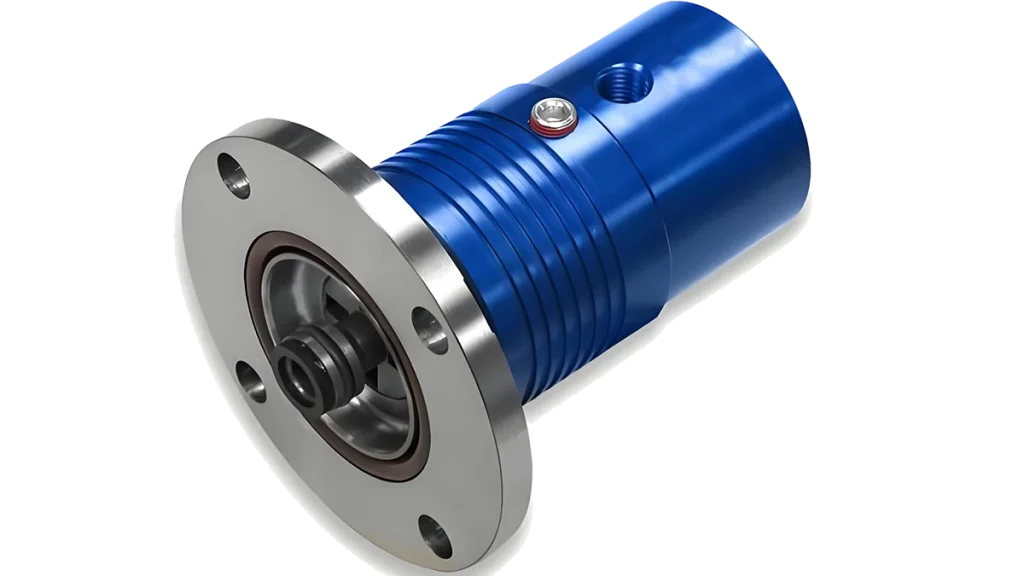
The type is as follows:
1. Core Features
-High sealing performance: adopting mechanical sealing or balanced sealing structure, the sealing surface roughness can reach Ra0.2 or below, effectively preventing medium leakage, reducing energy loss, and adapting to high temperature and high pressure working conditions (temperature resistance up to 350 ℃, pressure resistance up to 25MPa).
-Wear resistant and stain resistant: Components in contact with the medium are often made of wear-resistant and corrosion-resistant materials such as stainless steel, silicon carbide, and hard alloy, which can effectively resist the wear and corrosion of impurities such as pulp, ink, and coatings, extend the service life, and increase the sealing life by more than 30% compared to the industry average level.
-Adapt to high-speed operation: Optimize the bearing structure design, reduce friction torque, and adapt to the high-speed rotation requirements of printing, packaging, and papermaking equipment, avoiding problems such as heating and wear caused by high-speed operation and ensuring continuous operation of the equipment.
-Compact structure and easy installation: using flange or threaded connections, the design is compact and can be flexibly integrated into various devices, adapting to the complex installation space of the equipment while reducing installation difficulty and improving installation efficiency.
-Customized adaptation: The diameter size, connection method, and sealing structure can be customized according to the specific parameters of different equipment (such as drying cylinders, rollers, and coating machines) to meet the diverse working conditions in the industry.
2. Common types
-Single channel rotary joint: mainly used for the transmission of a single medium (such as steam, cold water), with a simple structure and high cost-effectiveness, widely used in basic equipment such as paper drying cylinders and printing drums.
-Multi channel rotary joint: It can simultaneously transmit multiple media (such as steam and condensate, paint and cleaning solution), saving installation space and adapting to equipment such as coating machines and laminating machines that require multi media collaborative work.
-High temperature and high pressure rotary joint: It adopts special sealing materials and structural design, specially adapted to high temperature and high pressure working conditions such as paper drying cylinders and corrugated machines, and can effectively resist the aging damage of sealing components caused by high temperature media.
-High speed rotary joint: Optimize bearing and sealing structure, reduce friction resistance, adapt to high-speed printing machines, high-speed coating machines and other equipment, ensure stability and sealing under high-speed operation.
The rotating joint may seem to have a sophisticated structure, but it actually contains exquisite engineering wisdom. Its core lies...
View details
The structure of an electric slip ring is actually not complicated, with only two components at its core, with clear...
View details
Early rotary joints had relatively limited functions, mainly relying on a single pathway and only capable of transmitting one medium....
View details
Sealing performance: Among the many technical indicators of rotary joints, sealing performance is undoubtedly the most critical one. In order...
View details