How to achieve non exposed rotary joints
19Sealing performance: Among the many technical indicators of rotary joints, sealing performance is undoubtedly the most critical one. In order...
View details rotary joints
Search the whole station
Early rotary joints had relatively limited functions, mainly relying on a single pathway and only capable of transmitting one medium. Their application scenarios were also relatively limited. But with the rapid development of industries such as intelligent manufacturing and high-end equipment manufacturing, industrial production has put forward higher requirements for the performance, efficiency, and multifunctionality of equipment. The rotary joint also conforms to the trend of the times, constantly evolving from single channel transmission to a complex system that can support multiple media and channels for simultaneous transmission, greatly expanding its application scope and becoming an indispensable core component of modern industry.
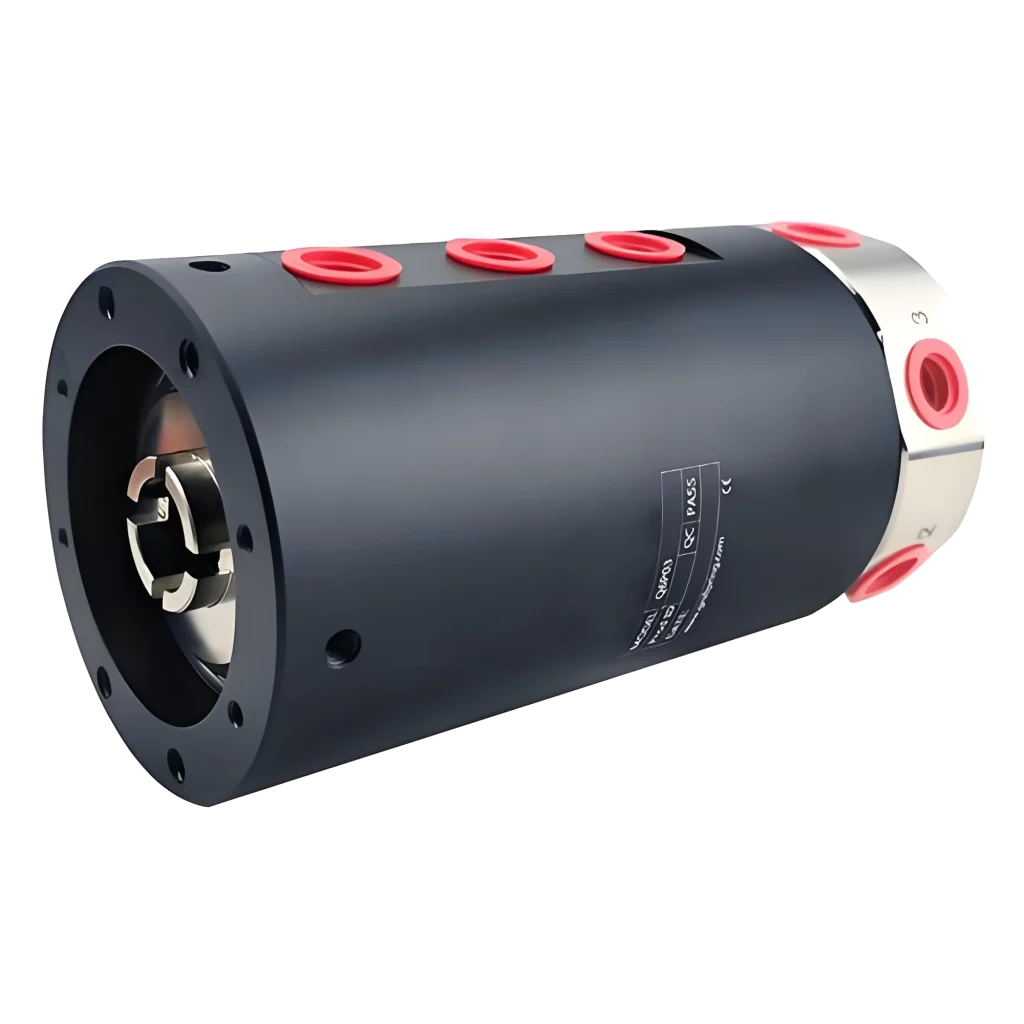
2、 Divided by the number of pathways: From basic to complex technological evolution
(1) Single channel rotary joint: the “basic model” for one-way transmission
The single channel rotary joint can be regarded as the “basic model” in the rotary joint family. Its structural design is very simple and only supports the circulation of a single medium, which can be water, gas, or oil. From the perspective of circulation direction, it can achieve both one-way transmission and two-way circulation to meet the basic needs of different devices. In some scenarios where the requirements for medium transmission are not high and the working conditions are relatively simple, the figure of single path rotary joints can be seen everywhere. For example, during the machining process of a regular lathe, coolant is needed to cool and lubricate the tools and workpieces. A single pass rotary joint can stably deliver the coolant to the rotating spindle, ensuring smooth machining; When small winding equipment is in operation, its pneumatic control part also relies on a single path rotary joint to transmit compressed air, thereby achieving precise operation of the equipment.
From a technical perspective, the single channel rotary joint adopts a single channel sealing structure, which commonly includes two forms: mechanical seal and packing seal. Mechanical seals utilize the tight fit between the dynamic and static rings to form a sealing surface and prevent medium leakage. This sealing method has good sealing performance and long service life, and is suitable for occasions with high sealing requirements; Filler sealing is achieved by filling sealing fillers such as asbestos rope, rubber, etc. between the rotating shaft and the shell. It has a simple structure and low cost, but the sealing effect is relatively weak. It is generally used in environments with low pressure and speed. In terms of speed and pressure parameters, single pass rotary joints are usually suitable for fixed speeds, with speeds mostly ≤ 3000rpm. In medium and low pressure environments, their pressure tolerance is generally ≤ 10MPa. Such parameter ranges can basically cover common low-speed and low-pressure industrial scenarios.
(2) Multi channel rotary joint: an all-around player in complex working conditions
With the development of industrial production towards high precision and multifunctionality, single path rotary joints are gradually unable to meet the requirements of complex working conditions. Multi path rotary joints have emerged as an all-around player in dealing with complex working conditions. Multi channel rotary joints can be further divided into two types based on the number of channels: dual channel and multi channel (3 or more channels).
Let’s first talk about the dual channel rotary joint, which has the ability to support independent transmission of two media, and this feature plays a key role in some specific industries. Taking the paper dryer as an example, during the paper drying process, steam needs to be introduced on one side to provide heat, and condensate needs to be discharged on the other side. The dual path rotary joint can perfectly perform this task, ensuring that steam and condensate are transmitted in independent channels without interference, ensuring the stable operation of the dryer and thus ensuring the drying quality of the paper; In a rubber vulcanizing machine, two types of media are also required to work together. One medium is used to heat and promote the rubber vulcanization reaction, and the other medium is used to cool the formed rubber products. The dual path rotary joint can accurately transmit these two media and assist in the smooth completion of the rubber vulcanization process. Looking at the multi-channel (3+channel) rotary joint again, it integrates multiple channels such as hydraulic, pneumatic, and electrical signals, and can achieve synchronous transmission of various types of media and signals in the same device. However, the design of multiple channels also brings technical challenges, among which the most crucial is to solve the problem of sealing and isolation between channels to prevent interference between different media or signals. In order to overcome this challenge, engineers have developed various ingenious structural designs. Layered design is like stacking multiple single pass rotary joints in a certain order, with each channel having an independent sealing layer. Through precise mechanical processing and assembly processes, the sealing between each channel is ensured; Concentric circle design is centered around the rotation axis, distributing different channels in a concentric circle shape, and using special sealing materials and structures to achieve effective isolation between channels.
Sealing performance: Among the many technical indicators of rotary joints, sealing performance is undoubtedly the most critical one. In order...
View details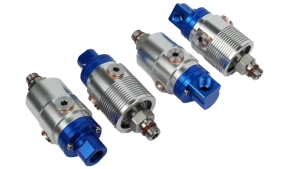
Textile Machinery Rotary Joint: A 'Dynamic Bridge' for Steam and Hot Water Transmission
View details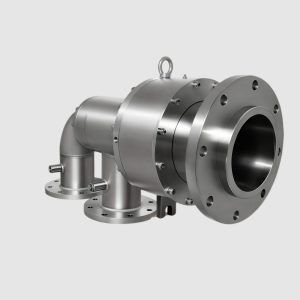
n the vast system of modern industry, heavy equipment is the main force of production, and its efficient and stable...
View details
Rotary joints play a crucial role in the efficient operation of printing and injection molding machines. A high-quality specialized rotary...
View details