Working principle of electric slip ring
12The structure of an electric slip ring is actually not complicated, with only two components at its core, with clear...
View details rotary joints
Search the whole station
The rotating joint may seem to have a sophisticated structure, but it actually contains exquisite engineering wisdom. Its core lies in cleverly solving the sealing problem between “motion and stillness”, which is also the key to its stable operation in photovoltaic tracking systems. From the perspective of internal structure, rotary joints are usually composed of rotating bodies, stationary rings, seals (commonly O-rings, mechanical seals), and bearings and other components. Among them, the rotating body is like a flexible “dancer”, closely connected to the rotating parts of the photovoltaic tracking system, constantly changing angles as the system rotates; And the stationary ring is like a steady “cornerstone”, firmly fixed at the end of the pipeline, providing stable support for the entire rotating joint. The two are supported by high-precision bearings, achieving flexible and smooth rotation, just like precision clock parts, perfectly matched.
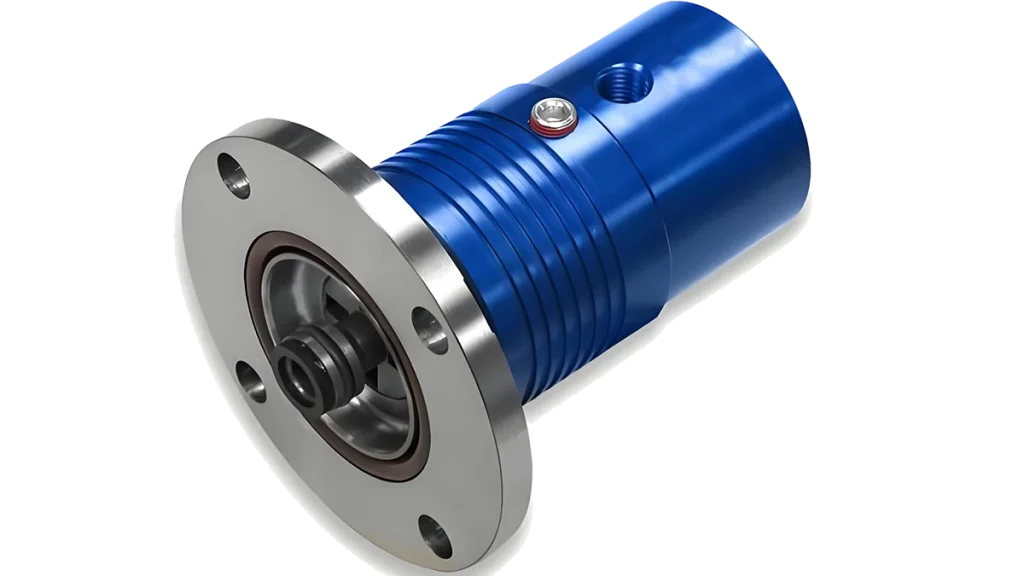
Seals play a crucial role as “guardians” in rotary joints. They form a tight dynamic sealing surface between the rotating body and the stationary ring through elastic pre tightening or fluid pressure, just like putting a strong “protective suit” on the rotating joint, effectively preventing the leakage of the medium. In practical applications, such as in trough solar thermal power stations, the collector needs to constantly follow the trajectory of the sun to rotate, and the sealing surface of the rotating joint must withstand high temperatures of up to 400 ℃ and pressures of 2.5MPa. Under such harsh working conditions, the sealing element, with its excellent performance, ensures the stable operation of the heat transfer oil during dynamic transmission, without leakage or interruption, providing strong guarantees for the efficient operation of the solar thermal power station.
In the daily operation and maintenance of photovoltaic power plants, there are two important links, namely cleaning and monitoring, and the rotary joint also plays an indispensable role in these two links, like a universal “flexible interface”, bringing great convenience to the operation and maintenance work. In the automatic cleaning device for photovoltaic panels, a water supply rotary joint is connected to a fixed water pipe and a rotatable cleaning arm, which is like installing a “flexible joint” on the cleaning arm, allowing the high-pressure water gun to continuously supply water even when rotating 360 °. You should know that the traditional hard connection method, once the cleaning arm rotates, the pipeline will be tangled together like a tangled mess, which not only affects the cleaning effect, but also easily damages the equipment. The emergence of water rotary joints has perfectly solved this problem, making cleaning work more efficient and convenient.
What’s even more impressive is that some high-end rotary joints also integrate signal transmission functions, like installing a “nervous system” on the photovoltaic bracket, which can transmit sensor data from the rotating photovoltaic bracket to the control system in real time, achieving remote monitoring of equipment status. In this way, the operation and maintenance personnel sitting in the monitoring room can always grasp the operation status of the equipment, timely discover potential problems and handle them, greatly improving operation and maintenance efficiency and reducing operation and maintenance costs.
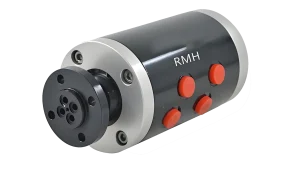
The structure of an electric slip ring is actually not complicated, with only two components at its core, with clear...
View details
Early rotary joints had relatively limited functions, mainly relying on a single pathway and only capable of transmitting one medium....
View details
Sealing performance: Among the many technical indicators of rotary joints, sealing performance is undoubtedly the most critical one. In order...
View details
Textile Machinery Rotary Joint: A 'Dynamic Bridge' for Steam and Hot Water Transmission
View details