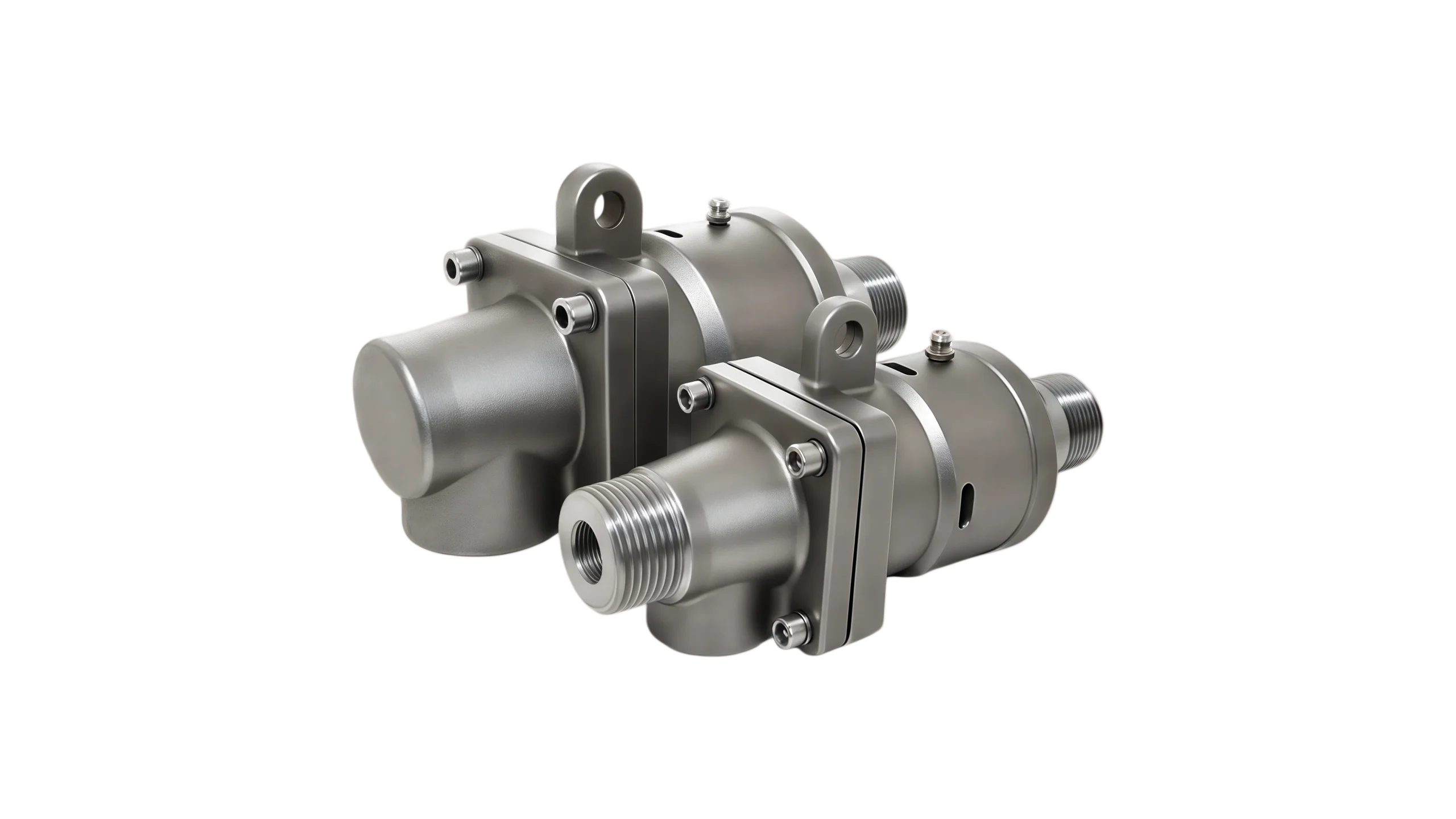
 rotary jointsrotary joints
Search the whole station
K-type rotary joints are divided into KD type, single-pass flow type, rotary joint, and KS type, dual-pass flow type, rotary joint. The KS type, dual-pass flow type, rotary joint is further divided into KS-G type, dual-pass flow type, fixed inner tube type, rotary joint, and KS-X type, dual-pass flow type
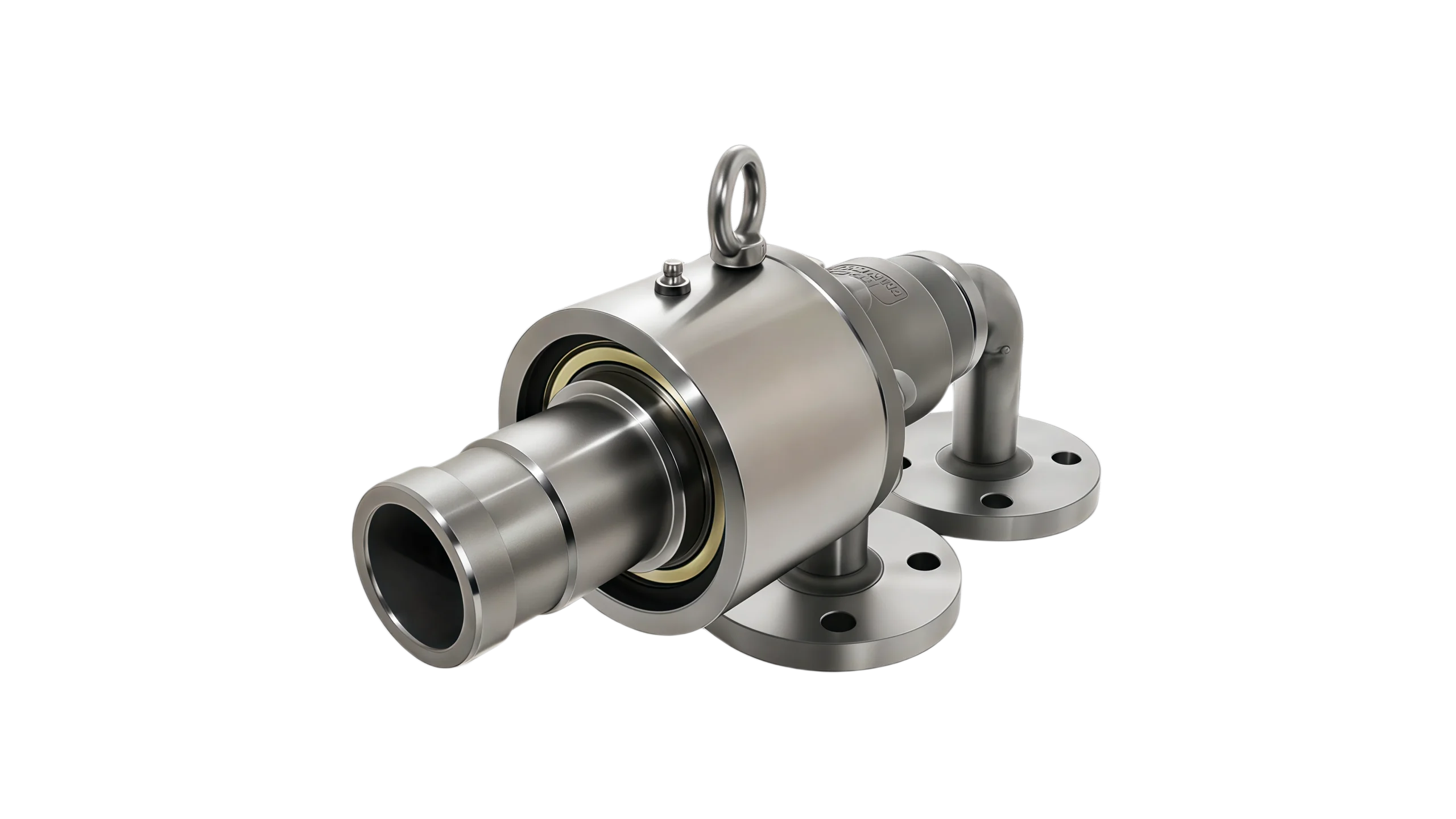
FF125 rotary unions
1. A pair of high-quality sealing rings are used for sealing internally.
2. It utilizes two ball bearings for internal support, enabling high-speed rotation, and is an internally supported rotary joint.
3. The built-in spring provides sealing pressure.
4. The outer tube K is made of stainless steel, while the shell is made of copper, aluminum, or stainless steel.
Due to the presence of frictional torque between the sealing surfaces during operation, an external anti-rotation rod or anti-rotation hole O, or relying on the inlet M pipeline with a rigid tube, is required for anti-rotation when installing the rotary joint.
6. When connecting the rotary joint and the pipeline, it is recommended to use metal hoses or high-pressure rubber hoses for flexible connection.
7. The outer tube K of the rotary joint is connected to the rotating roller shaft head in the equipment, serving as the main moving component.
8. The structure is simple and maintenance-free, making it easy to use and repair.
The K-type rotary joint is designed using three-dimensional technology, with key components processed by FANUC CNC, ensuring reliable quality. We welcome your selection and offer customization for non-standard products.
Joint specifications
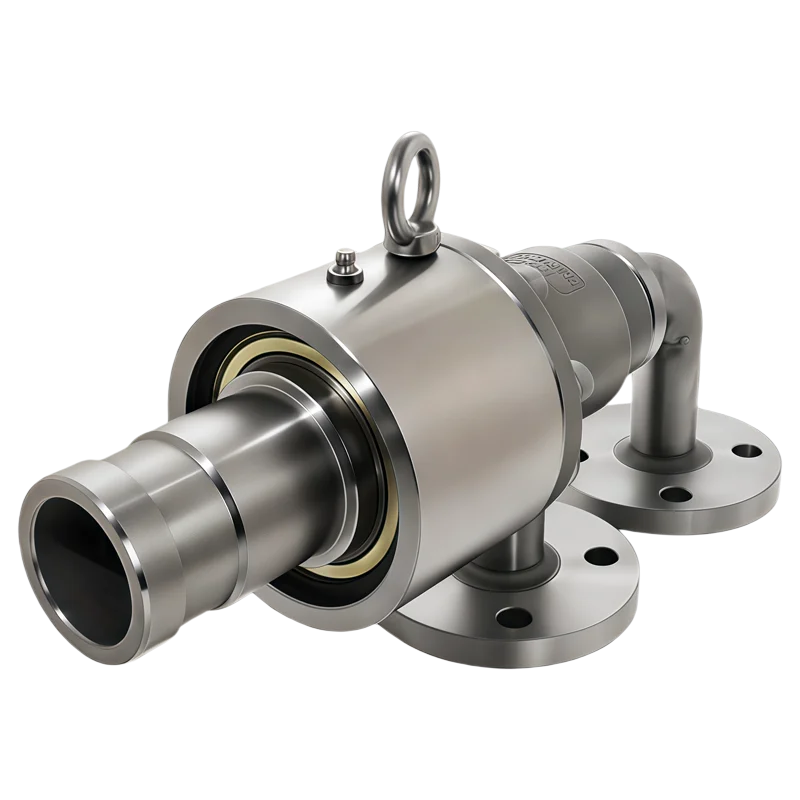
1. K-type rotary joints are divided into KD type, single-pass flow type, rotary joint, and KS type, dual-pass flow type, rotary joint. The KS type, dual-pass flow type, rotary joint is further divided into KS-G type, dual-pass flow type, fixed inner tube type, rotary joint, and KS-X type, dual-pass flow type, rotating inner tube type, rotary joint. For example, KS-GF20-8, “F” indicates that the connection between the rotary joint outer tube and the equipment shaft neck adopts a quick-change flange connection. “20mm” refers to the nominal flow diameter of the rotary joint outer tube being 20mm, and “8mm” refers to the nominal flow diameter of the rotary joint inner tube being 8mm. The rotation direction of the inner tube thread should be opposite to the rotation direction of the drum, so that the threads become tighter as they are screwed. The connection between the rotary joint outer tube and the equipment shaft neck adopts a threaded connection, without the need for a suffix, such as KS-X50-25, KS-G50-25. However, the rotation direction of the rotary joint outer tube should be opposite to the rotation direction of the equipment drum, so that the threads become tighter as they are screwed.
2. The commonly used specifications for K-type rotary joints are as follows: DN6 (1/8″), DN8 (1/4″), DN10 (3/8″), DN15 (1/2″), DN20 (3/4″), DN25 (1″), DN32 (1-1/4″), DN40 (1-1/2″), and DN50 (2″).
3. The specifications for KD type, single-passage flow, rotary joints are as follows: KD6 (1/8″), KD8 (1/4″), KD10 (3/8″), KD15 (1/2″), KD20 (3/4″), KD25 (1″), KD32 (1-1/4″), KD40 (1-1/2″), and KD50 (2″).
4. The specifications for the KS-G type, dual-passage flow, inner tube fixed type, and rotary joint are as follows: KS-G15-6 (1/2″), KS-G20-8 (3/4″), KS-G25-10 (1″), KS-G32-15 (1-1/4″), KS-G40-20 (1-1/2″), and KS-G50-25 (2″). Among them, in KS-G25-10 (1″), 25mm refers to the nominal flow diameter of the outer tube of the rotary joint, which is 25mm, and 10mm refers to the nominal flow diameter of the inner tube of the rotary joint, which is 10mm.
5. The specifications for the KS-X type, dual-passage flow, inner tube rotating type, and rotary joint are as follows: KS-X15-6 (1/2″), KS-X20-8 (3/4″), KS-X25-10 (1″), KS-X32-15 (1-1/4″), KS-X40-20 (1-1/2″), and KS-X50-25 (2″). Among them, in KS-X15-6 (1/2″), 15mm refers to the nominal flow diameter of the outer tube of the rotary joint, which is 15mm, and 6mm refers to the nominal flow diameter of the inner tube of the rotary joint, which is 6mm.
A rotary joint is a sealing device that connects stationary pipelines and rotating equipment, achieving leak free fluid transmission under 360 ° rotation. It allows fluid media to flow smoothly between fixed pipelines and rotating machines, and is a key component in industrial equipment
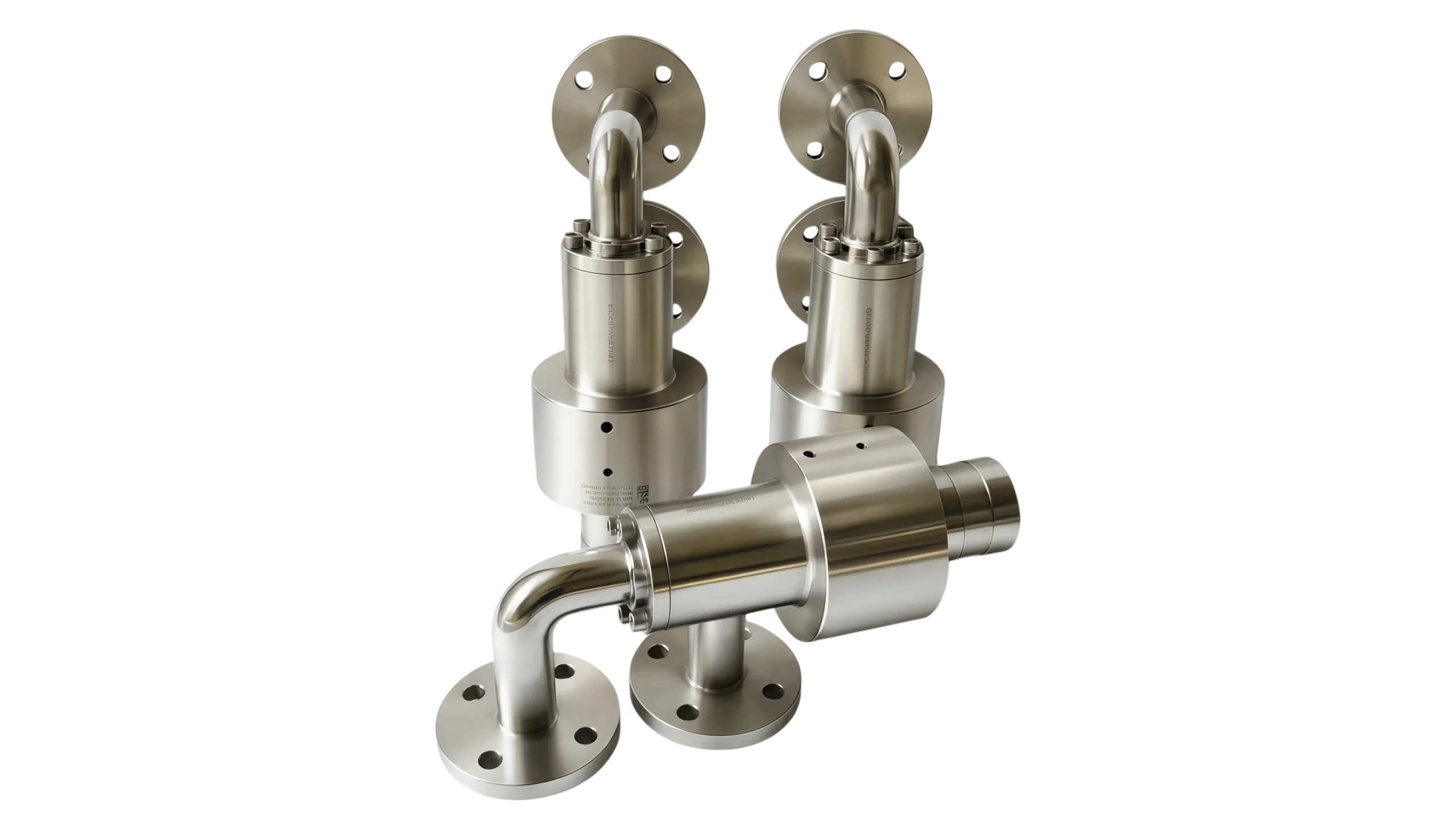
F90 swivel unions Transporting equipment components from a fixed pipeline system to high-speed rotating or reciprocating motion
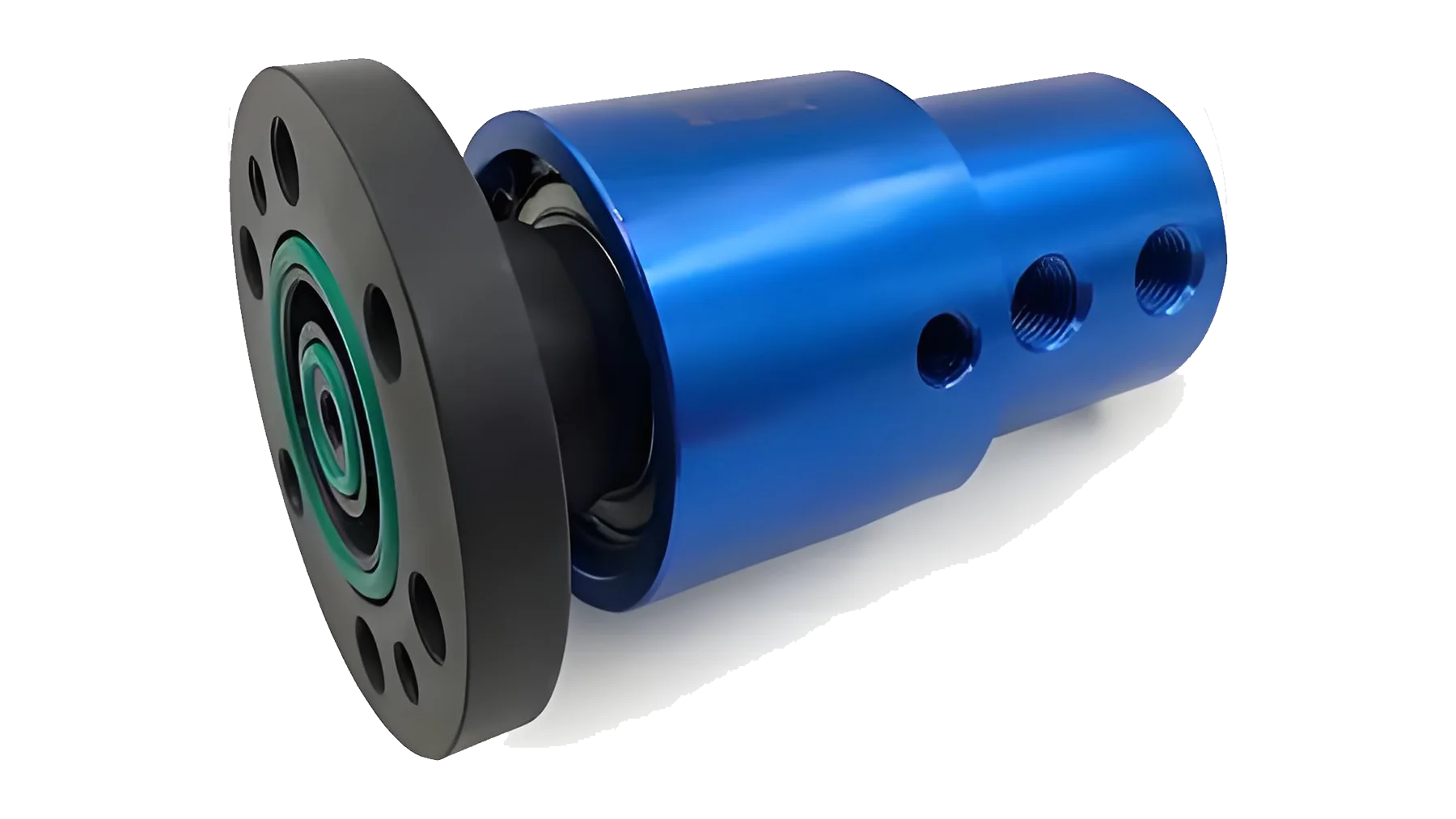
Q32 swivel unions
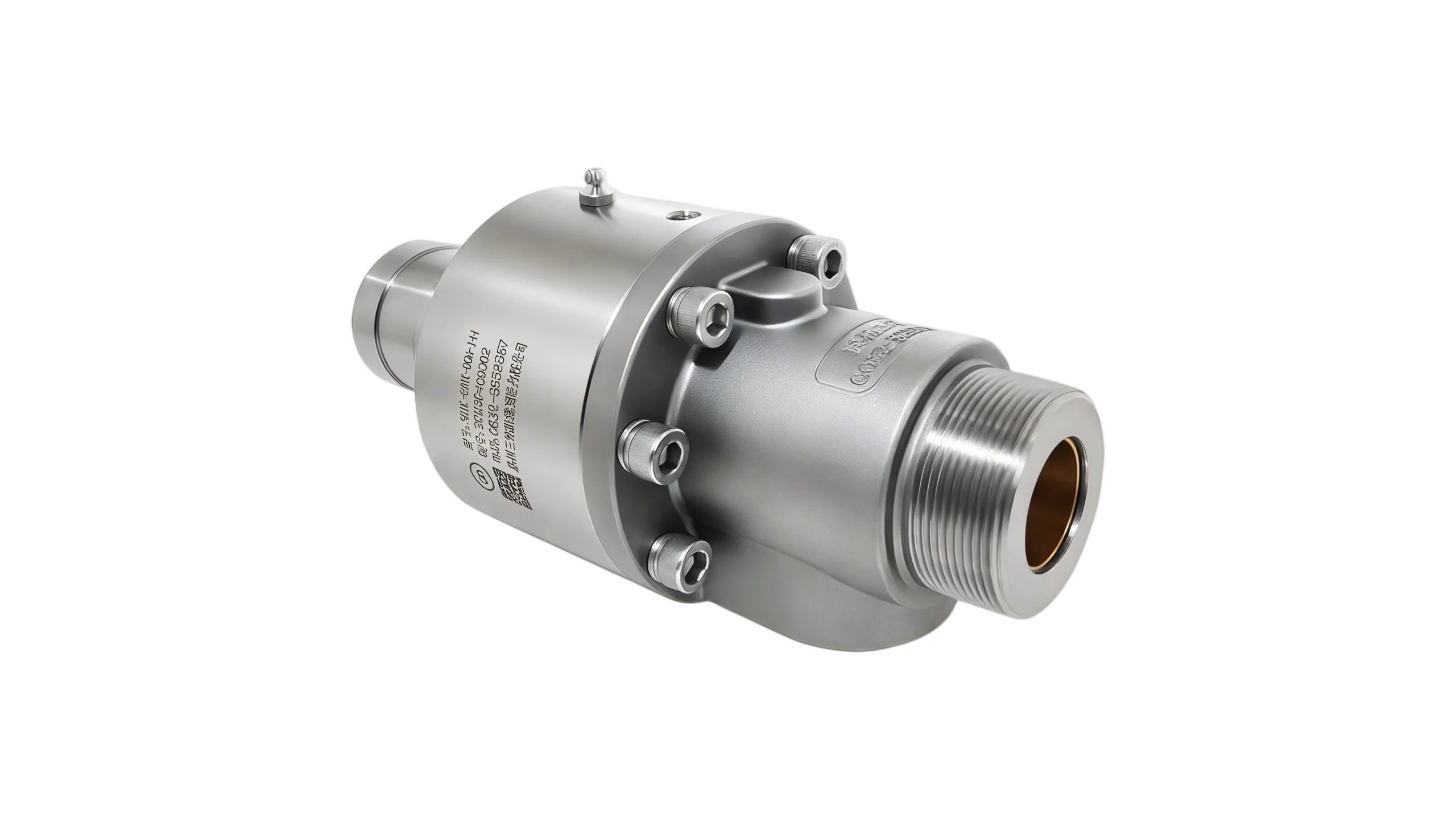
JD40 rotary joint is a key sealing component in industrial fluid transmission systems, usually referring to a rotary connection device with a diameter of DN40 (or corresponding British caliber). As a transitional sealing device that transports fluid media (such as water, steam, hydraulic oil, thermal oil, compressed air, etc.) from static pipelines to dynamic rotating or swinging equipment