Special rotary joint for printing, packaging and papermaking industry
14Compared to universal rotary joints, specialized rotary joints for the printing, packaging, and papermaking industry have been optimized in terms...
View details rotary joints
Search the whole station
The rotating joint of mining machinery is essentially a precision electromechanical device that can maintain fluid transmission continuity and sealing in a rotating state. Its core function is to achieve leak free and non winding fluid transportation between fixed pipelines and rotating components, while adapting to the complex working environment of mines and resisting erosion from factors such as dust, mud, high temperature, and high pressure. Its structure mainly consists of core components such as shell, rotor, stator, seals, bearings, etc.: the shell (stator) is fixed at the fixed end of the equipment and connected to external fluid pipelines; The rotor rotates synchronously with the rotating components of the equipment (such as drum, cutting head, rotor) and connects the fluid channel at the rotating end; Seals are the core sealing units used to isolate fluids and prevent leaks, while bearings support the smooth rotation of the rotor, reducing friction losses and ensuring long-term continuous operation of the equipment.
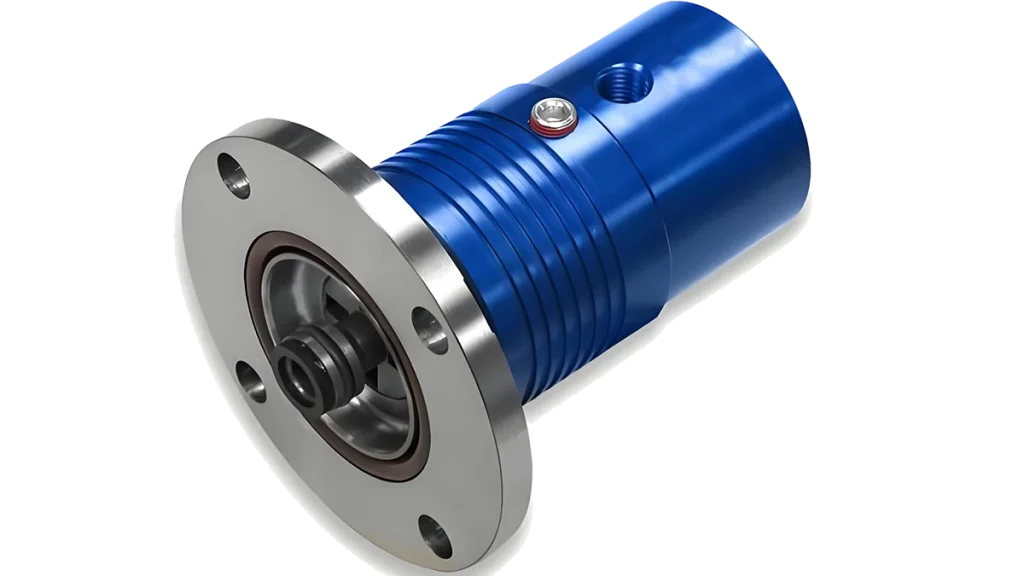
In combination with the operating scenarios of mining machinery, rotary joints need to have four core performance advantages in order to adapt to the needs of harsh working conditions. Firstly, it has super strong wear and corrosion resistance. The mining environment is filled with impurities such as coal dust, slag, and mud water, and some fluid media (such as sulfur-containing wastewater and corrosive lubricating oil) have certain corrosiveness. The rotor, stator, and seals of the rotary joint need to be made of high-strength wear-resistant and corrosion-resistant materials, such as using independent patented wear-resistant sealing technology combined with high-strength wear-resistant materials, and the surface is being uploaded Special anti-corrosion treatment can effectively resist wear and corrosion, and the service life of some high-quality products can reach more than twice the industry average, greatly reducing the frequency of parts replacement and maintenance costs. Secondly, stable and reliable sealing performance. Mining machinery often operates under high-pressure conditions, with fluid transmission pressures reaching tens of megapascals. The sealing performance of rotary joints directly determines the stability of equipment operation. The leakage rate of high-quality products can be strictly controlled within ≤ 1 × 10 ⁻⁹ Pa · m ³/s, effectively eliminating leakage problems. Even under long-term high load and high wear conditions, stable sealing can still be maintained to avoid equipment failures and safety hazards caused by fluid leakage. Thirdly, excellent environmental adaptability. The underground temperature of the mine fluctuates greatly and the humidity is high. The open-pit mine is faced with extreme weather such as high temperature, extreme cold and rainstorm. The rotary joint needs to have a wide working temperature range (usually covering -40 ℃ to 120 ℃). At the same time, the sealed structure is adopted, with the protection level of IP65 and above. Some special models have the protection level of IP68, which can effectively resist the invasion of dust, mud and water, and prevent the internal parts from moisture and corrosion damage. Fourthly, it has a high-strength structural load-bearing capacity. During the operation of mining machinery, severe vibrations and impacts are generated. Rotary joints need to have sufficient structural strength and impact resistance. By optimizing structural design and material selection, they can withstand the vibrations and impacts during equipment operation, ensuring that deformation and damage do not occur under heavy load conditions and guaranteeing uninterrupted fluid transmission.
In the practical application of mining machinery, the adaptability of rotary joints presents differentiated characteristics according to equipment types and operational requirements, covering the entire process of mining. In underground mining equipment, the coal mining machine is one of the core equipment, and its drum needs to continuously rotate and cut coal. The rotary joint is installed at the connection between the drum and the machine body, responsible for conveying hydraulic oil and lubricating oil to the drum, and discharging cooling wastewater. The rotary joint is required to have high pressure sealing, anti coal dust wear, impact resistance and other performance to avoid hydraulic oil leakage caused by sealing failure, which affects the operation of the drum; During the rotating excavation process, the cutting head of the tunneling machine needs to be driven to rotate by hydraulic oil conveyed through a rotary joint, while cooling water is conveyed to reduce the temperature of the cutting head and prevent it from wearing out too quickly due to high temperature. Therefore, the rotary joint needs to have the characteristics of high temperature resistance, dust resistance, and vibration resistance. In open-pit mining equipment, the rotary platform of the excavator needs to rotate continuously 360 °. The rotary joint is installed at the rotary center and is responsible for delivering hydraulic oil to the rotary platform, driving the movement of components such as the boom and bucket rod. The rotary joint is required to have high flow rate, high pressure bearing capacity, and impact resistance to meet the heavy load operation requirements of the excavator; When the rotor of the crusher rotates at high speed, lubricating oil needs to be transported through the rotary joint to lubricate and cool the rotor bearings, avoiding bearing burnout due to high temperature. Therefore, the rotary joint needs to have wear-resistant, high temperature resistant, and reliable sealing performance. In addition, rotary joints also play an important role in equipment such as scraper conveyors and stacker reclaimers, providing stable fluid transmission support for the rotating components of the equipment.
Compared to universal rotary joints, specialized rotary joints for the printing, packaging, and papermaking industry have been optimized in terms...
View details
The rotating joint may seem to have a sophisticated structure, but it actually contains exquisite engineering wisdom. Its core lies...
View details
The structure of an electric slip ring is actually not complicated, with only two components at its core, with clear...
View details
Early rotary joints had relatively limited functions, mainly relying on a single pathway and only capable of transmitting one medium....
View details