Large caliber rotary joint
14n the vast system of modern industry, heavy equipment is the main force of production, and its efficient and stable...
View details rotary joints
Search the whole station
1、 Textile Machinery Rotary Joint: A ‘Dynamic Bridge’ for Steam and Hot Water Transmission
(1) Core functions and technical principles
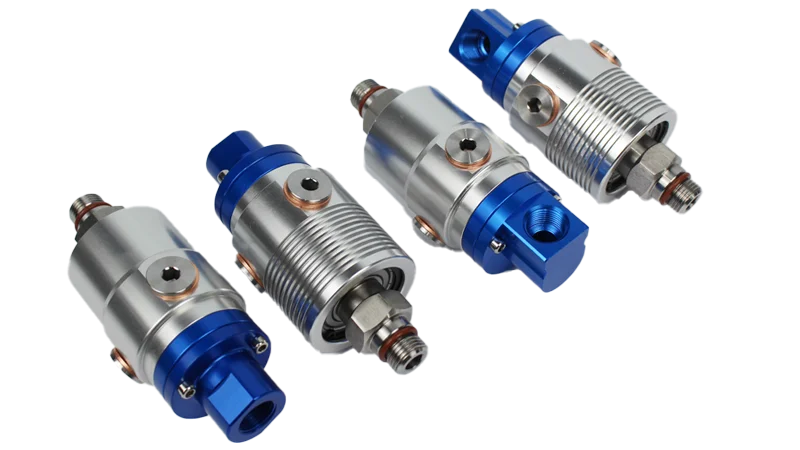
In the complex operating system of textile machinery, rotary joints play an indispensable role, serving as a “dynamic bridge” connecting fixed pipelines and rotating components, achieving stable transmission of heat media such as steam and hot water from stationary pipelines to rotating equipment such as rollers and dryers. Taking the common DN type joint as an example, it adopts a unique spherical non-equilibrium design, which gives the rotating joint the ability of “automatic calibration”. The precision electroplated spherical surface inside the joint is tightly matched with the impregnated graphite sealing ring, forming a key dynamic sealing friction pair. Even if it is difficult to achieve strict concentricity during installation, this clever design can automatically adjust the center. In practical production scenarios, the roller speed of textile machinery is usually between 100-220RPM, with a pressure of up to 2.5MPa and a temperature of up to 250 ℃. The rotary joint, with its excellent structure, can operate stably under such conditions, ensuring that steam and hot water are transmitted without leakage, providing a stable heat source for subsequent textile processes.
(2) The special requirements of textile technology for transmission systems
Every process in textile production, from evenly applying sizing solution to the yarn during sizing, to firmly attaching the dye to the fabric during printing and dyeing, to drying to remove excess moisture, all rely on the assistance of high temperature. In terms of the printing and dyeing process, fabrics need to undergo dye fixation at a specific temperature. If there are temperature fluctuations, it can lead to inconsistent color fastness and uneven color depth of products from the same batch, directly affecting product quality. Once steam or hot water leaks from the rotary joint, it not only causes energy waste, but may also lead to equipment corrosion, shorten equipment service life, and even pose safety hazards such as burns to operators. Therefore, rotary joints must have excellent sealing performance and be able to withstand high temperatures and pressures in order to ensure the stable and efficient operation of the entire textile process and produce high-quality textiles.
2、 Selection Core Parameters and Pit Avoidance Guide
(1) Media adaptability: differentiated requirements of steam vs hot water
Steam transmission: During steam transmission, due to its high temperature characteristics, the material of the rotary joint must have excellent high temperature resistance. Cast iron and stainless steel are ideal choices, as they can maintain stable mechanical properties in high temperature environments and are not easily deformed or damaged. Taking the common Dewei steam rotary joint as an example, it is made of stainless steel material and can operate stably at a high temperature of 250 ℃, effectively preventing material softening and leakage risks caused by high temperature. The anti cavitation ability of the sealing structure is also crucial, as changes in pressure and flow rate during steam transmission may cause cavitation, which has a strong erosive effect on the sealing surface. KADANT’s high-pressure rotary joint effectively reduces damage to the sealing surface caused by cavitation by optimizing the sealing structure, ensuring reliable sealing performance of the joint under high-pressure steam conditions of 2.5 MPa and above, providing strong support for the stable operation of textile machinery. Hot water transmission: For hot water transmission systems, corrosion resistance and anti scaling performance are key factors in selection. Brass casing has become a common choice for hot water rotary joints due to its excellent corrosion resistance, such as the Maier DX series joint, which demonstrates excellent corrosion resistance in hot water environments with its brass casing. Paired with metal ceramic sealing surfaces, it can further improve the wear and corrosion resistance of the joint, ensuring that the sealing performance is not affected during long-term use. Meanwhile, the flow rate and pressure drop parameters in the hot water transmission system have a direct impact on the temperature control accuracy. Excessive flow rate may result in uneven heat transfer, causing local temperatures of the equipment to be too high or too low; Excessive pressure drop can affect the flow rate of hot water and reduce heating efficiency. Therefore, in the selection process, it is necessary to accurately calculate and select suitable flow rate and pressure drop parameters according to specific process requirements, ensuring that the hot water system can operate stably and efficiently, and providing precise temperature control for textile processes.
(2) Condition matching: Three dimensional verification of speed, pressure, and temperature
Rotational speed: The rotational speed of textile machinery varies greatly, and must be fully considered when selecting. For low-speed equipment, such as some old-fashioned textile auxiliary equipment, the speed is usually below 100RPM, using ordinary rotary joints. This type of joint has a simple structure, low cost, and can stably transmit media at low speeds. However, for high-speed sizing machines and other equipment, the speed often exceeds 200RPM, and a specially designed high-speed rotary joint needs to be selected. These joints are usually equipped with oil-free bearings, which can effectively reduce friction, lower energy consumption, and improve the stability and service life of the joints. Oil free bearings can also prevent contamination of textile products due to lubricant leakage, ensuring product quality. Pressure and temperature: Under superheated steam conditions, the temperature often exceeds 220 ℃, which poses a huge challenge to the high temperature resistance of rotary joints. High temperature type joints must be selected, which use special high-temperature resistant materials and sealing technology to maintain good performance in high temperature environments. When annotating parameters, it is necessary to reserve 20% security redundancy. For example, if the actual pressure used is 1.5 MPa, the pressure resistance parameter of the joint should not be lower than 1.8 MPa when selecting. This can effectively cope with possible pressure fluctuations and changes in working conditions, avoid joint damage caused by excessive pressure, and ensure that textile machinery can operate safely and stably under various working conditions.
(3) Installation and maintenance: Details determine lifespan
Concentricity adjustment: Although non-equilibrium joints have the function of automatic centering, the coaxiality of the equipment still needs to be strictly controlled during installation to ensure that its deviation does not exceed 0.5mm. If the coaxiality deviation is too large, the joint will be subjected to biased loads during long-term operation, resulting in uneven stress on the sealing surface and accelerated wear. During the installation of rotary joints in a textile factory, due to the lack of strict control over coaxiality, the sealing surface of the equipment experienced severe wear after running for a period of time, resulting in steam leakage. This not only affected production efficiency but also increased maintenance costs. Therefore, during the installation process, professional measuring tools must be used to accurately adjust the coaxiality of the equipment, laying the foundation for the stable operation of the rotary joint. Lubrication and cleaning: Regularly checking the formation of liquid film on the sealing ring is an important measure to ensure the normal operation of the rotary joint. A good liquid film can effectively reduce the friction of the sealing surface, reduce wear, and extend the service life of the joint. For hot water systems, installing filters is essential as it can prevent impurities in the water from entering the rotary joint, avoiding scratches and blockages on the sealing surface caused by impurities. For steam pipelines, it is recommended to install drain valves to promptly remove condensed water, reduce the impact of condensed water on the rotating joint, ensure that the joint operates in a dry steam environment, and improve its reliability and stability.
n the vast system of modern industry, heavy equipment is the main force of production, and its efficient and stable...
View details
Rotary joints play a crucial role in the efficient operation of printing and injection molding machines. A high-quality specialized rotary...
View details
n industries such as petrochemicals, metallurgy, and power, rotary joints are key equipment for achieving medium transmission between rotating components...
View details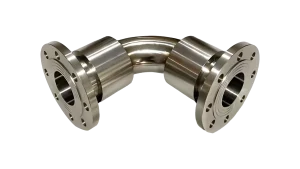
In industrial pipeline systems, rotary joints are key components responsible for achieving stable transmission of fluid media between fixed pipelines...
View details