The use of rotary joints in the rubber industry
20Rotary joints are mainly used in rubber product production for fluid (steam, thermal oil, cooling water) pathways of rotating components...
View details rotary joints
Search the whole station
Silicon carbide rings are sintered at high temperatures, and the flat surface is a mirror surface polished with diamond. The characteristics are high hardness, high temperature resistance, and friction resistance. Silicon carbide ring and graphite friction seal, because the powder nature of graphite produces a sealing ring effect. Impurities are difficult to enter the sealing end face. That’s why using silicon carbide to seal high-speed rotating joints won’t leak.
Be sure to use silicon carbide rings to seal high-speed rotating joints. Otherwise, it will not only affect the service life of the rotary joint but also cause the equipment to malfunction. It will have a significant impact on the daily production arrangements of enterprises. Seemingly simple and small problems, if not handled properly, can still affect production progress.
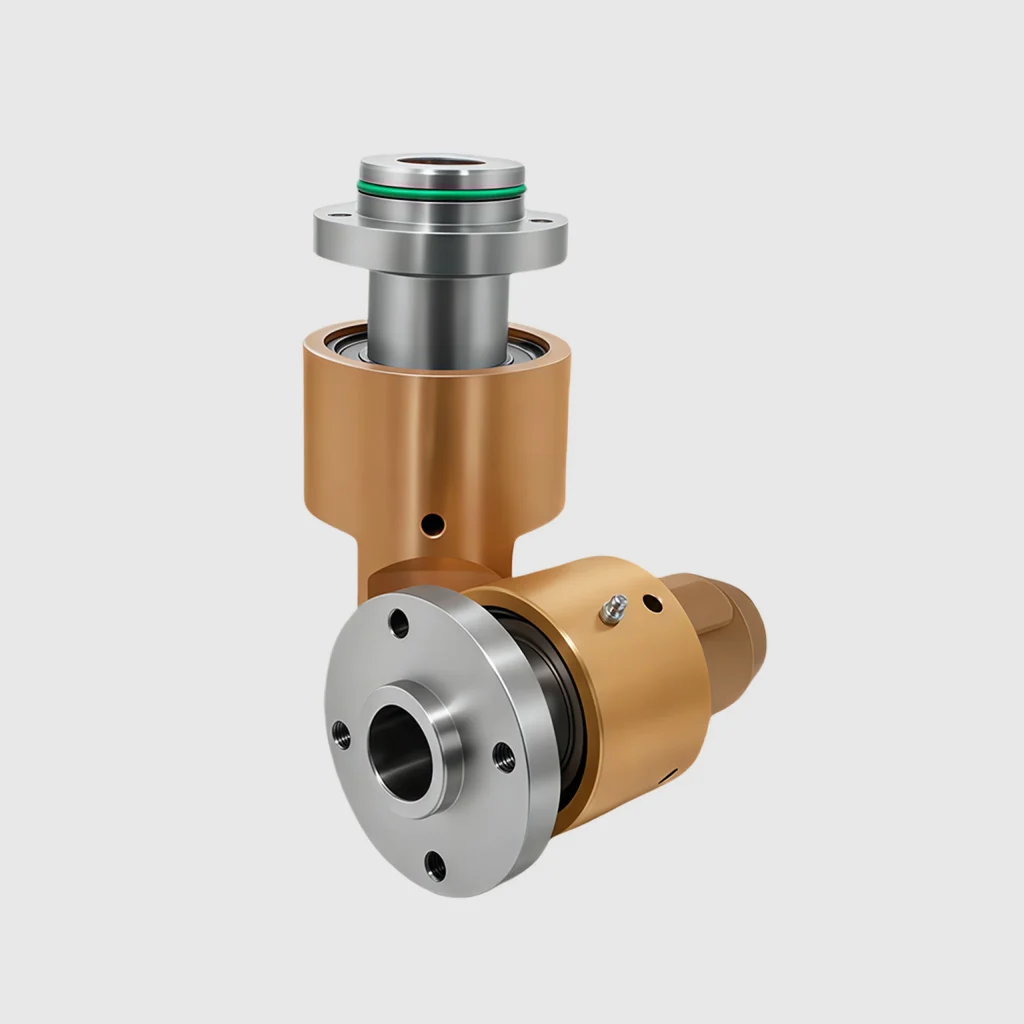
The high-speed rotary joint adopts silicon carbide sealing, which is characterized by its ultra-high hardness, excellent wear resistance, good thermal conductivity, low friction coefficient, and strong corrosion resistance. It can stably cope with sealing surface wear, thermal deformation, and leakage risks under high-speed (often>3000 rpm, linear speed>10 m/s), high temperature, high pressure, or corrosive working conditions.
High hardness and wear resistance: Silicon carbide has a Mohs hardness of 9-9.5, far exceeding traditional sealing materials such as graphite and copper alloys. It has strong resistance to abrasive and adhesive wear in high-speed sliding friction, significantly extending the sealing life.
High thermal conductivity (≈ 120-160 W/m · K): Quickly dissipate frictional heat, preventing the sealing surface from softening, cracking, or thermal adhesion (“sintering”) with wear-resistant parts (such as carbon graphite) due to temperature rise.
Low friction coefficient (especially when paired with carbon graphite): reduces heat generation and power consumption, maintains stable friction pairs at high speeds, and avoids leakage caused by increased vibration.
Chemical inertness and corrosion resistance: Stable to most acids, bases, solvents, and cooling fluids (such as water, oil, and thermal oil), reaction sintered silicon carbide containing free silicon is resistant to almost all industrial media, although strong bases are avoided.
High temperature strength retention: The bending strength does not decrease below 1400 ° C, making it suitable for high-temperature fluid environments such as superheated steam and thermal oil; The surface is prone to forming a self-lubricating SiO₂ protective film.
High density and dense structure: low porosity, high sealing surface flatness, and with precision grinding, can achieve near zero leakage end face bonding, especially suitable for high-pressure (up to 50 bar) or clean fluid scenarios.
Silicon carbide is often used in combination with silicon carbide to carbon graphite (for self-lubricating purposes) or silicon carbide to silicon carbide (for extreme working conditions such as particle content and dry operation), and has become a standard for highly reliable sealing in high-speed rotary joints in industries such as papermaking, steel, and chemical engineering. If the medium contains solid particles or requires continuous operation for more than 1000 hours, the anti embedding and anti thermal cracking properties of silicon carbide are more critical.
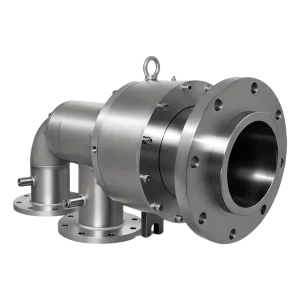
Rotary joints are mainly used in rubber product production for fluid (steam, thermal oil, cooling water) pathways of rotating components...
View details
ML02R008F is a high-performance two-way rotary joint designed specifically for the semiconductor manufacturing industry, widely used in key equipment such...
View details
ensure that the equipment has stopped running and completely released the fluid pressure (water, oil, or gas) inside the joint....
View details
Flexible pipes (such as metal hoses) must be used to connect the inlet and outlet, and it is prohibited Rigid...
View details