ML02R008F Semiconductor Rotary Joint
41ML02R008F is a high-performance two-way rotary joint designed specifically for the semiconductor manufacturing industry, widely used in key equipment such...
View details rotary joints
Search the whole station
Rubber has strong elasticity, good insulation, plasticity, water and gas resistance, tensile strength, and wear resistance. It is widely used in industry, agriculture, national defense, transportation, machinery manufacturing, medical and health fields, and daily life. In addition to strict requirements for raw materials and various additive formulas, machine technology in the production process is also responsible for the shape of rubber products, especially for ensuring consistent quality as much as possible. Rubber production mainly includes: 1. plasticization, 2. mixing, 3. rolling, 4. pressing, 5. forming, 6. vulcanization and other processes. Rotary joints are widely used in rubber production equipment such as rolling machines, open mills, internal mixers, shaping machines, coating machines, etc. due to their high speed, high temperature resistance, good stability, long service life, and ability to use multiple media.
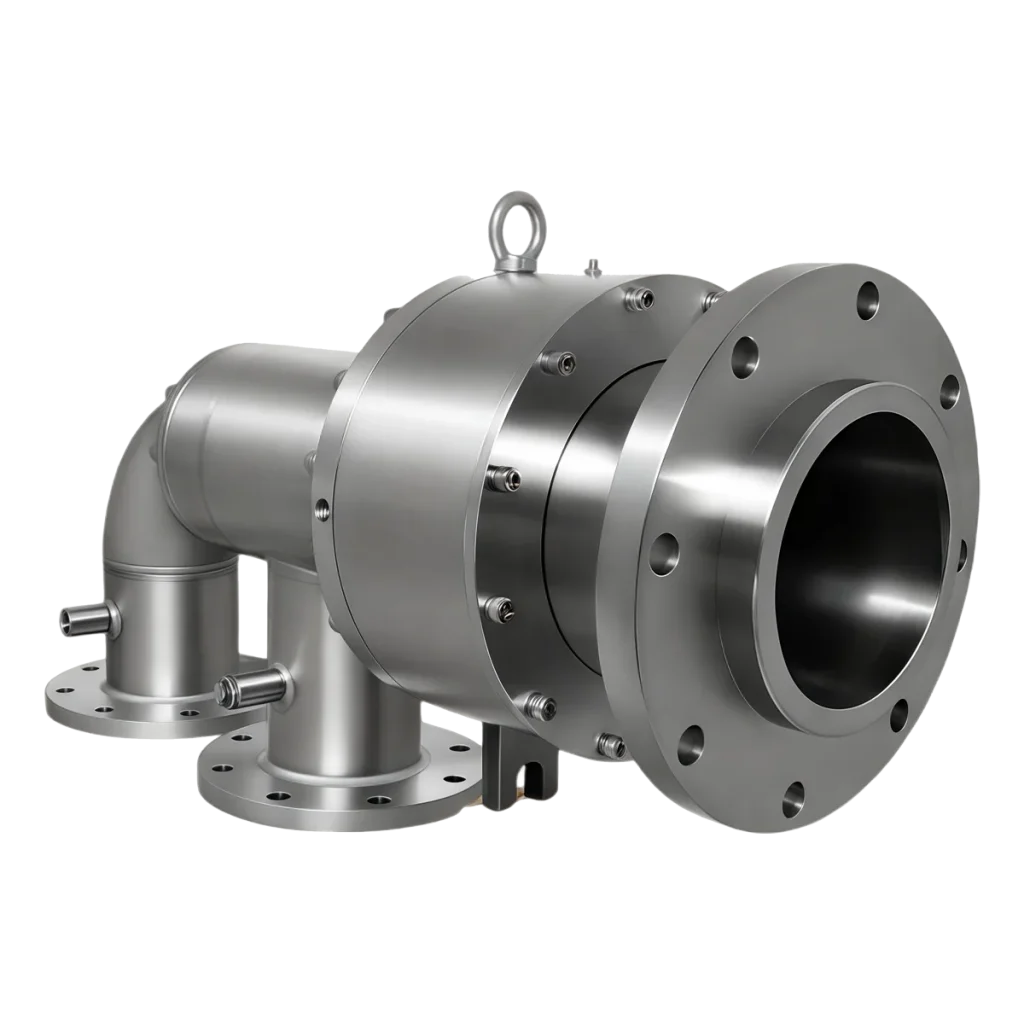
Rotary joints are mainly used in rubber product production for fluid (steam, thermal oil, cooling water) pathways of rotating components such as internal mixers, open mixers, calenders, extruders, and vulcanization equipment. Their core advantage lies in achieving stable, sealed, and continuous transmission of high-temperature/low-temperature media in rotating equipment, ensuring process temperature control and production efficiency.
Accurate temperature control ensures quality: Heat transfer oil or cooling water is introduced into the mixing chamber, rolling roller or extrusion screw, and dynamically sealed and transported through a rotating joint to ensure uniform and stable temperature (fluctuation ± 1-3 ℃) during rubber mixing, vulcanization or molding processes, improving product consistency and yield.
High speed and high reliability sealing: Rubber equipment often requires 200-1500 rpm rotation (such as drum vulcanizers), and high-quality rotary joints (pressure resistance of 10-40 bar, temperature resistance of -20 ℃ to+200 ℃+) support no leakage at high speeds, avoiding energy consumption increase or safety hazards caused by steam/oil medium loss.
Improving equipment stability and lifespan: Integrated rotary joints can reduce hose bending fatigue and vibration transmission, absorb thermal expansion and contraction displacement, and reduce pipeline stress; Some designs support dry operation or self-lubricating sealing, reducing downtime maintenance.
Multi media compatibility and compact integration: a single device can be configured with a dual rotary joint for steam (heating) and cooling water (temperature control), saving space; The smoothness of the flow channel Ra ≤ 0.8 reduces the adhesion of the rubber material to the wall and is suitable for mixing high viscosity rubber.
Suitable for harsh working conditions: using graphite ceramic/silicon carbide sealing pairs and stainless steel/alloy shells, resistant to rubber additives (such as sulfur and accelerators) with slight corrosion, meeting the requirement of continuous 24-hour operation
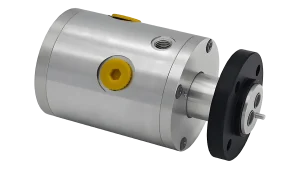
ML02R008F is a high-performance two-way rotary joint designed specifically for the semiconductor manufacturing industry, widely used in key equipment such...
View details
ensure that the equipment has stopped running and completely released the fluid pressure (water, oil, or gas) inside the joint....
View details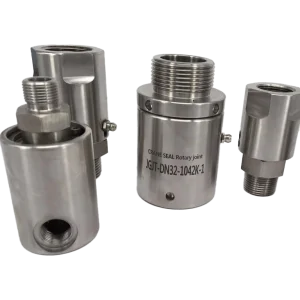
Flexible pipes (such as metal hoses) must be used to connect the inlet and outlet, and it is prohibited Rigid...
View details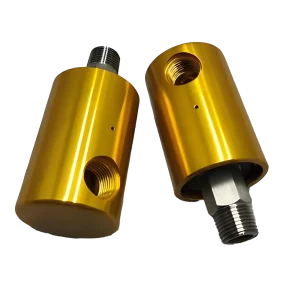
Application scenarios of rotary joints: cold rolling mills, hot rolling mills, hot rolling mills, steel mills, etc. printing industry
View details