The application of rotary joints in the steel industry
15Application scenarios of rotary joints: cold rolling mills, hot rolling mills, hot rolling mills, steel mills, etc. printing industry
View details rotary joints
Search the whole station
Flexible pipes (such as metal hoses) must be used to connect the inlet and outlet, and it is prohibited
Rigid pipe
To compensate for the axial displacement and concentricity deviation of the rotary joint.
The length of the hose should be sufficient to avoid twisting or excessive stretching.
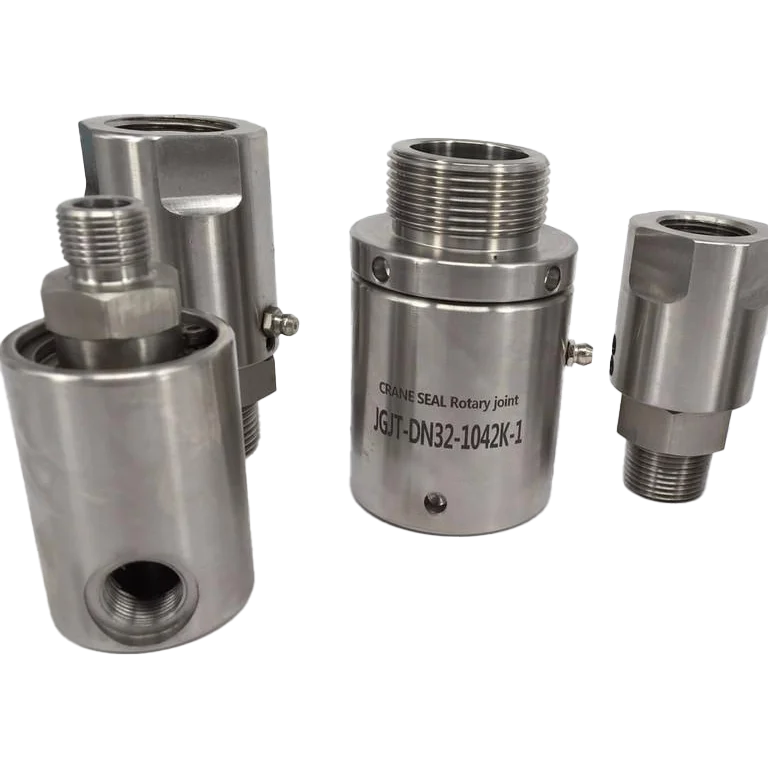
Preparation before installation:
Close the water source or fluid valve, clean the pipeline and rotary joint interface, and ensure that there are no debris, burrs, or residues.
Select the type of connector (single/multiple) and connection method (threaded or flanged) according to the equipment requirements.
Connection operation:
Threaded connection: Confirm that the rotation direction of the inner and outer pipe threads is consistent with the rotation direction of the equipment (usually in the opposite direction), and wrap them
PTFE tape
Or apply
sealant
Tighten it afterwards.
two
Flange connection: use
Quickly replace the flange
and
Half ring
Fixed, ensure
Copper gasket
Align and evenly apply force after pre tightening the diagonal screws.
The assembly of the inner tube must comply with
H8/e7 tolerance standard
And provide auxiliary support.
Testing and adjustment:
Open the fluid valve and check for leaks; The drainage outlet should face downwards or maintain a continuous downward slope to avoid liquid accumulation.
Adjust the anti rotation device (the diameter of the anti rotation rod is 2-3mm smaller than the anti rotation hole) to ensure that the joint can swing freely.
Key precautions
Concentricity control: The runout tolerance between the rotating joint and the equipment shaft neck should be ≤ 0.1mm, and it needs to be verified after installation
coaxiality
Medium and direction matching:
High temperature media (such as steam) need to be used
Siphon structure,
Inner tube suction nozzle
Vertical downwards.
Incorrect thread rotation can lead to seal failure, and it is necessary to clarify before installation
Equipment rotation direction
Maintenance points: Regularly check the wear of the sealing surface (normal wear of 5-10mm) to prevent foreign objects from entering; Long term discontinuation is required
rust prevention treatment
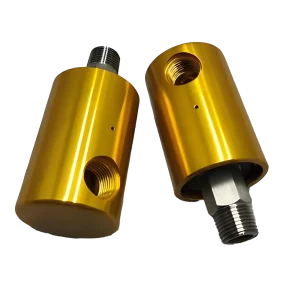
Application scenarios of rotary joints: cold rolling mills, hot rolling mills, hot rolling mills, steel mills, etc. printing industry
View details
The purpose of the seal in the rotary joint is to seal the connection and allow one of the two...
View details
One reason for steam rotary joint leakage is the spring and column ring.
View details
The materials used to manufacture high-speed rotary joints are quite special. Firstly, they must be resistant to high temperatures and...
View details