How do slip ring generate electricity
48Slip ring products should be placed indoors in a dry place. At the same time, screws should be tightened during...
View details rotary joints
Search the whole station
Rotary joints are sealed transmission devices, and different sealing rings are selected according to the requirements of the usage environment and transmission medium. They play a sealing role in the gaps lubricated with grease, preventing debris or dust from entering the interior of the joint, while reducing friction, heat generation, and wear; But the sealing ring is a vulnerable component of the rotary joint, which not only has to withstand the pressure of the internal medium, but also the friction between the external environment and the shell.
The application range of rotary joints is very wide. What are the commonly used classifications of rotary joints?
Firstly, based on the medium used in rotary joints, they can be divided into water rotary joints, oil rotary joints, steam rotary joints, pneumatic rotary joints, and electrical rotary joints.
Secondly, in terms of the pressure resistance of rotary joints, there are two types: atmospheric rotary joints and high-pressure rotary joints.
In addition, based on the material of the housing of the rotary joint, there are copper rotary joints, stainless steel rotary joints, aluminum alloy rotary joints, cast iron rotary joints, and plastic rotary joints.
Also, based on the pathway of the rotary joint, there are single pathway rotary joints, double pathway rotary joints, and multi pathway rotary joints.
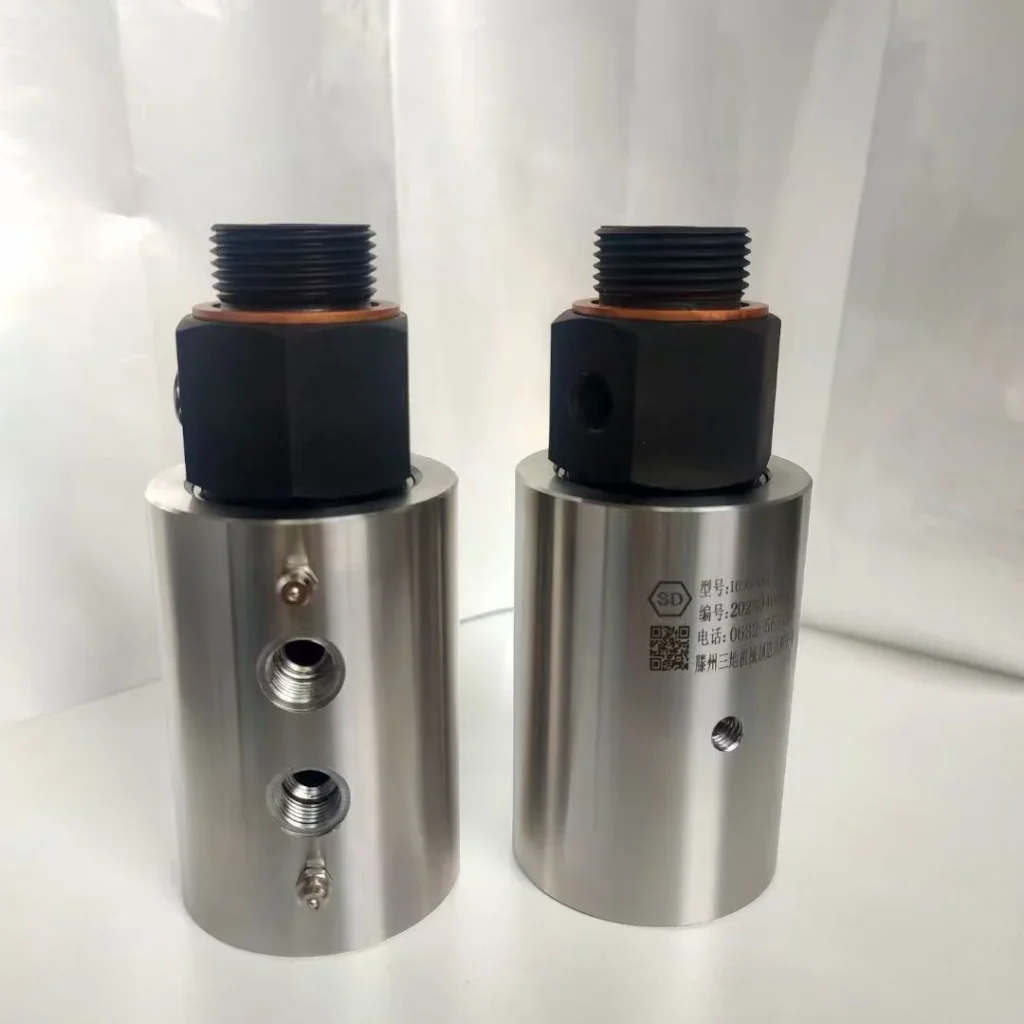
Selection guide:
1. Unidirectional flow type: Install rotary joints at both ends of the drum, allowing fluid to enter from one end and exit from the other end without using an inner pipe.
2. Unidirectional flow type: A rotary joint is installed at one end of the drum, and fluid is introduced and discharged at this end. The rotation of the inner pipe relative to the drum is stationary.
3. Bidirectional flow type (fixed inner tube): The difference from the previous type is that the drum is equipped with different types of siphon tubes to discharge the condensate. This type is mostly used for steam type.
4. Bi directional flow type (inner tube rotation): This type is used for structures where the inner tube is relatively fixed to the drum and rotates synchronously with the drum. At this time, fluid is introduced through the inner tube and discharged through the outer tube.
5. Bidirectional flow type (inner tube rotation): A siphon is installed inside the drum to synchronize with the drum and discharge the condensate. This type is mostly used for steam type.
Slip ring products should be placed indoors in a dry place. At the same time, screws should be tightened during...
View details
Slip rings are divided into electric slip rings, fluid slip rings, and slip rings, commonly known as "rotary connections"
View details
The interior of the rotary joint is made of precision parts, which can ensure stable operation during high-speed rotation and...
View details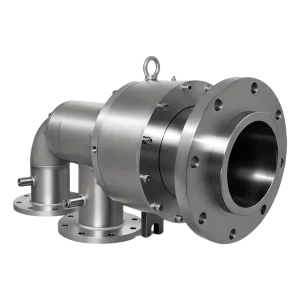
Application and Testing of High-Pressure Rotating Joints
View details