Construction machinery rotary joints
32Rotary Joint/Union, commonly referred to as "central rotary joint" or "central rotary joint" in the field of construction machinery, is...
View details rotary joints
Search the whole station
Mine rotary joint is a precision fluid dynamic sealing device designed specifically for mining machinery and heavy industrial equipment. Its core function is to achieve leak free continuous transmission of water, oil, gas and other media between fixed pipeline systems and rotating or swinging components. As a key component to ensure the efficient operation of mining equipment, it is widely used in heavy equipment such as tunneling machines, coal mining machines, drilling rigs, and conveyors for cooling, lubrication, hydraulic transmission, and slag discharge
Having been engaged in the mining hydraulic supporting industry for many years, I have visited hundreds of open-pit mines, underground coal mines, and sand and gravel aggregate factories, and found a common misconception:
The mine owner and equipment supervisor focus on the maintenance of excavators, electric shovels, roller presses, and drilling machines, but completely ignore the small and vulnerable component of the rotary joint. A million level mining host often experiences oil leakage and jamming of several hundred rotating joints, causing the entire production line to shut down for half a day, resulting in losses of tens of thousands of labor, ore, and machine shifts.
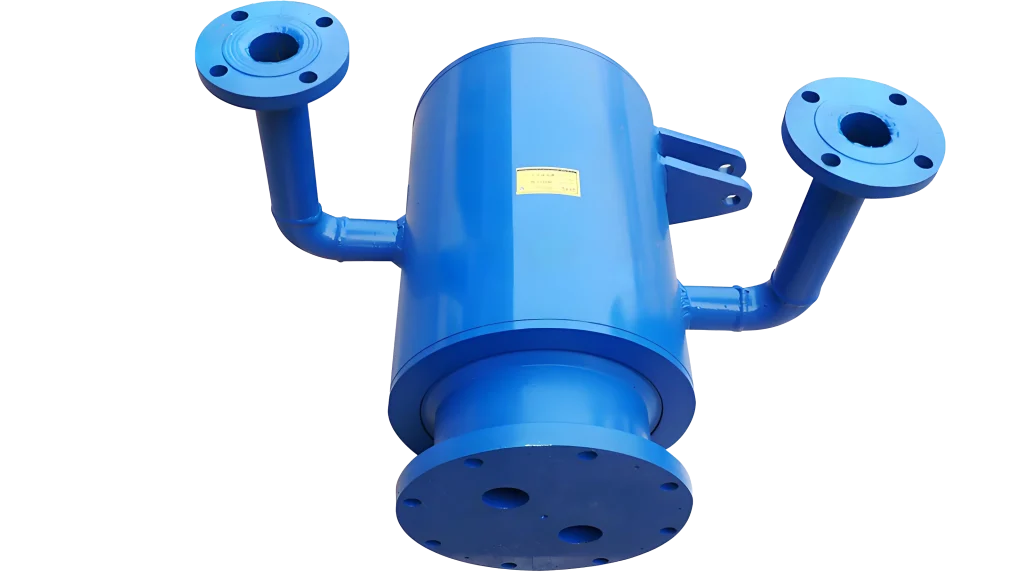
Many people think that rotary joints are just “an adapter” that can be easily used by purchasing a universal version. However, under extreme working conditions such as high dust, high-pressure impact, large temperature difference between day and night, and medium containing sediment and impurities, ordinary industrial joints cannot last for 1-3 months, while specialized mining equipment can operate stably for more than 1 year. Today’s complete disassembly of the selection, faults, maintenance, and pit avoidance of rotating joints in mining machinery is recommended for collection by mining equipment personnel.
1、 First, let’s understand: What are the core equipment used for mine rotary joints? What is its function?
The core function of a rotary joint (swivel joint) is to transport hydraulic oil, cooling water, high-pressure water, and compressed air between a fixed pipeline and a 360 ° rotating host without winding or leakage, solving problems such as pipeline twisting and medium transportation interruption. It is the “fluid hub” for all rotating mining equipment.
The mainstream adaptation scenarios for mines are divided into four categories:
Large mining equipment
Central rotary joint for open-pit electric shovel, mining excavator, and bucket wheel excavator: multi way high flow hydraulic transmission, capable of carrying 200-320bar high-pressure impact, driving walking, rotating, and pushing mechanisms. Once there is an oil leak, the entire machine will be powerless and the oil temperature will soar, making it impossible to mine ore normally.
Crushing and grinding equipment
Roller press, vertical mill, ball mill water-cooled rotary joint: circulating cooling water is used to cool down the grinding rollers. Under high temperature conditions, seal failure can cause water leakage into the lubricating oil tank, resulting in bearing locking and roller surface damage. The maintenance cycle can take up to 3-7 days.
Underground drilling/lifting equipment
Coal mine tunnel drilling rig and winch lifting rotary joint: transporting high-pressure flushing water and hydraulic oil. In high humidity, coal dust, and mud environments underground, ordinary seals are prone to rapid wear and tear, which can easily cause slipping and electrical short circuit safety hazards in the tunnel after water and liquid leakage.
Sand washing, screening, and transportation equipment
The rotating joints for single and double channel water in the washing drum, flipping bin, and sand and gravel separator are the primary cause of wear and tear due to long-term exposure to sand containing wastewater and impurities grinding the sealing surface.
Summary: As long as the equipment needs to continuously rotate and transport liquid/pressure oil, a rotary joint must be installed; Joint failure=Half paralysis of the entire machine.
2、 How harsh are mining conditions? Ordinary rotary joints cannot withstand it at all
Compared to the clean room temperature environment in the machine tool and packaging industries, mines belong to the “hell mode” of industrial working conditions, with four fatal loss points:
Ultra high pressure+frequent pressure shocks
The continuous working pressure of the mining hydraulic system is 16-32MPa, and the instantaneous impact pressure during shoveling and mining can reach 1.5 times the rated pressure. Ordinary rubber seals are deformed under pressure, and oil leakage and spraying may occur in the short term; Poor quality shell cracks directly.
Dust and sediment penetrate everywhere
Dust from open-pit mines, coal dust underground, and sand containing wastewater from ore washing, as well as small hard particles entering the sealing friction surface, can cause significant wear and tear on the sealing ring after continuous sanding with sandpaper. General carbon steel seals will show obvious wear grooves after 7 days.
The temperature difference span is extremely large
In winter, the temperature in northern mines is minus 30 ℃, and in summer, the oil temperature of outdoor exposure equipment exceeds 90 ℃; The sealing element undergoes repeated cycles of thermal expansion and contraction, while ordinary NBR rubber hardens and cracks, making fluororubber suitable for wide temperature conditions.
Continuous vibration, eccentric force
The heavy load impact of mining equipment causes high-frequency vibration, and the pulling of pipelines leads to the eccentricity of the joint rotation axis. After the coaxiality is offset, the sealing is subjected to unilateral force, resulting in rapid eccentric wear and leakage.
This is also the fundamental reason why the universal machine tool rotary joints on the market are generally “short-lived” in mines – the structure and materials have not been optimized for the harsh environment of mines.
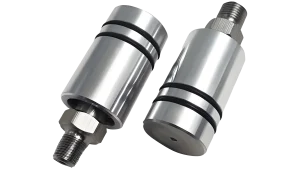
Rotary Joint/Union, commonly referred to as "central rotary joint" or "central rotary joint" in the field of construction machinery, is...
View details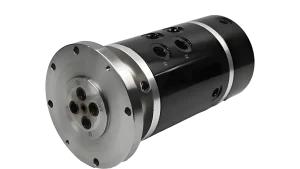
In the context of pursuing high efficiency, stability, and sustainability in industrial production, achieving "high pressure and wear resistance+doubled lifespan+40%...
View details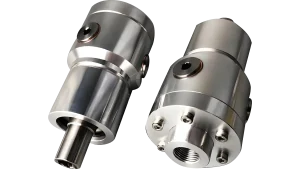
Pneumatic High Speed Rotary Joint is a fluid dynamic sealing device specifically used to transport compressed air or other gas...
View details
Stainless steel 304 high-speed and high-pressure rotary union is a key industrial sealing device used for continuous and sealed transmission...
View details