Pneumatic joint high-speed rotary joints
57Pneumatic High Speed Rotary Joint is a fluid dynamic sealing device specifically used to transport compressed air or other gas...
View details rotary joints
Search the whole station
In the context of pursuing high efficiency, stability, and sustainability in industrial production, achieving “high pressure and wear resistance+doubled lifespan+40% increase in production efficiency” for high-speed rotary joints is undoubtedly an attractive goal. This article will delve into the technical logic behind it, analyzing how these seemingly impossible leaps were achieved from material innovation, structural optimization to sealing technology upgrades.
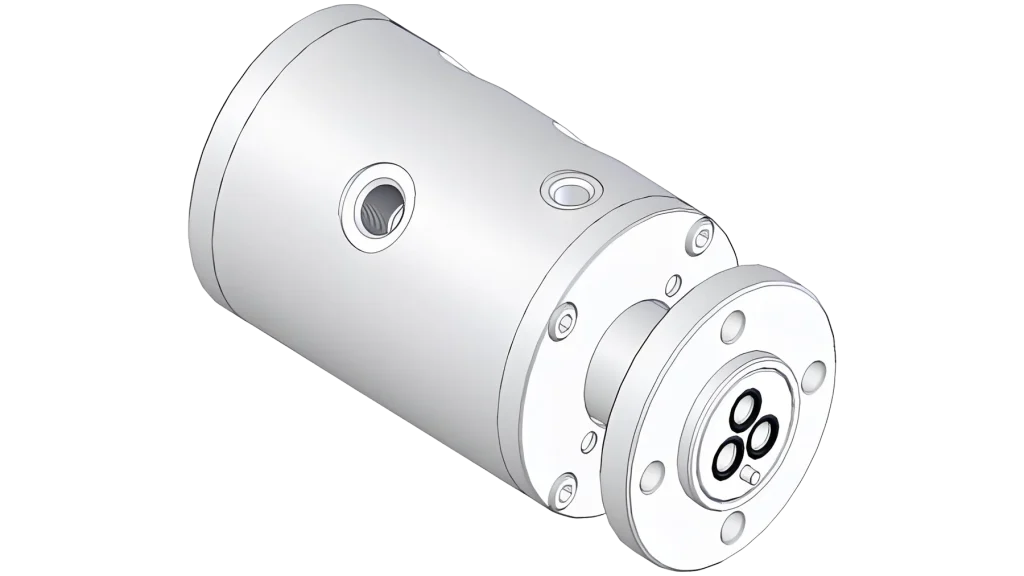
The traditional single sealed structure is like a fragile defense line in the face of high pressure, and even a slight fluctuation may be “penetrated” by the medium, causing leakage. The new rotary joint takes a different approach, adopting a double sealing surface design, as if putting a “double tightening spell” on the high-pressure medium. The main sealing surface is made of silicon carbide ceramic material, which has high hardness and strong wear resistance, comparable to the “diamond” in the sealing industry, and can maintain stability under high pressure erosion; The auxiliary sealing surface is matched with elastic sealing components, and the spring pressure compensation device is used to automatically adjust the fit of the sealing surface in real time. When the pressure increases, the spring is compressed and the elastic seal tightly adheres to the main sealing surface, ensuring the reliability of sealing under high pressure conditions and truly achieving “zero leakage”
The shell, as the “armor” of the rotary joint, bears enormous pressure caused by high pressure, which traditional materials are unable to handle. The new type of rotary joint uses high-strength alloy steel, such as 34CrNiMo6, which contains alloying elements such as chromium, nickel, and molybdenum. After quenching and tempering treatment, the hardness, strength, and toughness are greatly improved, and the compressive strength can easily adapt to high-pressure conditions of ≥ 35MPa, effectively avoiding deformation and cracking of the shell under high pressure. Bearings are the “joints” of rotary joints, and the radial forces under high pressure test them greatly. High voltage specialized precision bearings have emerged, which adopt special ball or roller designs, combined with high-precision machining processes, and have stronger load-bearing capacity. They can still maintain smooth rotation in high-pressure environments, reduce wear caused by frictional heat generation, and ensure stable operation of rotating joints.
The seal is in direct contact with the high-pressure medium, which is the key to preventing leakage. The seals made of high pressure resistant polyurethane or special rubber have excellent elasticity and anti-aging performance, forming a low friction pair with the graphite sealing surface, reducing the wear between the seals and rotating parts while ensuring the sealing effect, and greatly extending the sealing life; The rotating body undergoes special anti-corrosion treatment, such as electroplating, hot plating, chemical oxidation, etc., forming a dense protective film on the surface. It can not only resist the erosion of various corrosive media, but also reduce the wear of particles and impurities on the rotating body. From the material level, it comprehensively builds a wear-resistant and compressive defense line, making the rotating joint have a “diamond body that cannot be damaged”.
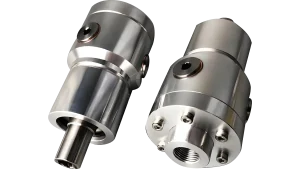
Pneumatic High Speed Rotary Joint is a fluid dynamic sealing device specifically used to transport compressed air or other gas...
View details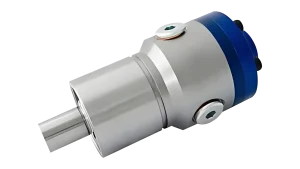
Stainless steel 304 high-speed and high-pressure rotary union is a key industrial sealing device used for continuous and sealed transmission...
View details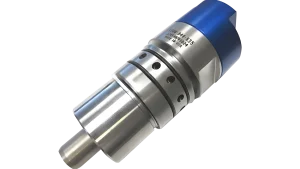
The 1108-844-835 rotary joint belongs to its precision fluid transmission series, designed specifically to meet the stable transmission of coolant...
View detailsPneumatic 304 stainless steel high-speed rotary joint is an industrial sealing device dedicated to transporting compressed air and other gas...
View details