High speed rotary joints for industry
127A rotary joint is a sealing device that connects stationary pipelines and rotating equipment, achieving leak free fluid transmission under...
View details rotary joints
Search the whole station
A rotary joint is a transitional sealing device that inputs fluid media from a static system to a dynamic rotating system. Sometimes referred to as a rotary joint or swivel joint, and vice versa. It is a connector that transports media between dynamic and static pipelines. The medium can be air, other gases, liquids, vapors, particles, and other substances. So, a rotary union is a precision sealed connection device used to transfer fluid media (liquids, gases, or vapors) between stationary pipelines and rotating equipment, achieving leak free transportation under 360 ° continuous rotation. Generally, it can be divided into high-pressure rotary joints, high-temperature rotary joints, high-speed rotary joints, water-cooled rotary joints, hydraulic rotary joints, pneumatic rotary joints, etc. Its figure can be seen in almost all processing and manufacturing industries.
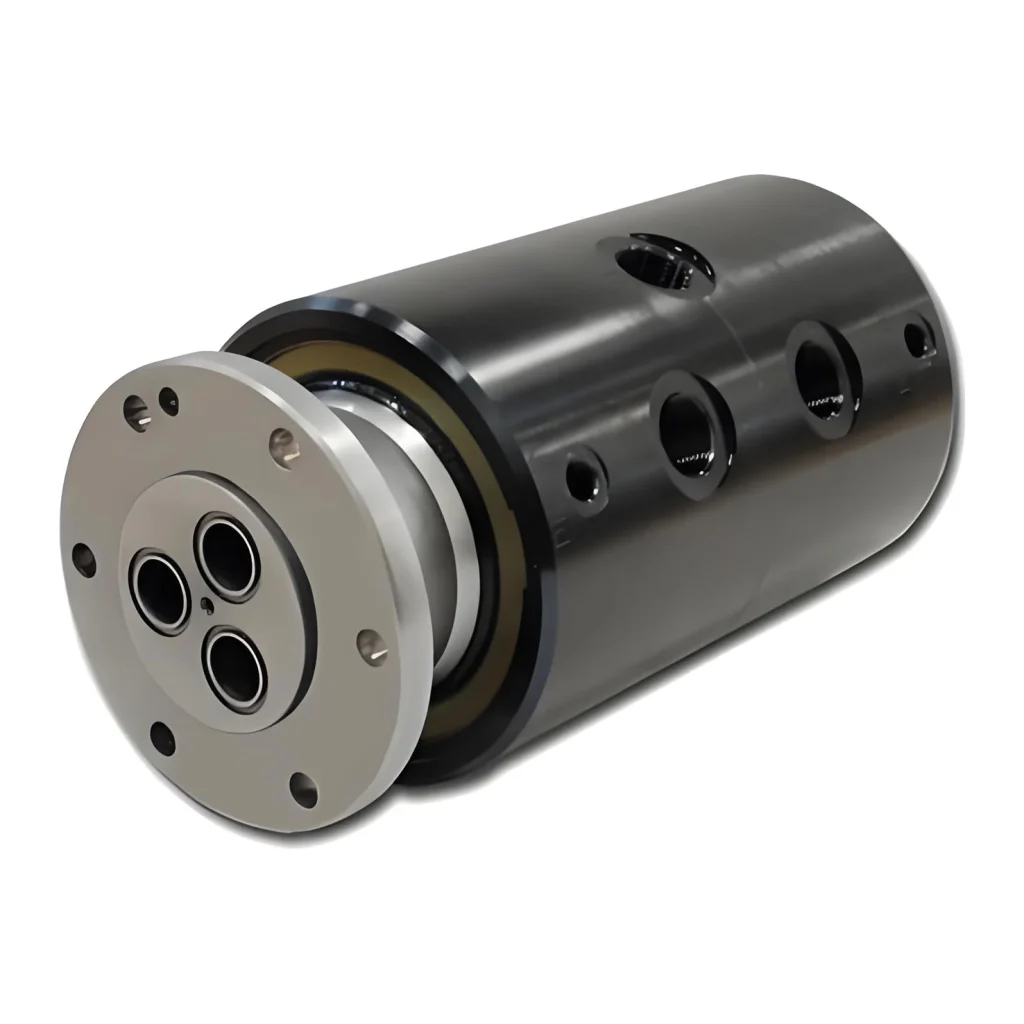
The principle of rotary joint:
The rotary joint consists of a fixed side flow path, a rotating side flow path, and a sealing element that seals these flow paths. The fixed side flow path is set on the rotating shaft
Rotary joints have been commercialized, with flow paths ranging from one port to over 20 ports, and the number of ports is set according to the amount of fluid used. Cooling rollers are commonly used in factories that process sheet products, typically using water as a refrigerant. In this case, a rotary joint with two ports is used, one for output and one for return. The shield machine used for tunnel excavation requires the supply of various fluids such as sludge, hydraulic oil, and lubricating grease, so a multi port rotary joint has been specially designed.
In addition, the material of the rotary joint used must be changed according to the temperature and corrosiveness of the fluid used. When transporting high-temperature fluids, products with high heat-resistant seals should be selected. When transporting highly corrosive fluids, rotating joints made of stainless steel or copper alloy materials should be selected.
core structure
Sealing system: using a combination of dynamic and static seals.
Q-type: The spherical ring (dynamic seal) forms a friction pair with the shell plane (static seal), and the spring provides continuous compensating pressure.
H-shaped: The spring pushes the H-shaped ring to seal with the hollow shaft end face, and the bearing supports rotational stability.
D-type: The bellows compensator directly seals the medium, reducing the risk of leakage.
Bearings and supports: Rolling bearings reduce friction and ensure high-speed operation.
Application of rotary joints:
Rotary joints can supply fluids such as water, air, oil, etc. to rotating bodies, and are therefore used to provide cooling, lubrication, and power sources for rotating bodies.
A typical example of cooling application is the cooling roller. A cooling roller is a roller that cools the surface of a sheet product by circulating a coolant such as water or oil inside the roller that transports the product, using a rotary joint to supply fluid.
In addition, in the steel industry, rotary joints are sometimes used to supply oil as a power source to cylinders connected to a rotating winding shaft.
A rotary joint is a sealing device that connects stationary pipelines and rotating equipment, achieving leak free fluid transmission under...
View details
There are many types and models of rotary joints specifically designed for steel mills. When purchasing, if you cannot choose...
View details
The flange connection of machine tool fixtures for high-temperature rotary joints, as a key component in industrial equipment, plays an...
View details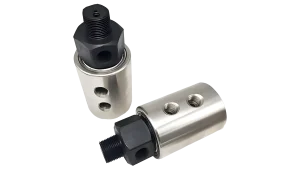
The 1790-0012-114 high-pressure high-speed rotary joint is a high-performance dual channel rotary joint designed for the transmission of air, hydraulic...
View details