what is Pneumatic multi-channel rotary joints
41The characteristics of pneumatic rotary joints: imported high-speed bearings are used internally to support the front and rear ends of...
View details rotary joints
Search the whole station
A rotary joint is a component capable of 360° rotation, boasting excellent sealing performance. It serves as a connector that facilitates the rotation of pipelines in situations involving tube or wire winding, and is used for transmitting compressed air, cooling water, hydraulic oil, heat transfer oil, and other fluid media. It is also referred to as a pneumatic rotary joint, hydraulic rotary joint, or conductive slip ring.
The rotating joint is characterized by including a dynamic joint, a static joint, and a clamping mechanism; The lower end of the dynamic joint is inserted into the static joint, and the contact surface between the two is a conical surface; The compression mechanism of the rotary joint includes a protective cover, an annular protective cover base, an adjusting bolt, a compression spring, and an upper spring seat; The shield is fixed to the annular shield base by bolts, and the annular flange at the top of the rotating joint static joint sits on the upper surface of the annular shield base, with ball bearings between the two; The compression spring of the rotary joint is seated on the lower spring seat located on the dynamic joint, and the adjusting bolt is pressed onto the top surface of the upper spring seat through the threaded hole on the upper wall of the protective cover; Both the rotating joint and the static joint are equipped with air ducts,
And their airways are connected, with internal threads at the lower end of the static joint.
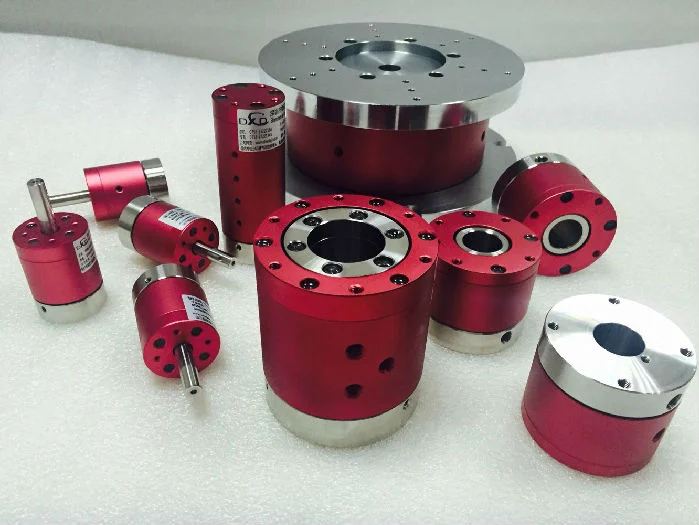
Features:
1. Supported by two large and precise imported bearings, it operates smoothly and stably, with no maintenance required for the bearings throughout their lifespan;
2. Imported specialized seals ensure long-lasting operation;
3. The stainless steel shaft core has undergone special treatment to ensure sufficient wear resistance;
4. The shell can be made of aluminum alloy, stainless steel, or copper;
5. Unique drainage hole reflux design prevents leakage to the outside and affects the environment;
6. All technical indicators meet those of similar foreign products;
7. Capable of tailoring the rotary joints required by customers;
Application areas: various automation industries, food industry, paper industry, CNC machine tool industry, printing industry, semiconductor industry, military industry
The food industry, plastic molding, and various other equipment industries
1. Paper making: Processing equipment for various types of paper, such as drying cylinders of paper machines, digesters, coating machines, calenders, etc.
2. Fiber products: textile, chemical fiber, and printing and dyeing, such as bed sheet refining and bleaching machine, mercerizing machine, flat washing machine, vacuum dryer, textile
Printing, dyeing, and drying equipment.
3. Rubber and Plastics: Calender, Screw Extruder, Mixing Mixer, Rotating and Laminating Machine, Drum Type Automatic Vulcanizer for Rubber
Chemical machinery and flat vulcanizing machines, etc.
4. Leather, artificial leather, and synthetic leather: coating machines, raw fabric machines, fine washing machines, hot roller presses, roller drying equipment, etc.
5. Printing: rotary offset and gravure printing machines, layered drying equipment, mixers, etc.
6. Chemical and pharmaceutical industry: cylindrical, frustum-shaped, and drum-like dryers, rolling test equipment, ball mills, laminators
The electrode lifting of the calcium carbide furnace.
7. Food: Grain, food drying equipment, kneading machine, discharge device, roller mill equipment, rotary drying equipment. service
Process: Technical experts participate in customer product design, providing customers with more reasonable technical solutions. Customize products according to customer requirements,
Ensure that we truly meet the diverse requirements of each customer, from design to simulation, manufacturing, and testing. The entire process is controllable, providing genuine satisfaction
The products required by customers Fine manufacturing management, effective control of product costs, and provision of value-added services to customers Efficient development
Design, continuously reduce manufacturing and logistics cycles, shorten delivery cycles, maintain close communication with customers, and continuously improve to meet their evolving needs
The enhanced requirements necessitate unique design processes and methodologies to ensure superior product performance and cost optimization.
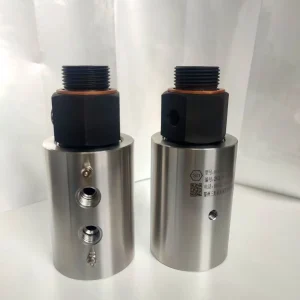
The characteristics of pneumatic rotary joints: imported high-speed bearings are used internally to support the front and rear ends of...
View details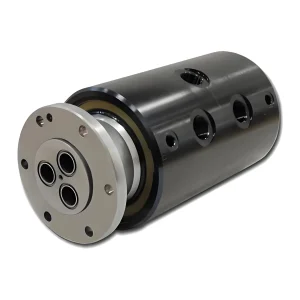
hydraulic rotary joint, high-pressure rotary joint, multi-path rotary joint, high-speed rotary joint, high-temperature rotary joint, single channel rotary joint, special...
View details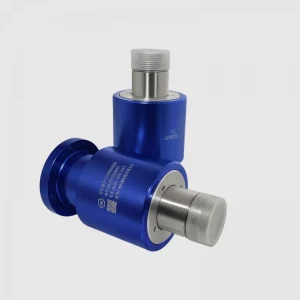
What are the commonly used classifications of rotary joints
View details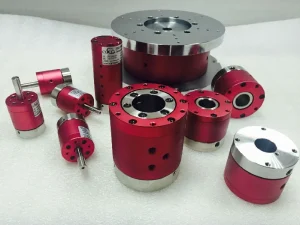
Slip ring products should be placed indoors in a dry place. At the same time, screws should be tightened during...
View details