DS-50 High Temperature Rotary Joints
40The DS50 high-temperature rotary joint is equipped with precision sealing and durable ball milled cast iron made of spherical graphite,...
View details rotary joints
Search the whole station
In industrial production lines, the stable operation of thermal oil systems relies on reliable rotary joints. Once a company encounters a rotary joint leakage fault, shutdown for maintenance can cause production capacity loss, skyrocketing maintenance costs, and even serious safety accidents.
Recently, SD after-sales engineers arrived at the user’s site to troubleshoot, inspect, and analyze some of the rotating joint problems that were shipped to the factory. Disassembling the rotary joint: After cleaning the inner cavity, inspecting the sealing components, and conducting non-destructive testing on the shell castings, it was determined that the leakage was mainly caused by two major sources.
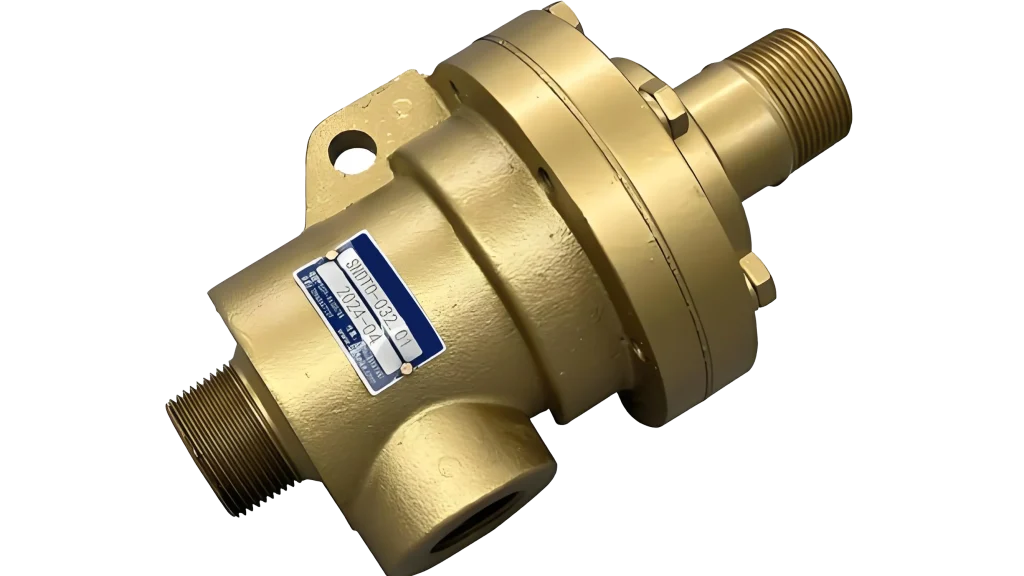
1: Water enters the inner cavity of the rotary joint, causing the casting to rust and produce hard rust residue
Under normal operating conditions, only high-temperature heat transfer oil flows through the rotary joint of heat transfer oil. If there is water leakage, coolant leakage, or water ingress during maintenance in the system, the water will enter the interior of the rotary joint and undergo oxidation reaction with the cast iron shell of the rotary joint to form rust. The detached rust residue belongs to hard solid impurities that remain in the rotating joint cavity. As the equipment continues to rotate, it continuously flushes and grinds the sealing surface of the dynamic and static rings. The smooth sealing surface is gradually pulled, and the flatness of the sealing surface is damaged. The initial trace oil leakage gradually develops into continuous leakage. Many companies initially overlooked the slight water immersion problem inside the rotary joint cavity, and by the time the rotary joint leaked in large quantities, the seals had already been damaged and could not be repaired.
2: A large amount of iron filings accumulate in the inner cavity, and the oil circuit is blocked, resulting in continuous wear and tear of the seal
The circulating flow of heat transfer oil may cause impurities to continue to accumulate in the circulation path, resulting in poor circulation of heat transfer oil. This not only reduces heat transfer efficiency, but also accumulates iron filings that continue to get stuck between the sealing friction pair and the graphite bearing and housing, continuously eroding the sealing components and exacerbating seal wear. The loss of compensating force in the spring leads to repeated leakage problems, even if a new seal is replaced, it will still recur in the short term, forming a vicious cycle.
After reviewing the after-sales cases, it is not difficult to find that the above-mentioned problems of water ingress, corrosion, and impurity blockage often stem from previous selection omissions and mixed media. Procurement and engineering personnel only focus on pressure and temperature parameters when selecting, ignoring medium compatibility requirements. The heat transfer oil rotary joint must be strictly matched with the operating medium, and mixing of media is strictly prohibited. If the heat transfer oil system is mixed with cooling water, emulsion or other media, the composition of the working medium changes, which not only accelerates the corrosion of the shell, but also generates various impurities, continuously impacting the sealing structure and causing batch failure of the rotary joints.
To reduce the leakage of thermal oil rotary joints,
Clear communication on the type, temperature, pressure, and speed of the medium during the initial selection process, and the use of specialized rotary joints suitable for heat transfer oil. Do not mix rotary joints for different medium operating conditions;
Regularly inspect the entire thermal oil pathway and identify potential hazards;
The DS50 high-temperature rotary joint is equipped with precision sealing and durable ball milled cast iron made of spherical graphite,...
View details
XHDS type high-temperature water rotary joint adopts a brand new appearance, mechanical seal combination, and durable ball milled cast iron...
View details
Choosing the right rotary equipment depends heavily on the operating environment. For instance, selecting the right seal material for thermal...
View details
EATON Airflex Rotorseals is a multi-channel fluid sealed joint designed specifically for rotating shaft ends, used to transfer pressurized gas...
View details