257-130-012 high-speed rotary joints
30257-130-012 is the specific model of the "257 series" high-speed rotary joint from the United States, designed specifically for high-speed...
View details rotary joints
Search the whole station
In the packaging and printing industry, rotary joints play a crucial role in connection and transmission. It can smoothly input liquids such as thermal oil and cooling water from stationary pipelines into printing equipment components that are in a rotating or reciprocating state, and then discharge these media from the rotary joint, perfectly serving as a sealing device for connection. For example, in common printing equipment such as single sheet offset printing machines, roll offset printing machines, and gravure printing machines, rotary joints are connected to rotating rollers and pipelines, which are in turn connected to heaters or cooling circuits, ensuring the smooth flow of the entire medium transmission path.
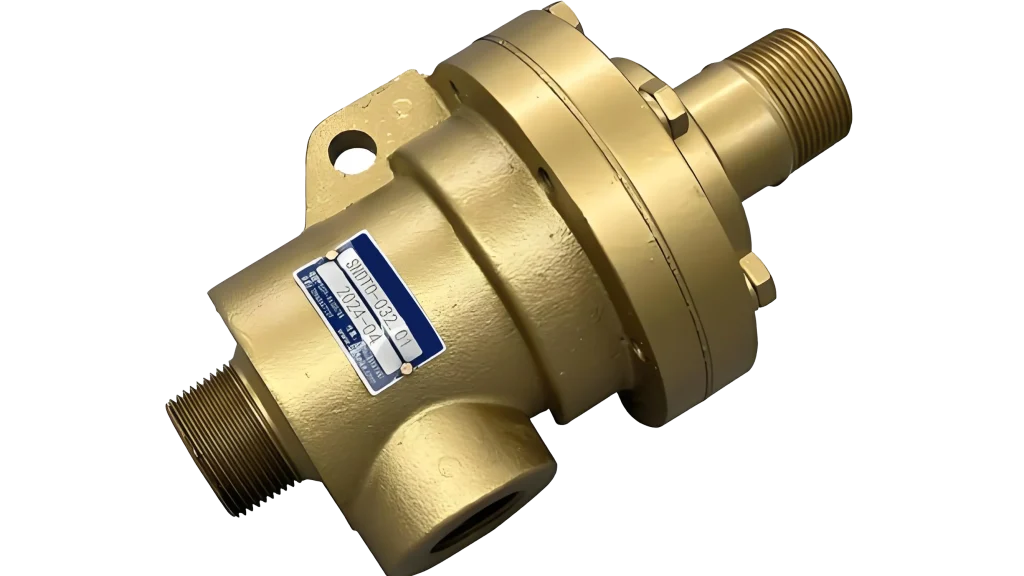
1、 Performance characteristics of rotary joints in the packaging and printing industry
(1) Sealing performance
The rotary joints in the packaging and printing industry have excellent sealing performance. It often adopts the principle of balanced sealing, for example, some rotary joints can make the pressure generated at both ends of the sealing ring almost equal, effectively reducing the wear of the sealing surface caused by the sealing load. The speed is fast and the stability is strong, which greatly extends the service life. The selection of sealing materials is also quite particular, such as the combination of fine ceramic materials and carbon sealing rings, or the use of friction pair seals composed of carbon graphite, silicon carbide, and tungsten carbide. The sealing surfaces and rings made of these special materials have the characteristics of wear resistance, corrosion resistance, and no leakage. At the same time, there are various elastic sealing rings with different cross-sections such as O-rings inside the rotary joint to seal the axial unsealed passage. Some elastic elements such as springs and bellows installed inside the rotary joint can adjust and compensate for the axial thermal expansion of the friction body and the wear of the friction pair end face and spherical surface, further ensuring good sealing under different working conditions, minimizing the occurrence of medium leakage, and meeting the needs of various equipment in the packaging and printing industry.
(2) Corrosion resistance and durability
The use of corrosion-resistant materials for the components of rotary joints is of great significance. Given the complexity of the working environment in the packaging and printing industry, which may come into contact with media of different properties such as water and thermal oil, the selection of corrosion-resistant materials can ensure that rotary joints are not easily corroded or damaged during long-term use. For example, the components of the RXE rotary joint are made of corrosion-resistant materials, which can be used in environments with corrosive media. Some parts such as the housing and rotor are made of 304 stainless steel, while others can be made of 316L stainless steel. Moreover, under harsh working conditions such as high speed and high pressure, with good structural design, such as using wide rolling bearings to support it, its operation is more flexible and stable. At the same time, it is matched with high-quality sealing structure to reduce friction loss between components, effectively extending the service life of the rotary joint as a whole, enabling it to serve the relevant equipment operation in the packaging and printing industry for a long time, reducing equipment maintenance costs and replacement frequency
2、 Precautions for using rotary joints in the packaging and printing industry
(1) Installation aspect
When handling and storing rotary joints in the packaging and printing industry, special attention should be paid to avoiding impact and falling to prevent damage to the interface and internal sealing structure, which may lead to problems such as concentricity, perpendicularity, equipment vibration, and deviation.
There are also many key points to pay attention to during the installation process. Firstly, it is important to ensure the concentricity between the rotating joint and the shaft head, which is a crucial prerequisite for its stable operation in the future. When performing threaded connections, it is necessary to carefully check whether the thread direction of the inner and outer pipes of the rotary joint is consistent with the rotation direction of the drum, and the thread rotation direction of the inner and outer pipes should also match. From the installation direction of the rotary joint, if the rotation direction of the roller, drum, etc. is clockwise, it corresponds to the left thread; If it is counterclockwise, it is a right thread.
In addition, flexible hoses should be used for the connection between the rotary joint and the pipeline. It is recommended to prioritize the use of metal hoses with good anti-interference properties and strictly prohibit the use of rigid connections. This can reduce the auxiliary weight of the rotary joint and extend its service life. Attention should also be paid to the size of the inner tube components. For inner tubes with a large self weight, auxiliary support should be provided. It is recommended to use H8/E7 tolerance fit between the joint of the inner tube and the inner tube rotating joint to ensure good operating conditions. Moreover, the support and anti rotation of the rotary joint should be accurate and error free. Usually, the diameter of the rod should be about 2 millimeters smaller than the rotary hole to ensure that the rotary joint can be freely adjusted and compensated.
(2) Maintenance aspect
In daily maintenance, it is necessary to keep the inside of the drum and the pipes connected to the rotary joint clean. Special attention should be paid to new equipment, and filters can be added if necessary to prevent the sealing surface of the rotary joint from being damaged by foreign objects. Due to the possibility of scaling and rusting inside the rotating joint caused by prolonged idle time of the machine, it is recommended to let the equipment idle for 2 hours every one to two months during the shutdown period. When reusing the machine, pay attention to whether there is any blockage or dripping.
At the same time, it is necessary to regularly use an oiler to inject lubricating grease into the rotary joint to ensure that the bearing can operate smoothly. For rotary joints with heat transfer oil or heat medium, the heating process should be stepped to avoid problems such as thermal expansion and contraction of rotary joint components caused by sudden temperature changes. When regularly inspecting equipment, pay attention to the wear and thickness changes of the sealing surface of the rotary joint. The normal wear range is generally around 5-10 millimeters. Carefully observe the friction trajectory of the sealing surface. If there are serious wear and abrasion phenomena such as three-point discontinuity or scratches, they should be replaced in a timely manner. In addition, after the seal wears out, simple replacement and repair can be carried out. For example, when replacing the main seal of the crane tube rotary joint, first close the pipeline or equipment connected to the rotary joint to ensure that there is no fluid flow. Then use appropriate tools to loosen the fixing screws or nuts on the rotary joint, and remove the protective cover or cover plate of the main seal.
257-130-012 is the specific model of the "257 series" high-speed rotary joint from the United States, designed specifically for high-speed...
View details
The high-temperature, high-pressure, and high-speed rotary joint for cooling water is a fluid sealed transmission device designed specifically for extreme...
View detailsH-type rotary joint, also known as cooling water rotary joint or water rotary joint, is a fluid transmission sealing device...
View details
Universal copper pipe joint is a metal connection device that combines mechanical transmission flexibility and fluid transmission sealing, mainly used...
View details