Stainless steel rotary joints for punch press clutch
34The stainless steel quick connector for punch press clutch is a key component used in pneumatic stamping equipment to connect...
View details rotary joints
Search the whole station
In order to enable a part of the pressurized fluid pipeline of the rotary joint to rotate around the axis relative to another concentric part, it is necessary to provide a joint between the two parts and a device for sealing the rotary joint. A device for achieving this connection under high pressure and high speed is to use a large-diameter shaft, which includes a joint and a sealing element that surrounds the rotating joint around the outer diameter of the shaft. However, it was found that such a device would cause a high relative surface velocity between a part of the shaft and the seal, thereby generating heat that would exceed the heat resistance range of the seal and cause it to be damaged. In addition, this form requires high driving torque to rotate one part of the shaft relative to another, a large cover to support high internal pressure, and a large bearing to support the enormous axial force of the shaft.
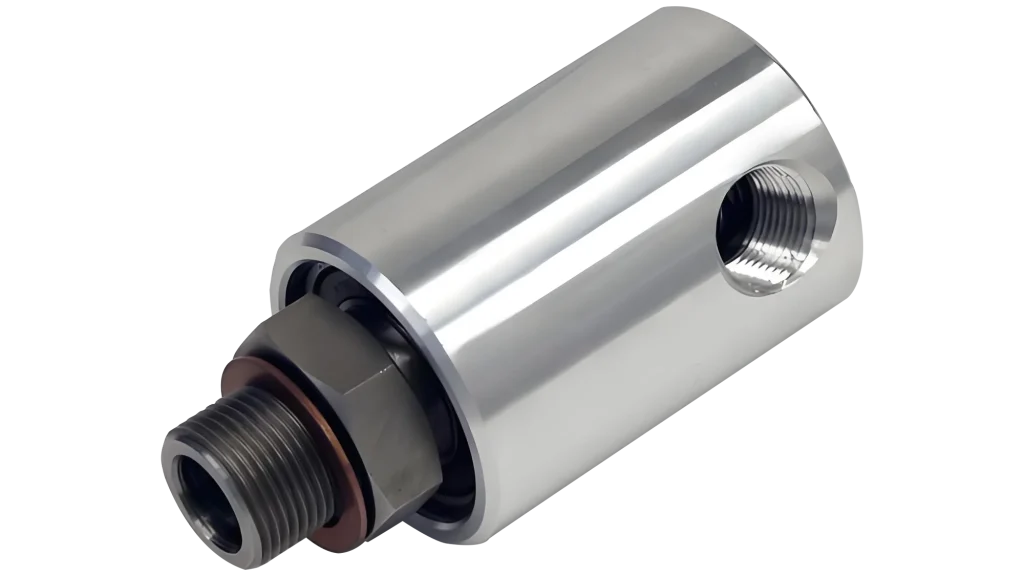
Choosing the right rotary joint is not just about matching shaft size or RPM. A high-speed rotary joint must transfer media reliably while rotating at elevated speeds, often in demanding production environments where leakage, vibration, heat, or premature wear can cause costly downtime.
Use the steps below to narrow your options and select a solution that fits your machine, process, and maintenance expectations.
Start with the media moving through the joint. Different applications may require air, water, coolant, hydraulic oil, steam, gas, or other process fluids. The media affects seal material, bearing design, internal passage geometry, and overall durability.
Before comparing products, document:
A high-speed rotary joint designed for clean air may not perform well with hot oil or abrasive coolant. Matching the joint to the media is the first step toward long service life.
Next, identify the actual rotational speed of the equipment. Do not choose based only on the average RPM. Consider the highest operating speed, acceleration, deceleration, and duty cycle.
For high-speed equipment, even small mismatches can increase heat, seal wear, and vibration. Ask the manufacturer for the joint’s rated RPM under your specific pressure, temperature, and media conditions. A rating that looks suitable on paper may change when multiple operating factors are combined.
If your process runs continuously, choose a high speed rotary joint built for sustained operation rather than intermittent performance.
Speed, pressure, and temperature should not be reviewed separately. Higher RPM can create heat. Higher pressure can increase seal load. Higher temperature can reduce material life. When these conditions overlap, the joint needs a design that can manage all of them at once.
Look for clear performance guidance and avoid selecting a joint at the extreme edge of its published limits. A reasonable safety margin helps reduce wear and improves reliability, especially in production settings where conditions may vary.
Seal design is one of the most important factors in a high-speed rotary joint. The right seal helps control leakage, friction, and heat generation.
Common selection considerations include:
Bearing quality also matters. At high speeds, bearings must support stable rotation and minimize vibration. Poor bearing alignment or undersized components can shorten the life of the entire assembly.
Review how the rotary joint will mount to the machine. High-speed connectors and fittings should be compatible with the joint, the piping layout, and the available installation space.
Pay attention to:
Improper installation can cause side loading, misalignment, and early failure, even if the joint itself is correctly specified.
High-speed operation leaves little room for imbalance. Confirm the acceptable shaft runout and alignment requirements before installation. Excessive vibration can damage seals, bearings, and connected equipment.
If the application involves very high RPM, ask whether the joint is dynamically balanced or designed for precision rotating equipment. This is especially important for spindles, test stands, printing equipment, packaging machinery, and other speed-sensitive systems.
The lowest-cost option is not always the most economical. A better high-speed rotary joint may reduce downtime, leakage, replacement frequency, and maintenance labor.
Compare options based on:
A reliable joint should support both performance and maintainability.
Before making a final selection, provide the supplier with your full operating conditions and ask for a recommendation. Share RPM, pressure, temperature, media, duty cycle, mounting details, and any space limitations.
The best choice is the high-speed rotary joint that meets your operating requirements with enough margin for real-world conditions. By reviewing media, speed, sealing, mounting, vibration, and maintenance needs upfront, you can select a rotary joint that supports safer operation, better uptime, and longer equipment life.
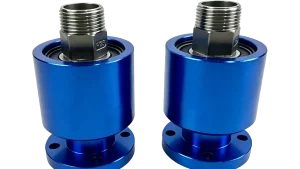
The stainless steel quick connector for punch press clutch is a key component used in pneumatic stamping equipment to connect...
View details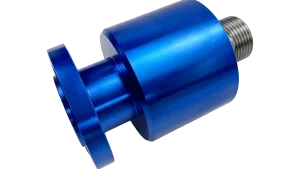
The clutch intake rotary joint for ball mills is a key fluid dynamic sealing device that connects a fixed gas...
View details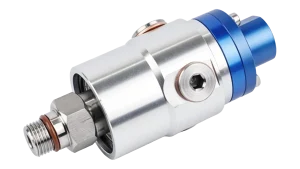
902-120-188 is a 902 series single channel high-speed rotary joint, specifically designed for machine tool spindle internal cooling or MQL...
View details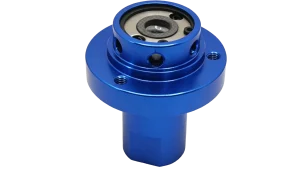
1101-202-651 rotary joint is a single channel "closed seal" rotary joint of the 1101 series, specially designed for conveying coolant...
View details