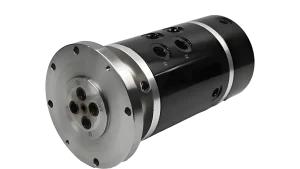
Reasons for leakage of rotary joints
In the context of pursuing high efficiency, stability, and sustainability in industrial production, achieving "high pressure and wear resistance+doubled lifespan+40% increase in production efficiency" for high-speed rotary joints is undoubtedly an attractive goal. This article will delve into the technical logic behind it, analyzing how these seemingly impossible leaps were achieved from material innovation, structural optimization to sealing technology upgrades
Read More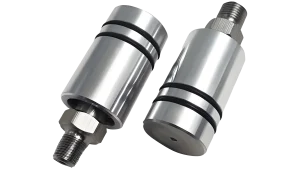
Construction machinery rotary joints
Rotary Joint/Union, commonly referred to as "central rotary joint" or "central rotary joint" in the field of construction machinery, is a critical pipeline connection device. Its core function is to transport fluid media (such as hydraulic oil, cooling water, steam, etc.) from fixed pipelines to rotating or swinging equipment components at a certain angle, achieving leak free sealed transmission under 360 ° continuous rotation
Read More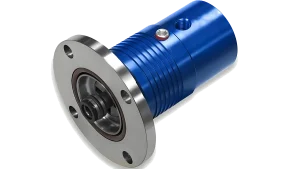
The use of central rotary joint in excavators
The central adapter plays a crucial role. Firstly, let's understand the working principle of an excavator: it consists of three parts: the upper rotating body (engine, cab, etc.), the lower walking body (walking part), and the working device
Read More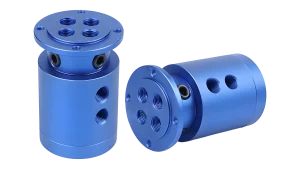
High temperature rotary joint with different media
When purchasing rotary joints, it is known that the specific applicable model needs to be determined based on the operating parameters. Especially for high-temperature rotary joints, the applicable models vary depending on the medium used! During the customer inquiry process
Read More
How to replace the graphite ring of high-temperature rotary joints
Follow the product manual of the rotary joint manufacturer to disassemble the rotary joint. First, take out the circular sealing ring, use a special tool to evenly rotate the pressure ring, and then take out the connecting plate. Loosen the hexagonal bolt of the joint crystallizer
Read More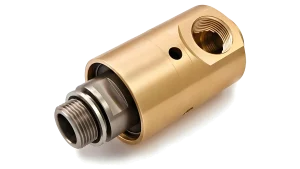
Structural principle of rotary joints
The structure of a rotary joint consists of three main parts, namely the rotating part, the resting part, and the sealing part. The rotating department is connected to the rotating chamber, and the resting department is connected to the resting chamber, with a complete fluid channel between these two departments
Read More
Correct usage method of rotary joints
Rotary joints are common sealing components in industrial equipment used for transferring fluids or gases. Proper use of rotary joints can extend their lifespan and ensure safe operation of equipment. Here are some key usage precautions
Read More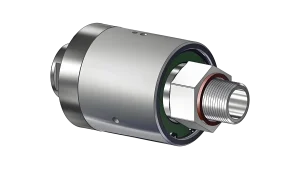
What is a special-shaped rotary joints?
What is a special-shaped rotary joint? It can be called a special-shaped rotary joint, also known as a special-shaped rotary joint, which is a rotary joint that has significant differences in appearance and function from the commonly seen rotary joints
Read More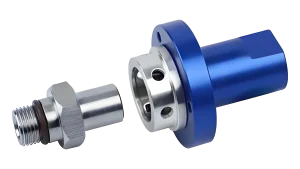
How to distinguish and select the connection threads of rotary joint
Due to different starting standards for rotary joints, the industry standards for selecting joints were not consistent at the beginning. Of course, due to the gradual standardization of industry equipment, many uncommon thread styles of rotary joints were cleaned
Read More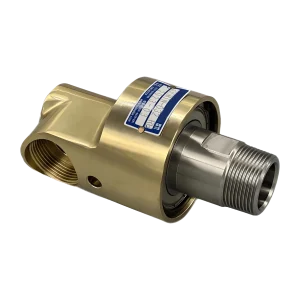
Optimization of rotary joint under high temperature/high pressure
n industries such as petrochemicals, metallurgy, and power, rotary joints are key equipment for achieving medium transmission between rotating components of equipment and fixed pipelines. They often need to operate under harsh conditions of high temperature and high pressure resistance
Read More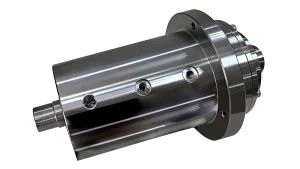
Special rotary joints for printing/injection molding machines
Rotary joints play a crucial role in the efficient operation of printing and injection molding machines. A high-quality specialized rotary joint that ensures smooth and unobstructed operation of equipment at high speeds, while achieving zero loss of ink and hydraulic systems, greatly improving production efficiency and product quality
Read More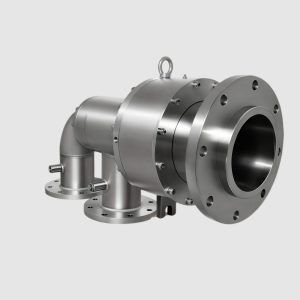
Large caliber rotary joints
n the vast system of modern industry, heavy equipment is the main force of production, and its efficient and stable operation is crucial. The large-diameter rotary joint, as a key component connecting stationary pipelines and rotating equipment, is quietly playing the core role of a "fluid hub", providing indispensable support for the smooth operation of heavy equipment
Read More