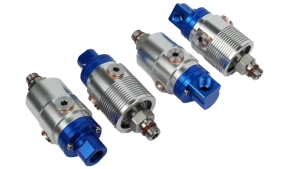
Textile machinery rotary joints
Textile Machinery Rotary Joint: A 'Dynamic Bridge' for Steam and Hot Water Transmission
Read More
Selection of rotary joint
Early rotary joints had relatively limited functions, mainly relying on a single pathway and only capable of transmitting one medium. Their application scenarios were also relatively limited
Read More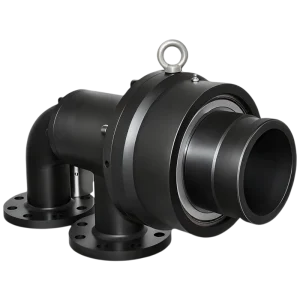
Reason for leakage fault of rotary joints
rotary joints are widely used in many industrial fields such as lithium batteries, semiconductors, photovoltaics, new energy, machine tools, rubber and plastic, papermaking, chemical engineering, steel, textiles
Read More
Application of BC type rotary joints in solvent-free laminating machine
In modern industrial production, solvent-free laminating machines play a crucial role and are widely used in industries such as packaging and printing. As one of the key components of solvent-free composite machines, the performance of BC type rotary joints directly affects the operating efficiency and product quality of the equipment. Today, let's delve into the application of BC type rotary joints in solvent-free composite machines.
Read More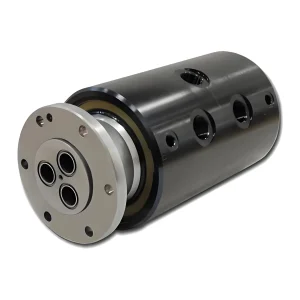
How to solve the oil leakage of the thermal oil rotary joints?
impurities in thermal oil are one of the main causes of oil leakage in rotary joints. Therefore, before solving the problem of oil leakage in the rotary joint, it is necessary to first clean the heat transfer oil and the rotary joint. The specific method is as follows
Read More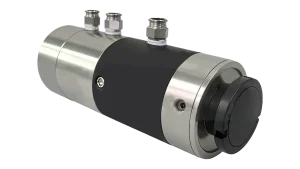
Installation sequence of rotary joint
The rotary joint should be installed correctly according to the installation and use instructions, otherwise its sealing performance and service life will not be fully utilized.
Read More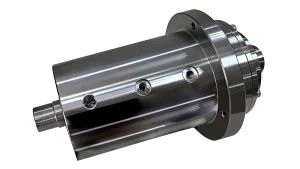
Types of rotary joint
The threaded end connected metal hose joint is an extension product of JB/GQ0552-83 metal joint; The metal joint is made of zinc alloy material by die-casting, and the surface is galvanized, sandblasted, or chrome plated; Tight structure, no pores, high strength. Reliable connection with metal hoses, with a beautiful and elegant appearance
Read More
Dismantling and maintenance methods for rotary joint
it is necessary to install, disassemble, and maintain it according to the correct method to ensure that the joint can operate normally and extend its service life. The scope of application of rotary joints varies and should be selected according to actual needs
Read More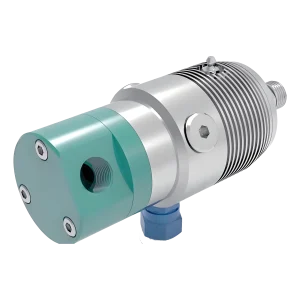
Wear characteristics of high-speed rotary joint
The materials used to manufacture high-speed rotary joints are quite special. Firstly, they must be resistant to high temperatures and friction, as high-speed rotation wears out quickly and friction generates heat
Read More
Reasons for steam rotary joints leakage
One reason for steam rotary joint leakage is the spring and column ring.
Read More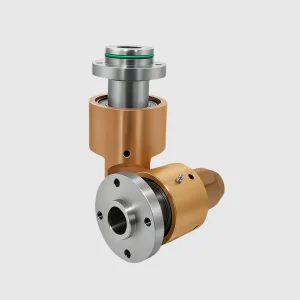
The purpose of rotary joint seal
The purpose of the seal in the rotary joint is to seal the connection and allow one of the two pipeline sections to rotate relative to the other. At the same time, in order to reduce the pressure drop across the connection. Therefore, it is best to place the rotary joint seal in the enlarged axial portion of the entire fluid bearing channel formed by the pipeline section
Read More
The application of rotary joint in the steel industry
Application scenarios of rotary joints: cold rolling mills, hot rolling mills, hot rolling mills, steel mills, etc. printing industry
Read More