
Construction machinery rotary joints
Construction machinery rotary joint, Construction machinery rotary joints, Construction machinery rotary union, Construction machinery rotary unions, Construction machinery swivel joint, Construction machinery rotary unions, Construction machinery swivel union, Construction machinery rotary unions, Construction machinery swivel unions
construction machinery rotary joints
Rotary joints are small compared with booms, drums, tracks, and attachments, but they play a major role in keeping mobile equipment moving safely and efficiently. In construction machinery, they allow fluids, air, grease, or electrical signals to pass between stationary and rotating parts without twisting hoses or cables. Understanding how construction machinery rotary joints work helps equipment owners, maintenance teams, and buyers choose better components and prevent avoidable downtime.
What do rotary joints do in construction machinery?
Rotary joints create a sealed passage between a fixed supply line and a rotating component. That means hydraulic oil, coolant, compressed air, lubricant, or other media can move continuously while the machine part turns, swings, indexes, or slews. Without a rotary joint, hoses would quickly kink, wrap, fatigue, or fail whenever movement repeats through a large rotation range.
On construction sites, this function is especially important because equipment rarely works in clean, gentle conditions. Excavators swing under load, cranes rotate with heavy structures, concrete machinery cycles repeatedly, and drilling equipment operates with vibration, shock, and abrasive contamination nearby. A reliable rotary joint helps the machine keep delivering power or media where it is needed, even when movement is constant.
The practical benefit is simple: better routing, fewer stressed lines, and more controlled motion. When rotary joints are correctly selected and maintained, they support smoother operation and reduce the chance that a basic fluid transfer point becomes a weak link in the machine.
The role of rotary joints in demanding jobsite conditions
Construction equipment faces a mix of forces that can be hard on precision components. Mud, dust, water, vibration, uneven loads, and temperature changes all add stress. A rotary joint must seal effectively while allowing rotation, which makes the design more demanding than a standard fitting or hose connection.
In many machines, rotary joints support hydraulic power transmission. Hydraulic systems rely on pressure and flow to move cylinders, motors, brakes, steering systems, and work tools. If the rotary joint leaks internally or externally, the machine may lose efficiency, respond slowly, generate heat, or create a safety and housekeeping problem around the equipment.
Rotary joints may also support lubrication, cooling, or pneumatic functions. Some applications require multiple passages in a single unit so different media can move independently through the same rotating interface. In more advanced systems, electrical slip rings or signal paths may be paired with fluid passages to support sensors, controls, or attachments.
Rotary Joint/Union, commonly referred to as “central rotary joint” or “central rotary joint” in the field of construction machinery, is a critical pipeline connection device. Its core function is to transport fluid media (such as hydraulic oil, cooling water, steam, etc.) from fixed pipelines to rotating or swinging equipment components at a certain angle, achieving leak free sealed transmission under 360 ° continuous rotation
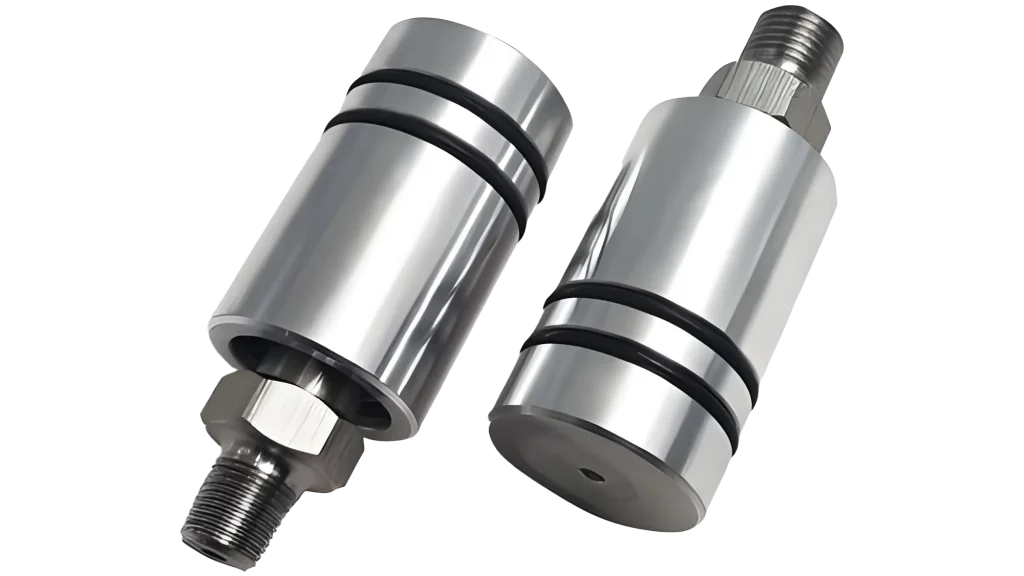
The working environment of construction machinery is extremely challenging and a rigorous test of the performance of rotary joints. Under high temperature conditions, the continuous high load operation of the equipment causes the hydraulic system oil temperature to rise sharply. Coupled with outdoor exposure in summer, metallurgical construction and other environmental temperatures, the internal temperature of the equipment can exceed 200 ℃. Traditional ordinary rotary joints often use ordinary rubber seals and conventional metal materials, which are prone to problems such as aging and deformation of seals, material thermal expansion and contraction imbalance, medium leakage, and transmission jamming, directly leading to power transmission interruption and equipment shutdown faults. In mining, earthwork construction and other scenarios, dust particles, sand and gravel impurities will continue to invade the joint rotation gap. The continuous friction and impact generated by high-frequency rotation and high-pressure transmission of equipment will accelerate component wear, causing larger gaps and pressure loss, greatly shortening the service life of the transmission system. Frequent maintenance and replacement not only increases operation and maintenance costs, but also seriously delays construction progress. Therefore, a rotary joint with excellent high temperature resistance and wear resistance is a core requirement for the stable operation of engineering machinery transmission systems.
Hard core materials and precision structural design are the core supports for rotary joints to achieve dual performance of high temperature resistance and wear resistance. In terms of material selection, high-performance engineering machinery rotary joints abandon traditional ordinary steel and rubber fittings, and use alloy materials such as 304 stainless steel and high-strength carbon steel for the main body, which have high strength, impact resistance, and deformation resistance characteristics, fundamentally improving structural stability and wear-resistant substrates. The core sealing friction pair adopts high-end wear-resistant and heat-resistant materials such as ceramic sealing surfaces and silicon carbide, combined with composite sealing structures such as double-layer graphite sealing rings, completely solving the shortcomings of traditional rubber seals in high temperature resistance and easy wear. It can not only adapt to stable operation in a wide temperature range of -40 ℃ to 200 ℃, but also withstand extreme high temperatures of 600 ℃ in special customized models, effectively preventing sealing failure and medium leakage problems in high temperature environments.
Relying on its ultimate temperature and wear resistance as well as stable transmission performance, high-performance rotary joints can fully adapt to the operational needs of various construction machinery in all scenarios. In the field of mining machinery, facing harsh working conditions such as high dust, high wear, and continuous operation, its super strong wear resistance can resist impurity erosion and high-frequency friction loss, ensuring long-term uninterrupted operation of equipment such as excavators and tunneling machines; In infrastructure lifting scenarios, cranes and rotary drilling rigs frequently rotate and are driven by high pressure. The rotating joints can stably withstand high pressure impacts and temperature fluctuations, eliminating power leakage and transmission failure problems; In metallurgical and high-temperature construction scenarios, excellent high-temperature resistance can withstand continuous high-temperature baking, avoid component thermal aging and failure, and ensure the continuous and stable operation of equipment. Compared to traditional joints that are prone to damage and require frequent replacement, high-performance rotary joints, with their long-lasting durability, significantly reduce the frequency of equipment downtime and maintenance, lower the cost of parts replacement and manual operation and maintenance, and effectively improve the continuity and comprehensive efficiency of construction machinery operations.
The reliability of the transmission system is the core cornerstone of efficient operation of construction machinery, and the temperature and wear resistance of the rotary joint directly determines the stability and service life of the transmission system. With the upgrading of construction machinery towards large-scale, heavy-duty, intelligent, and long-term direction, the industry has put forward higher requirements for the adaptability, durability, and stability of transmission core components. High temperature resistant and wear-resistant high-performance rotary joints, through material innovation, structural optimization, and process upgrades, accurately overcome various transmission difficulties under harsh working conditions, and create an integrated transmission solution for construction machinery with high stability, low loss, and long service life.