
Reasons for leakage of rotary joints
five Reason for leakage of rotary joint, five Reason for leakage of rotary joints, five Reason for leakage of rotary union, five Reason for leakage of rotary unions, five Reason for leakage of swivel joint, five Reason for leakage of swivel joints, five Reason for leakage of swivel union, five Reason for leakage of swivel unions
In the context of pursuing high efficiency, stability, and sustainability in industrial production, achieving “high pressure and wear resistance+doubled lifespan+40% increase in production efficiency” for high-speed rotary joints is undoubtedly an attractive goal. This article will delve into the technical logic behind it, analyzing how these seemingly impossible leaps were achieved from material innovation, structural optimization to sealing technology upgrades.
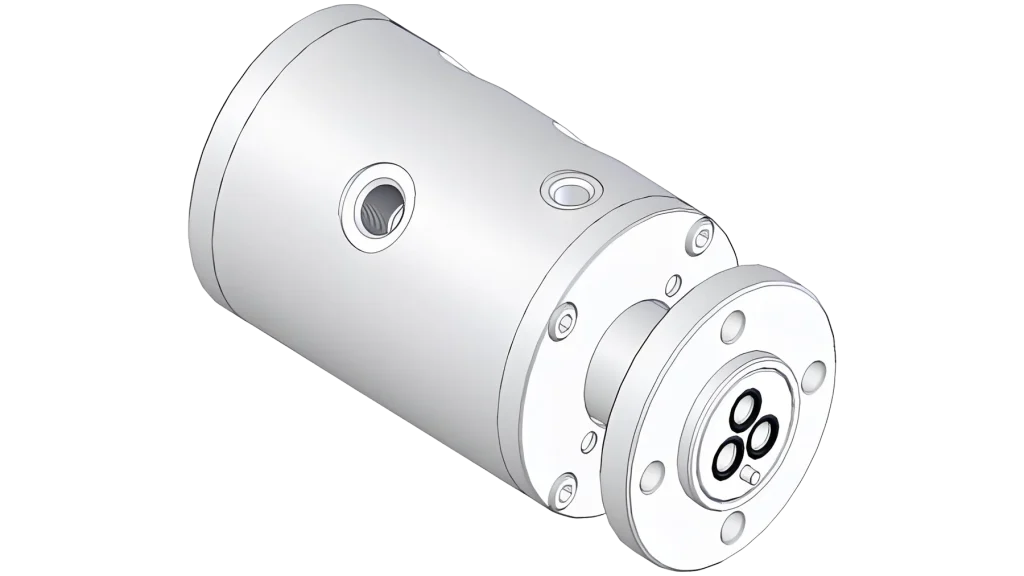
Common causes of leakage in rotary joints
The most common causes of leakage are related to seal damage, incorrect mounting, and operating conditions that exceed the joint’s design limits. A good inspection should look at both the joint itself and the system connected to it. The following issues are the ones maintenance teams should check first.
Worn or damaged seals
Seals are the main protection against leakage. Over time, friction, heat, pressure, and chemical exposure can wear down the seal faces. Once the surface becomes scratched, cracked, uneven, or hardened, fluid can pass through the sealing area.
Seal wear is expected in any rotating application, but premature seal failure usually points to a deeper problem. Dry running, poor lubrication, contaminated media, or excessive temperature can shorten seal life. If seals are replaced repeatedly but leakage returns quickly, the root cause is probably in the operating conditions rather than the seal alone.
Misalignment during installation
Misalignment is one of the most preventable reasons for leakage. A rotary joint must be installed so that it runs smoothly with the rotating shaft or machine connection. If the joint is forced into position, connected with rigid piping, or mounted at an angle, uneven stress is placed on the sealing surfaces.
This stress can create vibration, heat, and abnormal wear. In some cases, leakage appears soon after installation because the seal face has not been allowed to run squarely. Flexible hoses, proper supports, and careful alignment can greatly reduce this risk.
Excessive pressure or temperature
Every rotary joint has working limits. If system pressure or temperature rises beyond those limits, the internal parts may deform, the seals may lose contact, or the medium may escape through the weakest point. Steam and hot oil applications are especially sensitive because heat can affect seal materials and bearing life.
Pressure spikes are also important. A system may appear to operate within the normal range, but sudden surges can damage seals quickly. Checking gauges, relief valves, and process controls can help confirm whether the joint is being exposed to conditions it was not designed to handle.
Contamination in the medium
Particles, rust, scale, sludge, or other contaminants can damage seal faces. Even small abrasive particles can create grooves that become leakage paths. This is common in water, coolant, and steam systems where poor filtration or pipe scale is present.
Contamination can also block internal passages and interfere with lubrication. When this happens, the joint may run hotter than expected, which speeds up wear. Installing filters, flushing lines before startup, and keeping the medium clean are practical ways to protect the joint.
How can you identify the real reason for leakage?
You can identify the real Reason for leakage of rotary joints by observing when the leak occurs, where it appears, and what changed before it started. A leak during startup may suggest installation or pressure shock, while leakage after long service may point to normal wear. Leakage that returns soon after replacement usually means the system conditions need closer investigation.
Use a simple checklist during inspection:
- Check whether the joint is correctly aligned with the rotating equipment.
- Look for visible seal wear, cracks, scoring, or discoloration.
- Confirm that pressure, speed, and temperature are within the joint’s rated range.
- Inspect hoses and piping for strain, poor support, or rigid connections.
- Review whether the medium contains dirt, scale, or abrasive particles.
- Listen for unusual vibration, noise, or bearing roughness.
- Check if leakage started after maintenance, process changes, or new operating settings.
This approach helps avoid guesswork. Instead of replacing parts blindly, the team can connect the symptom to the most likely cause and take corrective action.