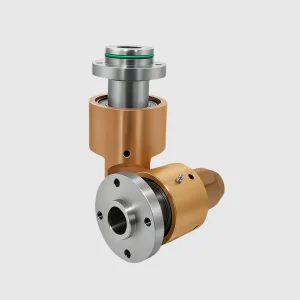
Characteristics of rotary joint
A rotary joint is a component that can rotate 360 ° and has good sealing performance. It is a device that can solve problems such as pipe winding, wire winding, etc
Read More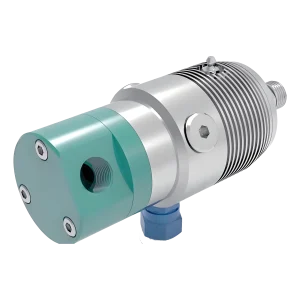
Precautions for installing rotary joint
Please remove foreign objects from the pipes, rollers, and other flow channels to prevent them from entering the sealing surface. New machines often have abnormal damage to the rotating joints due to unclean interiors (cylinder ring jamming, spherical ring pulling). In addition
Read More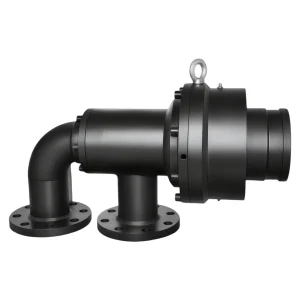
Selection and selection steps for rotary joints forms
The working principle of rotary joints is a topic of interest to many customers, and different specifications and models of rotary joints have different working principles. Before using rotary joints, we should learn more about them in order to facilitate our design. Below, we will visually explain the working principle of the rotary joint based on its circulation method in the form of graphics and text.
Read More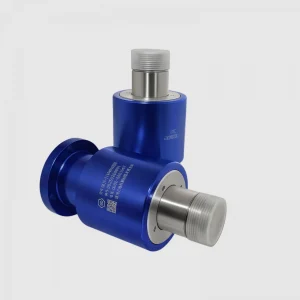
The difference between pneumatic rotary joints and hydraulic rotary joint
The sealing surface and sealing ring are made of special materials, which are wear-resistant, long-lasting, corrosion-resistant, and leak free. By visually inspecting the appearance of the product, the wear of the internal seal can be observed, preventing mechanical shutdown or damage, achieving a preventive effect and reducing losses
Read More
Installation method of high-speed rotary joints
Install the machine as concentric as possible to ensure the good operation of the rotary joint.
Read More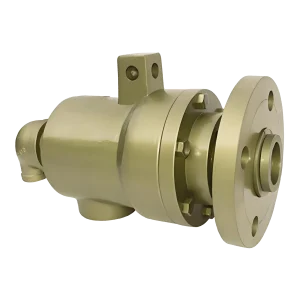
How to maintain high-speed rotary joint
High speed rotary joint is a type of rotary joint. The name indicates the purpose of high-speed rotary joints. Yes, high-speed rotary joints are used for high-speed interface transmission media
Read More
Application fields of pneumatic rotary joint
industries such as metallurgical machinery, papermaking machinery, and construction machinery. This product is a transitional connection sealing device that inputs gas medium from a static system to a dynamic rotating system
Read More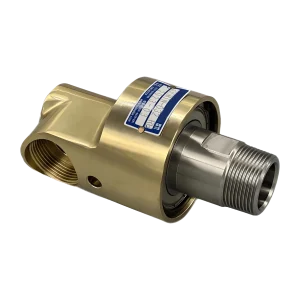
Characteristics of hydraulic rotary joint
The hydraulic rotary joint has a compact structure and small volume, Hydraulic rotary joints have a wide range of applications. Due to the choice of sealing material and the forward position, bearings and other parts are not in contact with the fluid medium, preventing corrosion. Therefore, they can be used in any fluid (gas, water, oil, etc.)
Read More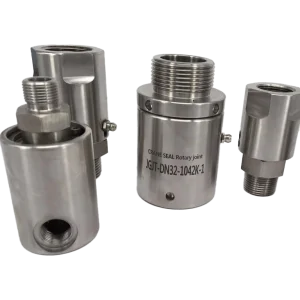
How to reduce the torque of pneumatic rotary joint
The main transmission medium of pneumatic rotary joints is gas, consisting of joints, solenoid valves, cylinders, and vacuum equipment. It has the characteristics of small size, light weight, and low friction torque, making the seal more stable and reliable
Read More
Working principle and maintenance of hydraulic rotary joints
Hydraulic rotary joints usually have three oil ports connected to workshop pipelines. For example, if the inner diameter of the core shaft is smaller than the diameter of the housing, its gap is equivalent to the gap between the cylinder barrel and the piston of a typical hydraulic cylinder
Read More
The key to choosing a high-temperature rotary joints lies in its material
The key to choosing a high-temperature rotary joint lies in its material
Read More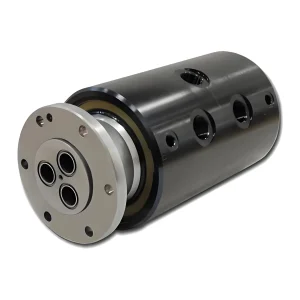
Reasons and solutions for periodic leakage of rotary joint
Reasons and solutions for periodic leakage of rotary joints
Read More