
Characteristics of hydraulic rotary joint
Characteristics of hydraulic rotary joints
Hydraulic rotary joint is an important fluid transmission component widely used in situations where medium transmission between relatively rotating components is required. They ensure continuous flow of fluids (such as oil, water, or air) during rotation without leakage.
Internal structure of hydraulic rotary joint
The internal structure of the hydraulic rotary joint adopts advanced design, including the following main components: main structure, sealing structure, transmission structure, and accessories.
The main structure is the main supporting part of the hydraulic rotary joint, usually made of high-quality alloy steel materials. It has sufficient strength and stiffness to withstand high pressure and torque in hydraulic systems. There are also some key machining holes and grooves on the main structure, which are used to connect other components such as the sealing structure and transmission structure.
The sealing structure is a very important part of hydraulic rotary joints, which ensures that the connection does not leak liquid medium and can withstand high pressure and temperature. Common sealing structures include O-ring seals, piston rings, and gaskets. These sealing components are usually made of wear-resistant and corrosion-resistant materials to ensure their long-term service life and reliability.
The transmission structure is the part of a hydraulic rotary joint used to transmit rotational power, usually in the form of gears or hydraulic motors. The gear transmission structure has the advantages of simple structure and high transmission efficiency, and is suitable for most applications of hydraulic rotary joints. The hydraulic motor transmission structure has the characteristics of a wide range of rotational speeds and smooth rotation, and is more suitable for specific working conditions.
The accessory components are auxiliary parts in hydraulic rotary joints, mainly including lubrication system and cooling system. The lubrication system reduces wear and extends service life by providing lubricating oil to key parts inside the joint. The cooling system can reduce the working temperature of hydraulic rotary joints in high-temperature environments by circulating coolant, ensuring their normal and stable operation.
Working principle of hydraulic rotary joint
The working principle of hydraulic rotary joint is to drive the rotational motion of the rotary joint through the hydraulic pressure in the hydraulic system. When the hydraulic oil in the hydraulic system enters the interior of the hydraulic rotary joint through the oil inlet hole on the main structure, it is supported and sealed by the sealing structure, and finally transmits power through the transmission structure to drive the rotation of the joint. Through the internal structure and channels of hydraulic rotary joints, liquid media can be transmitted and supplied continuously during rotation.
To sum up, hydraulic rotary joints play a crucial role in hydraulic systems, with a well-designed and fully functional internal structure, including the main structure, sealing structure, transmission structure, and accessories. The hydraulic rotary joint can achieve the transmission and supply of liquid medium by driving the rotational motion of the joint through hydraulic pressure. When using hydraulic rotary joints, it is necessary to pay attention to maintaining the cleanliness of their internal structure and good sealing performance to ensure their normal operation and extend their service life.
1. The hydraulic rotary joint has a compact structure and small volume;
2. Hydraulic rotary joints have a wide range of applications. Due to the choice of sealing material and the forward position, bearings and other parts are not in contact with the fluid medium, preventing corrosion. Therefore, they can be used in any fluid (gas, water, oil, etc.);
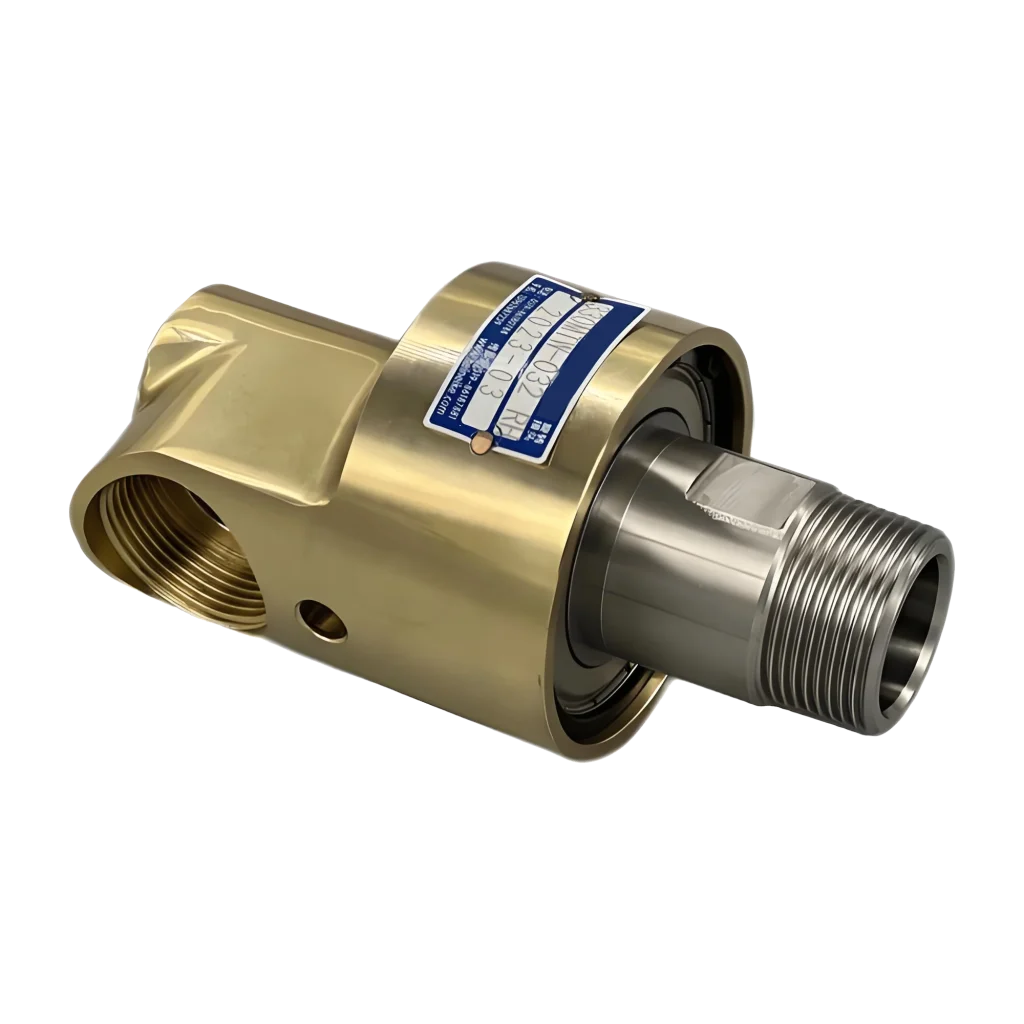
3. Flexible rotation, the hydraulic rotary joint adopts a combination of self-lubricating sliding bearings and flat rolling bearings, effectively solving the friction and thrust of the parts after compression;
4. Reliable sealing, the hydraulic rotary joint adopts a combination seal, suitable for both high (40MPa) and low pressure, with low sealing friction coefficient, good strength, and long service life;
5. The connection method is not limited and can be processed into pipe joints of any connection method and diameter;
6. Hydraulic rotary joint has high rotational speed: it can achieve relative motion speed within 5M/S of the seal.