
Characteristics of rotary joint
Characteristics of rotary joints, What is a rotary joint, What is rotary joints, What is a rotary union, What is rotary unions, What is a swivel joint, What is swivel joints, What is a swivel union, What is swivel unions
A rotary joint is a component that can rotate 360 ° and has good sealing performance. It is a device that can solve problems such as pipe winding, wire winding, etc. It is used to transmit fluid media such as compressed air, cooling water, hydraulic oil, and heat transfer oil in pipelines. Also known as pneumatic rotary joint, hydraulic rotary joint, conductive slip ring.
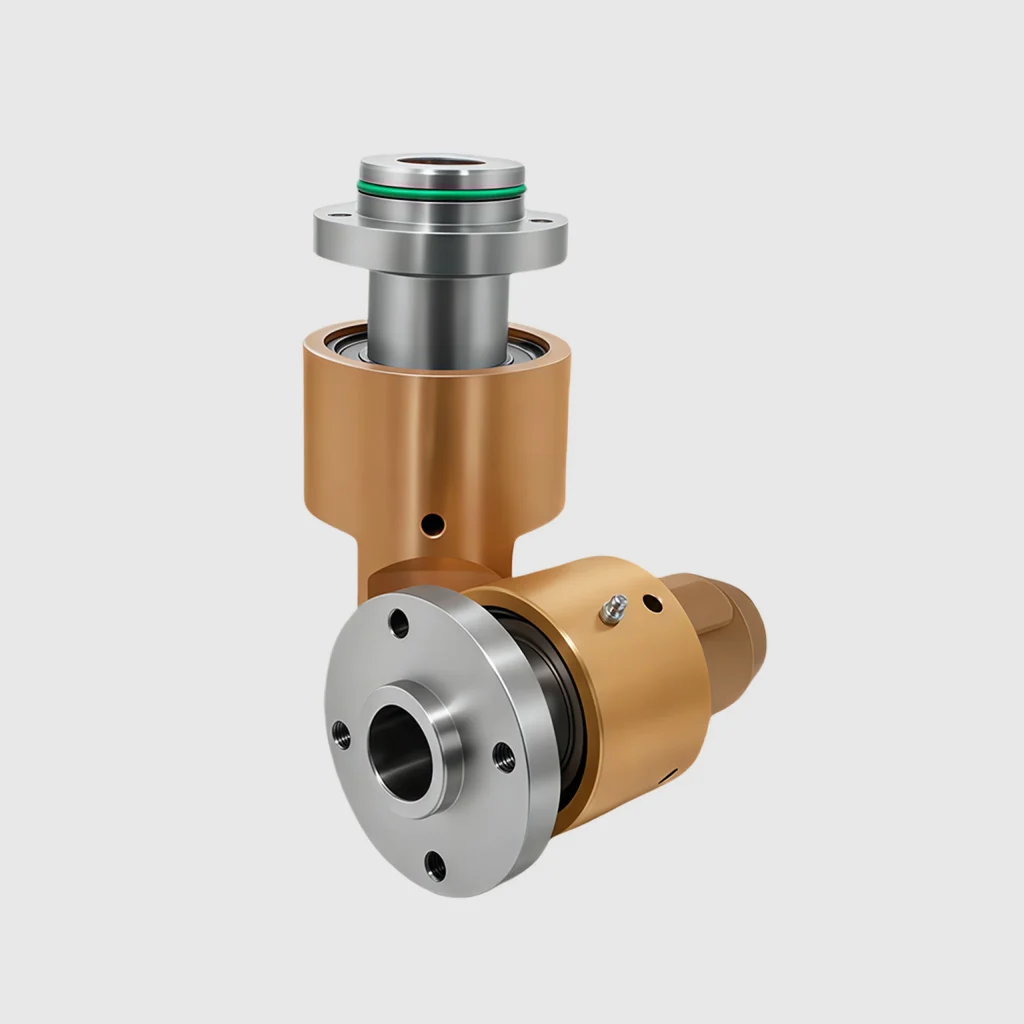
Core characteristics that define a rotary joint
The most important rotary joint characteristics usually fall into a few practical categories. Each one affects reliability, sealing performance, safety, and service life.
- Media compatibility: The joint must be suitable for the liquid or gas passing through it. Water, steam, hot oil, coolant, hydraulic fluid, chemicals, and air can require different seal faces, elastomers, metals, and internal clearances.
- Pressure capacity: Pressure rating describes the force the joint can contain without leaking or failing. The correct rating should account for normal operating pressure as well as spikes or surges.
- Temperature range: Heat affects seals, lubricants, metals, and bearings. A joint used for steam or thermal oil needs materials that remain stable at the required temperature.
- Rotational speed: Speed influences friction, heat generation, seal wear, and balance. Higher speeds generally demand tighter control of alignment, bearing design, and seal loading.
- Flow configuration: A rotary joint may have a single passage or multiple passages. Multi-passage designs allow different media or separate supply and return lines through one rotating interface.
- Seal design: Seal faces and elastomers control leakage while allowing rotation. The seal design must suit the medium, speed, pressure, and expected contamination level.
- Material construction: Housing, shaft, spring, and seal materials must resist corrosion, wear, thermal stress, and chemical attack.
- Connection style: Threaded, flanged, quick-change, or custom connections affect installation, alignment, and maintenance.
- Bearing support: Some joints include internal bearings, while others rely partly on the machine’s support structure. Bearing choices affect stability and tolerance of vibration.
- Drainage and leakage control: Some applications need controlled leakage paths, venting, or drainage to prevent pressure buildup or protect nearby components.
These traits should be considered as a system. A high pressure rating is not useful if the seal material is incompatible with the medium. A robust housing will not solve a speed problem if the rotating interface creates too much heat.
How do these characteristics affect performance?
Rotary joint characteristics affect performance by controlling how well the joint seals, rotates, transfers media, and resists wear during operation. When the characteristics match the application, the joint can support consistent flow, reduce leakage risk, limit unplanned downtime, and protect connected equipment.
Seal performance is often the first concern. A rotary joint must maintain contact between sealing surfaces while still allowing motion. Too much seal load can increase friction and wear. Too little load can cause leakage, especially during pressure changes or vibration. The right balance depends on pressure, speed, temperature, and media properties.
Flow performance is another major factor. Internal passage size, geometry, and surface condition can influence pressure drop and heat transfer. In cooling or heating applications, restricted flow can reduce process efficiency. In hydraulic or pneumatic systems, poor flow characteristics can affect response time or equipment behavior.
Mechanical stability also matters. A rotary joint exposed to shaft runout, misalignment, or vibration may experience uneven seal wear. Some designs tolerate these conditions better than others, but no rotary joint should be treated as a substitute for proper alignment and support. A good selection process looks at the machine around the joint, not just the joint itself.
Features:
1. Supported by two wide and precise imported bearings, the operation is smooth and the bearings do not require maintenance for life;
2. Imported specialized seals to ensure longevity and longevity;
3. The stainless steel shaft core has undergone special treatment to ensure sufficient wear resistance;
4. The shell can be made of aluminum alloy, stainless steel, or copper;
5. Unique drainage hole reflux design to prevent leakage to the external environment;
6. All technical indicators meet the standards of similar foreign products;
7. Able to customize the required rotary joints for customers;
Application areas: various automation industries, food industry, paper industry, CNC machine tool industry, printing industry, semiconductor industry, military industry
Food industry, plastic molding and other equipment industries
1. Papermaking: Processing equipment for various types of paper, such as dryers, steamers, coating machines, etc.
2. Fiber products: textiles, synthetic fibers and printing and dyeing, such as bed sheet bleaching machines, silk machines, flat washing machines, vacuum dryers, textiles
Product printing and dyeing drying equipment.
3. Rubber and plastics: screw extruders, mixing mixers, rotary and laminating machines, drum type automatic vulcanizing machines for rubber
Chemical machines and flat vulcanizing machines, etc.
4. Leather, synthetic leather, and synthetic leather: coating machines, raw fabric machines, fine washing machines, hot roller presses, roller drying equipment, etc.
5. Printing: rotary offset and gravure printing machines, layered drying equipment, mixers, etc.
6. Chemical and pharmaceutical industries: cylindrical, conical and drum shaped dryers, rolling testing equipment, ball mills, laminating machines
Electrode lifting for calcium carbide furnace.
7. Food: Grain, food drying equipment, kneading machine, release device, rolling and crushing equipment, rotary drying equipment. service
Process: ◇ Technical experts participate in customer product design to provide customers with more reasonable technical solutions ◇ Customize products according to customer requirements,
Ensure that it truly meets the different requirements of each customer ◇ Design – Simulation – Manufacturing – Testing. The entire process is controllable, providing true satisfaction
Customer requested products ◇ Refined manufacturing management, effective control of product costs, and provision of value-added services ◇ Efficient development
Design, continuously reduce manufacturing and logistics cycles, shorten delivery cycles ◇ Maintain close communication with customers, continuously improve to meet customer needs
The unique design process and methods for improving requirements ensure better product performance and better cost. For details, please refer to our development and testing process
Cheng