
Application fields of pneumatic rotary joint
Application fields of pneumatic rotary joints, Application fields of pneumatic rotary unions, Application fields of pneumatic swivel joints, Application fields of pneumatic swivel unions
Advantages of Using Pneumatic Rotary Joints
A pneumatic rotary joint lets compressed air pass between a stationary supply line and rotating equipment without twisting hoses, interrupting motion, or forcing awkward workarounds. It is used where a machine, fixture, arm, spindle, table, or drum needs reliable air transfer while it turns. If your system depends on pneumatic actuation, vacuum, blow-off, cooling air, or air-powered tooling, the right rotary connector can make the machine cleaner, safer, and easier to maintain.
What does a pneumatic rotary joint do?
A pneumatic rotary joint, sometimes called an air coupling, rotary coupling, swivel joint, or rotary connector, creates a sealed passage for compressed air across a rotating interface. One side connects to the fixed air supply, while the other side turns with the machine component. This allows air to flow continuously or intermittently without wrapping, kinking, or stressing the hose.
The practical advantage is simple: your equipment can rotate as designed while the air line stays controlled. Instead of routing hoses through improvised loops or stopping rotation to reset connections, a properly selected rotary joint keeps production moving and reduces avoidable wear around the connection point.
Built for cleaner motion and more dependable air transfer
In many pneumatic systems, the weakest point is not the air source or actuator. It is the transition between something fixed and something moving. A pneumatic coupling designed for rotary service helps solve that problem by giving the air line a defined mechanical path.
That matters in real machine environments. Hoses that twist repeatedly can fatigue, fittings can loosen, and operators may lose time clearing tangled lines. A rotary coupling reduces that stress by allowing rotation at the connection rather than forcing the hose to absorb the movement.
Key advantages include:
Reduced hose strain: The hose stays in a more stable position while the rotary joint handles movement.
Smoother rotation: The machine component can turn without dragging an air line around the work area.
More compact routing: Air can be supplied through a controlled point instead of long external loops.
Less downtime risk: Fewer twisted, kinked, or pulled lines can mean fewer avoidable interruptions.
Better operator access: Cleaner line management helps keep work zones easier to inspect and service.
For machines with repetitive rotation, even a small improvement at the connection point can have a noticeable effect on reliability. The goal is not just to move air; it is to move air without making the rest of the system fight the motion.
There are many opportunities to use pneumatic rotary joints in industries such as metallurgical machinery, papermaking machinery, and construction machinery. This product is a transitional connection sealing device that inputs gas medium from a static system to a dynamic rotating system. The product mainly consists of components such as connectors, filters, solenoid valves, vacuum equipment, and air pipes. It has multiple series, and domestically produced high-precision rotary connectors have higher cost-effectiveness and can be applied in more fields.
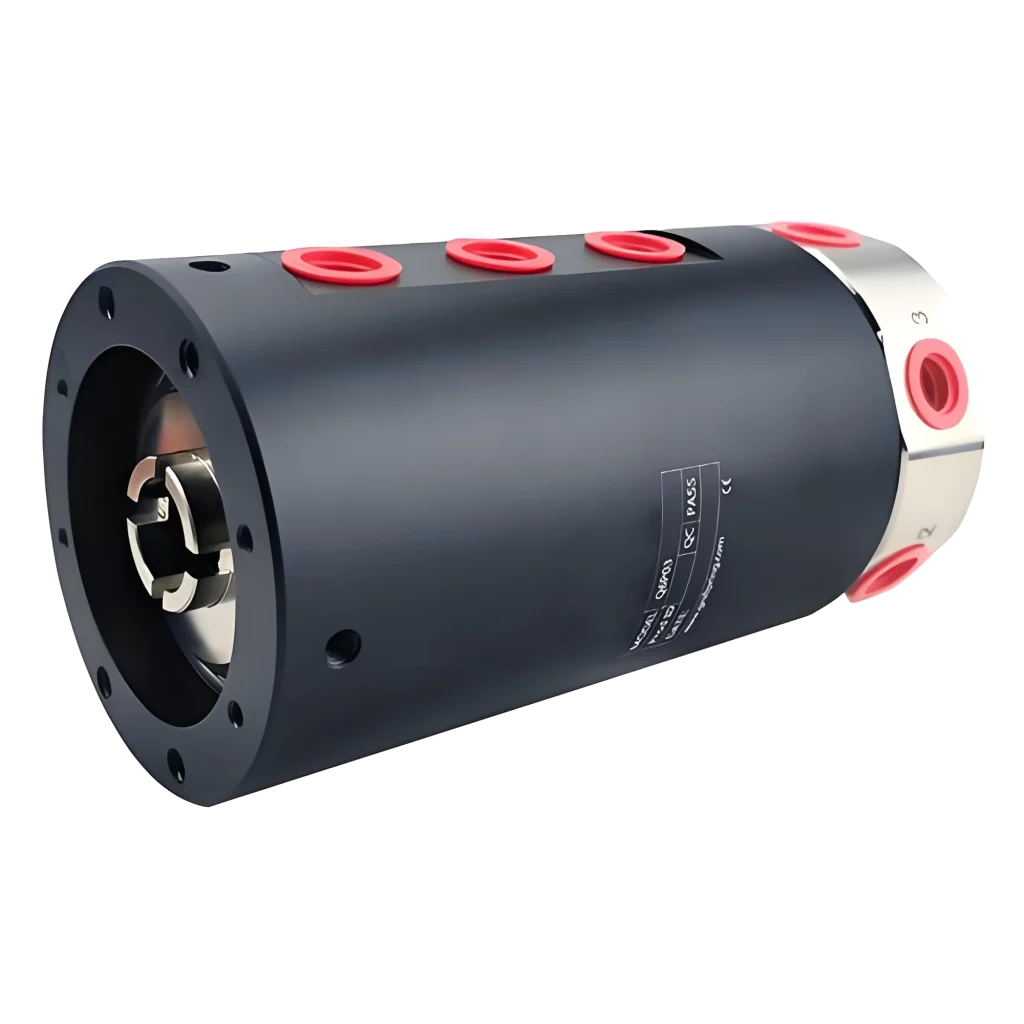
It is precisely because pneumatic rotary joints have applications in many fields that they can be accepted by more customers, so when choosing products, we should understand their performance advantages and disadvantages. This equipment is commonly used in a series of products designed in the field of pneumatic control. It has the advantages of small size, light weight, and low friction torque. It uses a rotating joint made of balanced sealing and friction group materials, which has very high stability performance. Therefore, it is important to choose a better one and should be given sufficient attention.
It is precisely because pneumatic rotary joints are widely used in many mechanical equipment that they can achieve better quality results, which is naturally the basis for more recognition. Therefore, we still need to make better decisions. All products in the pneumatic control system series will use this sealed joint, so making a better choice will be the basis for more recognition.