
Application of BC type rotary joints in solvent-free laminating machine
Application of BC type rotary joint in solvent-free laminating machine, Application of BC type rotary joints in solvent-free laminating machine, Application of BC type rotary union in solvent-free laminating machine, Application of BC type rotary unions in solvent-free laminating machine, Application of BC type swivel joint in solvent-free laminating machine, Application of BC type swivel joints in solvent-free laminating machine, Application of BC type swivel union in solvent-free laminating machine, Application of BC type swivel unions in solvent-free laminating machine
bc type rotary joints
BC type rotary joints are rotary joints designed to transfer media such as air or water between a stationary supply line and a rotating part while keeping the connection sealed. In practical terms, they let a roll, drum, spindle, fixture, or other rotating machine component receive fluid without twisting hoses or interrupting rotation. The term “BC type” is usually a model or series designation, so the exact dimensions and ratings should always be checked against the manufacturer’s data sheet.
What are BC type rotary joints?
BC type rotary joints are a specific type or product series within the broader family of rotary joints, also called rotary unions or rotating unions. A rotary union transfers fluid from a fixed source into rotating machinery; common media include water, air, hydraulic oil, hot oil, steam, coolant, and vacuum, depending on the joint design and application.
The “BC type” label is not a universal engineering standard by itself. It is most often used by suppliers to identify a particular rotary joint design, size range, or application family. For example, one published BC type rotary joint listing describes a design for air and water service, with a balanced mechanical seal, two large precision ball bearings, an aluminum alloy body, a stainless steel rotor, and an individually replaceable seal.
That makes the term useful, but it also means buyers should not assume every BC model has the same pressure, speed, material, or temperature rating. The safe definition is this: bc type rotary joints are sealed rotating fluid-transfer components identified by a BC series or type code, selected according to media, speed, pressure, temperature, connection style, and installation requirements.
Defining characteristics of BC type rotary joints
Because “BC type” can vary by manufacturer, the defining characteristics should be understood as selection points rather than universal specifications. A well-matched BC style unit is usually recognized by a combination of the following features:
- Stationary-to-rotating media transfer: The joint provides a sealed path between fixed piping and a rotating shaft, roll, or machine element.
- Bearing-supported rotation: Many designs use ball bearings or similar support elements to keep the rotating portion stable under normal operating conditions.
- Mechanical sealing: The seal system is the critical wear and leakage-control area. Balanced mechanical seals are often used to reduce seal loading and heat generation in suitable designs.
- Single or multiple flow paths: Some rotary joint types have one passage, while others provide separate channels for supply and return or for different media.
- Application-specific materials: Housings, rotors, seals, and elastomers are selected based on fluid compatibility, temperature, corrosion risk, and duty cycle.
- Defined operating limits: Pressure, temperature, speed, and fluid type are not interchangeable assumptions; they are limits that must match the actual machine.
- Serviceable wear parts: Some BC type rotary joints are designed so seals can be replaced separately, which may reduce downtime when maintenance is practical.
These characteristics are what separate a rotary joint from a simple pipe fitting or swivel connector. It is not only a connection point; it is a precision sealing and support component.
In modern industrial production, solvent-free laminating machines play a crucial role and are widely used in industries such as packaging and printing. As one of the key components of solvent-free composite machines, the performance of BC type rotary joints directly affects the operating efficiency and product quality of the equipment. Today, let’s delve into the application of BC type rotary joints in solvent-free composite machines.
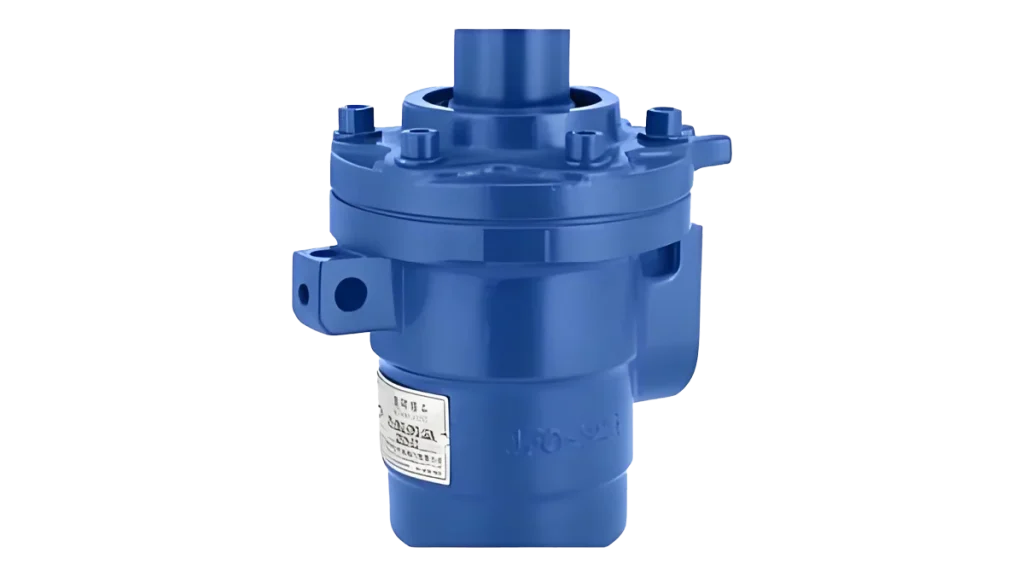
What is the origin of BC type rotary joint?
BC type rotary joint is a rotary joint that uses mechanical sealing. Structurally, it utilizes the principle of balanced sealing, which is highly effective. The balanced sealing design can reduce the impact of pressure changes on the sealing surface, greatly extending the service life of the rotary joint. It’s like putting a strong armor on the sealing surface, which can effectively resist the impact caused by pressure changes. Moreover, it adopts a combination of fine ceramic materials and wear-resistant graphite sealing rings. This combination has extremely excellent durability and performance. Fine ceramic materials have high hardness and strong wear resistance, while wear-resistant graphite sealing rings have good sealing and self-lubricating properties. The strong combination of the two enables BC type rotary joints to operate stably under various complex working conditions. In addition, the BC type rotary joint adopts a split structure, which is simply too thoughtful in design. When there is a problem with the equipment that needs to be repaired, it can be quickly repaired on site by replacing the seal, greatly reducing maintenance costs. In the past, maintenance may have required replacing the entire component, which was costly and time-consuming. Now, with the split structure, maintenance has become easy and cost-effective.
What is the role of rotary joints in solvent-free composite machines?
During the operation of the solvent-free laminating machine, different thin film materials need to be laminated together, which involves the transmission of various media such as heating and cooling media. The BC type rotary joint is like an efficient “transportation hub”, responsible for stably and accurately delivering these media to the required locations. Temperature control is crucial in the composite process. The BC type rotary joint can ensure that the heating medium evenly enters the heating rollers and other components of the laminating machine, making the temperature of the heating rollers uniform, thereby ensuring that the film material is uniformly heated during the laminating process and improving the laminating quality. If the performance of the rotary joint is poor and the heating medium delivery is unstable, it may cause the local temperature of the heating roller to be too high or too low, resulting in quality problems in the composite product, such as weak film adhesion, bubbles, etc. At the same time, in the cooling process, the BC type rotary joint can timely transport the cooling medium to the cooling roller, quickly taking away heat and allowing the composite product to cool and solidify quickly. The process of heating and cooling is precisely controlled by the BC type rotary joint, ensuring the efficient operation of the solvent-free laminating machine.
BC type rotary joint has significant advantages

High speed and long lifespan: Due to its unique balanced sealing principle and high-quality material combination, BC type rotary joints can adapt to high-speed working environments. When the solvent-free laminating machine operates at high speed, it can still maintain stable performance and will not experience sealing failure or other issues due to excessive speed. Moreover, the long lifespan also reduces the frequency of equipment downtime for maintenance and improves production efficiency. For enterprises, reducing downtime means increasing production and bringing more economic benefits.
Split structure for easy maintenance
The split structure mentioned earlier has obvious advantages in practical applications. When the rotary joint malfunctions, maintenance personnel can quickly carry out repairs on site by replacing damaged sealing components without disassembling the entire rotary joint for complex repairs. This not only saves maintenance time, but also reduces maintenance costs. For some enterprises with tight production tasks, rapid maintenance can avoid production delays caused by equipment failures and ensure timely delivery of orders.
Provide multiple model options
BC type rotary joints are available in single and double pass models, and can be configured with rotating or fixed center supply pipes. This diverse selection of models can meet the design and process requirements of different solvent-free laminating machines. Enterprises can choose the most suitable BC type rotary joint model based on the characteristics of their own equipment and actual production needs to achieve optimal equipment performance.
The BC type rotary joint plays an irreplaceable role in solvent-free composite machines. Its advanced design, excellent performance, and convenient maintenance features provide strong guarantees for the efficient and stable operation of solvent-free laminating machines. With the continuous development of industrial technology, we believe that BC type rotary joints will continue to innovate and upgrade, showcasing their outstanding performance in more fields and bringing more convenience and benefits to industrial production.