
What is a fibre optic rotary joint?
What is a fibre optic rotary joint, What is a fibre optic rotary joints, What is a fibre optic rotary union, What is a fibre optic rotary unions, What is a fibre optic swivel joint, What is a fibre optic swivel joints, What is a fibre optic swivel union, What is a fibre optic swivel unions,
A fibre optic rotary joint is a device that transmits data through a rotating interface. This allows systems that need to spin or rotate whilst maintaining flawless communications, like radars or medical scanners, stay connected and keep sending data smoothly.
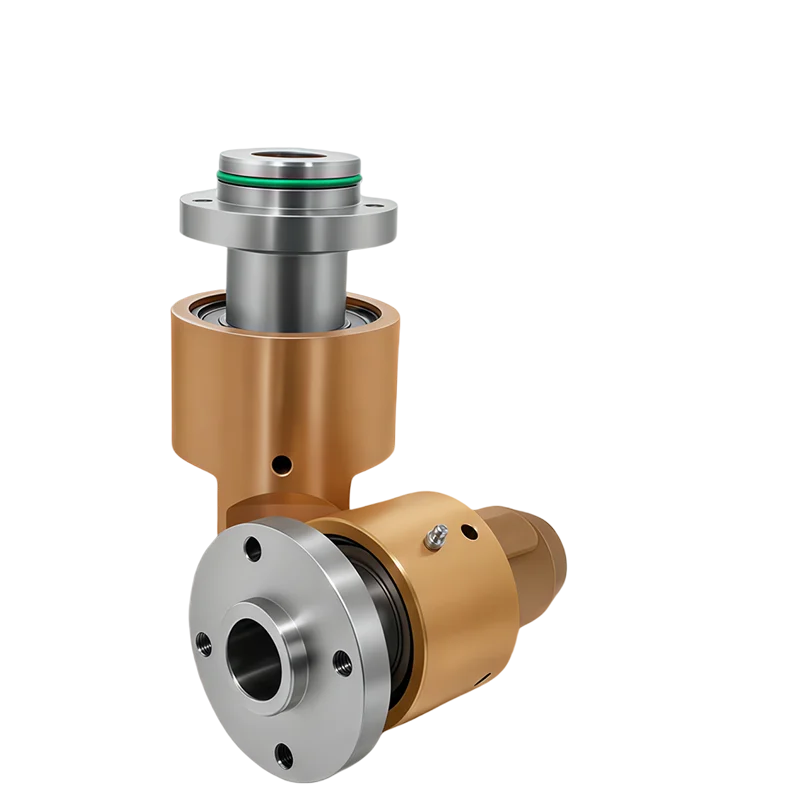
The fiber optic rotary joint is a crucial device capable of stably transmitting optical signals between rotating components, and is widely used in fields such as radar, medical equipment, and industrial automation.
Its core function is to address the issue of continuous transmission of optical signals in a rotating state, ensuring uninterrupted data transmission during movement.
Analysis of key technologies
The core of a fiber optic rotary joint lies in the design of its optical channel.
Common structures include single-channel and multi-channel. Single-channel is suitable for simple signal transmission, while multi-channel can support more complex data interaction.
To ensure signal stability, precision optical components such as collimating lenses or prisms are typically employed internally to reduce light loss.
In addition, sealing and wear resistance are also crucial. Special materials, such as ceramics or high-strength alloys, must be used for rotating parts to cope with long-term friction and harsh environments.
Performance advantages and challenges
Compared to traditional electrical slip rings, fiber optic rotary joints offer significant advantages.
Firstly, optical fiber transmission is immune to electromagnetic interference, ensuring more stable signals. Secondly, it boasts higher bandwidth, making it ideal for transmitting large amounts of data. Lastly, it has a longer lifespan and lower maintenance costs.
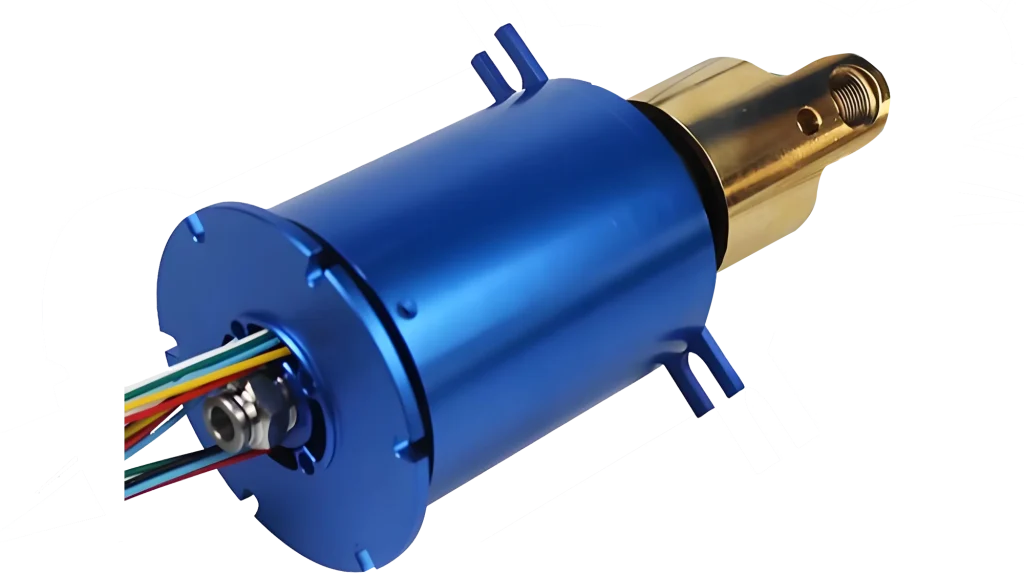
Application of Optoelectronic Combination Slip Ring in Modern Radar Systems
Radar systems, especially surveillance radars, fire control radars, and airborne/spaceborne synthetic aperture radars that require 360 ° continuous rotation, must establish a continuous energy and information transmission path between their fixed platforms and rotating antennas (or rotating platforms). This core component is called a “slip ring” or “rotary joint”.
With the development of advanced radar technologies such as phased array radar and synthetic aperture radar, unprecedented high requirements have been put forward for the data transmission rate, bandwidth, and anti-interference ability of rotating joints. Traditional slip rings rely on the sliding contact between metal rings and electric brushes to transmit all electrical energy and signals. However, in modern radar, the baseband data rate is getting higher and the video signal bandwidth is getting wider. Traditional slip rings expose a series of problems such as limited transmission capacity, susceptibility to electromagnetic interference, and short wear life. The photoelectric combination slip ring integrates fiber optic transmission technology into the electric slip ring, forming an innovative architecture of “optical transmission signal, electrical transmission power”, perfectly solving this contradiction.
Technical advantages of optoelectronic slip rings
Compared with pure electric slip rings, photoelectric slip rings have the following outstanding advantages:
Ultra high bandwidth and data rate:
The bandwidth of optical fiber far exceeds that of any metal wire, and can easily transmit radar data of several Gbps or even tens of Gbps, meeting the needs of high-resolution and high data rate radar.
Excellent electromagnetic compatibility:
Optical signal transmission is completely unaffected by electromagnetic interference (EMI) and radio frequency interference (RFI), and does not generate interference. This is crucial for radar receivers with extremely high signal sensitivity, significantly improving the signal-to-noise ratio and detection accuracy of the system.
No contact, long lifespan:
The signal transmission part has no physical contact, fundamentally eliminating wear and tear, and its lifespan far exceeds that of the electrical contact part. It can usually match the lifespan of the entire radar system, achieving maintenance free operation.
Small size and light weight:
In the case of transmitting the same capacity of information, a thin fiber optic cable can replace a heavy cable, greatly reducing the weight and moment of inertia of the rotating platform, which is of great significance for airborne and satellite platforms.
Data security and fidelity:
Optical signals are transmitted within the channel, making them less susceptible to eavesdropping or crosstalk, and the transmission loss is extremely low, ensuring the complete transmission of large data volumes and high fidelity radar signals (such as SAR raw data).