
Leakage of rotary joint
Leakage of rotary joint, Leakage of rotary joints, Leakage of rotary union, Leakage of rotary unions, Leakage of swivel union, Leakage of swivel unions, Leakage of swivel joint, Leakage of swivel joints
The main reason for the occurrence of rotary joint failures is the leakage of the sealing part in the early stage, which can be discovered by checking whether there is fluid flowing out from the hole or between the outer tube and the shell. Most faults can be resolved through repair or replacement of parts, and the joints can be reused. Therefore, it is important to dispose of the internal parts as soon as possible before they are damaged. After years of experience, our company has summarized the following reasons for the main faults.
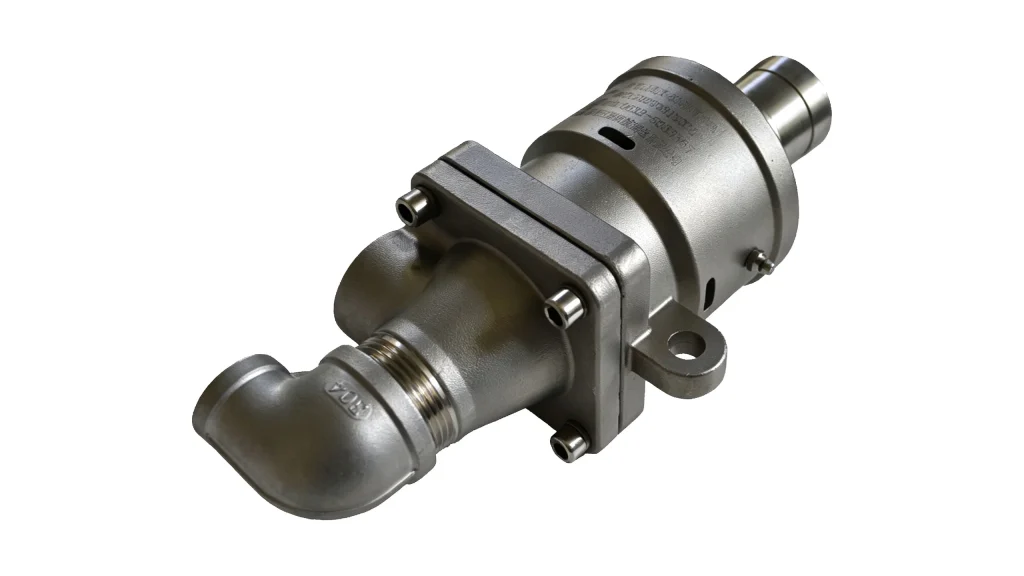
1. Natural or abnormal wear of the sealing surface or bearing part.
2. Improper restraint of the rotating joint housing. The anti rotation load-bearing mechanism is constrained.
3. Are the shafts of the installation machinery and the rotating joint shafts concentric?
The end face of the rotating shaft for installing machinery is not at a right angle to the shaft.
Inaccurate fitting part (recess).
The core of the installation screw for installing machinery is not aligned.
The thread direction is incorrect.
In the case of flange installation, the tightening method of bolts is uneven. After installation, please make sure to rotate at low speed to confirm if the core is aligned.
4. Improper piping for joint connections.
Steel pipe piping is used.
The flexible pipe is too hard and non flexible piping is used.
The bending direction of the flexible pipe is inappropriate.
The weight of valves, gates, etc. is directly added to the joint.
5. Inappropriate inner tube.
The weight of the inner tube and siphon tube is too heavy, only supported by the screw at the head of the joint.
The inner tube is biased towards the core.
6. Incorrect model selection.
The caliber size is too small.
The usage temperature is too high.
The usage pressure is too high.
The speed is too high.
Wrong type of fluid used.
Empty operation.
7. Abnormalities in fluids
Foreign objects in the flow paths such as pipes and rollers have not been removed.
There is inappropriate solvent precipitation in the fluid.
Inappropriate piping design.