
Structure of heat transfer oil rotary joint
Structure of heat transfer oil rotary joint, Structure of heat transfer oil rotary joints, Structure of heat transfer oil rotary union, Structure of heat transfer oil rotary unions, Structure of heat transfer oil swivel union, Structure of heat transfer oil swivel unions, Structure of heat transfer oil swivel joint, Structure of heat transfer oil swivel joints
The installation of a heat transfer oil rotary joint is composed of a non rotating component and a rotatable shaft or flange. Firstly, a flexible hose or straight pipe is inserted into the non rotating component. The non rotating connection part and the upper part formed by the casting are composed of external threads and concave internal threads. In the axial direction of the non rotating component, there is an opening on the insertion connection part, which faces the opening on the concave side of the connection path on the rotating component side. On the other hand, the heat transfer oil rotary joint forms a non rotating component side flow path that can supply liquid from the outside. The discharge path for recovering liquid from the gap generated between the insertion connection part and the connection concave part, and the air passage for releasing air supplied by external pressure into the gap, are formed. The non rotating component side flow path of the heat transfer oil rotary joint is arranged in parallel. On the other hand, The insertion connection part is formed with a diameter smaller than that of the non insertion part. One end that can be rotated is easier to install. There are two modes: flange and external thread pipe tooth mode. The thread is directly wrapped with adhesive tape and screwed on, and the flange type is directly connected and pressed tightly with screws.
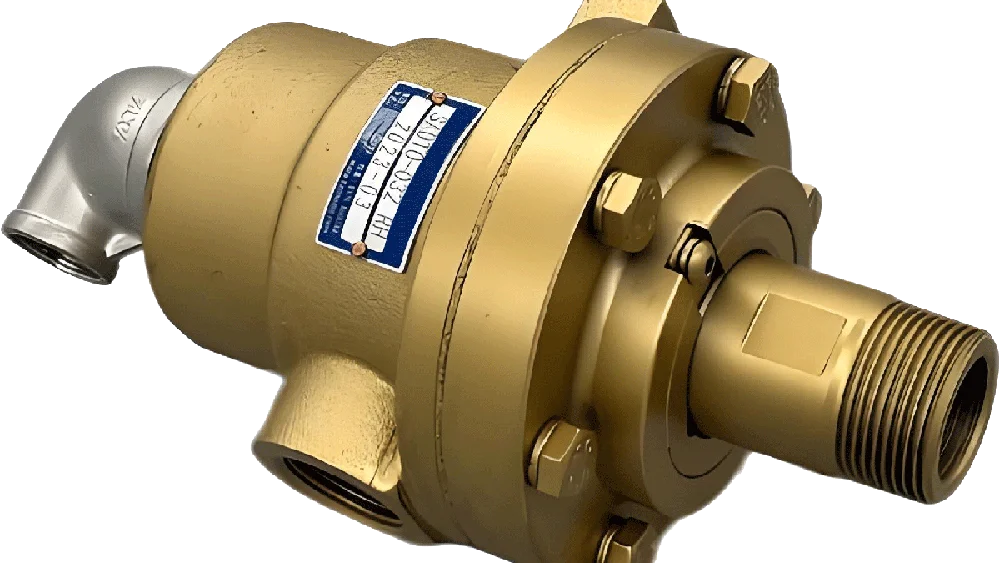
Regarding the situation of oil leakage after installation, let’s first understand the testing method of the heat transfer oil rotary joint. Firstly, the formation of a heat transfer oil joint is provided by the customer with a schematic drawing or general idea, and then the factory produces the heat transfer oil rotary joint. After a simple operation test, the heat transfer oil joint is sent to the customer’s factory and installed on the machinery of the required rotary joint. If there is no leakage when the heat transfer oil joint is installed on this machinery, it indicates that the joint made by the manufacturer meets the customer’s requirements; If there is a leakage phenomenon when the joint is installed on this machine, let’s investigate the cause of the oil leakage: first, confirm whether the installation is completed. Sometimes, if an inconspicuous screw is not tightened at the end of the installation, it will cause uneven force on the external oil seal, resulting in oil leakage from the gap to the outside; Next, check if the high-temperature sealed antimony ring is intact, as high-temperature antimony rings are relatively brittle. The impact during transportation and the violent factors of inserting the inner tube during installation can cause scratches on the “inner ring” of the antimony ring, resulting in severe wear on the mirror surface and cracking, leading to oil leakage; Finally, we need to consult with the customer on whether they are using it correctly. The so-called correct use is that the heat transfer oil rotary joint generally cannot be applied to high-speed equipment because there are no bearings in this model. It works by frictional rotation between the shaft and the sphere. This combination can effectively compensate for simple misalignment, but cannot rotate at high speeds