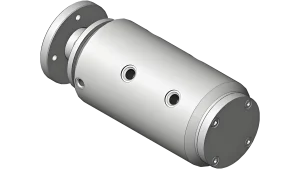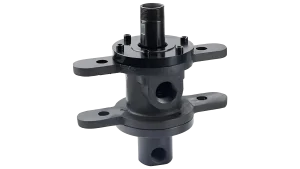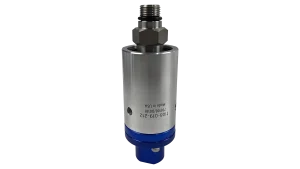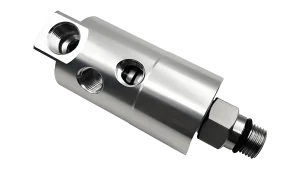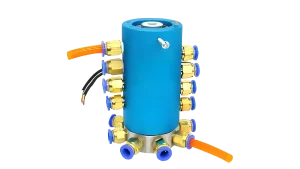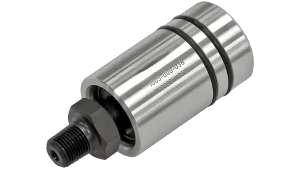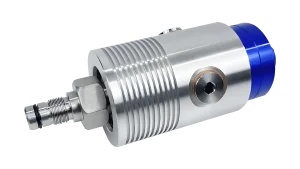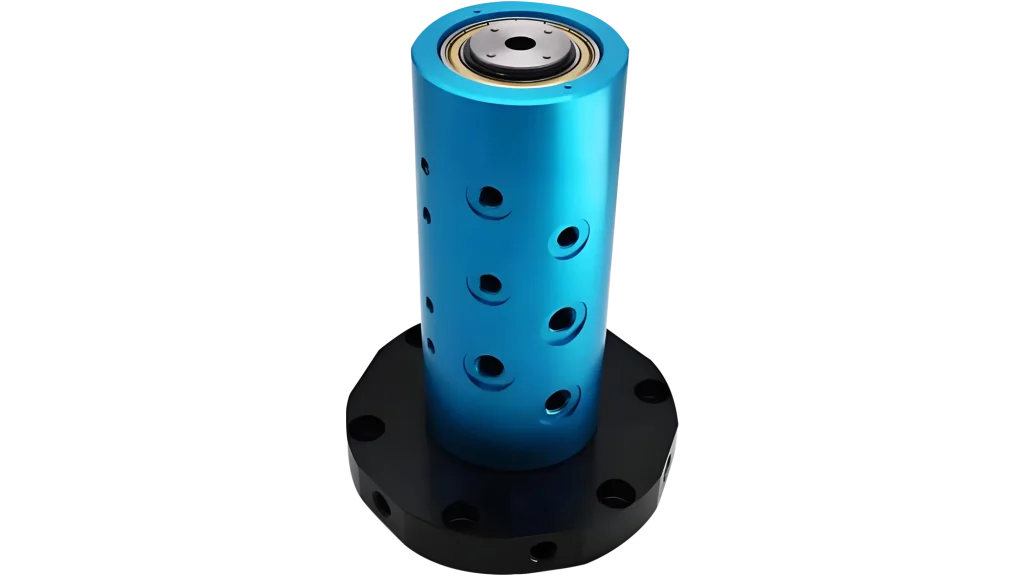
Semiconductor cutting machine high-speed rotary joints
Semiconductor cutting machine high-speed rotary joint
Semiconductor cutting machine high-speed rotary joints
Semiconductor cutting machine high-speed rotary joint
characteristic
1) The speed reaches up to 3000rpm,
2) Low torque;
3) Long lifespan, adopting a special structural design, equipped with automatic air cooling heat dissipation, and almost frictionless rotation;
4) Compact structure, suitable for installation in narrow spaces;
5) Small axial runout, especially suitable for cutting machines.
technical indicators
| medium | vacuum | Compressed air, which may contain a small amount of water and dust | |
| Pressure (Kpa) | -95 | 600 | |
| Rotational speed (rpm) | 3000 | ||
| number of channels | 1-3 | ||
| Fluid diameter (mm) | 5 | ||
1、 The basic function of rotary joints in semiconductor equipment
A rotary joint is a device specifically designed to transmit liquids, gases, or electrical signals between two components that rotate relative to each other. It has good sealing performance and can withstand harsh working conditions such as high pressure, high temperature, and high-speed rotation. In the semiconductor industry, rotary joints are mainly used in precision equipment for wafer cleaning, photolithography, etching, deposition, testing, and other processes, to achieve safe and efficient transmission of cooling fluids, chemicals, inert gases, and other media.
1. Wafer processing equipment: In equipment such as lithography machines and etching machines, high-speed rotary joints ensure precise operations such as photoresist coating, developer cleaning, and etching gas injection during the high-speed rotation of silicon wafers, effectively reducing transmission interruptions and medium leakage problems caused by rotational motion.
2. Cooling system: Semiconductor production equipment generates a large amount of heat during operation, and the importance of the cooling system is self-evident. The cooling water rotary joint is responsible for continuously transferring cooling liquid (such as deionized water, ultrapure water) to the rotating wafer stage in the cooling circulation system, ensuring precise control of wafer temperature and thus ensuring the accuracy and yield of the chip process.
3. Clean room environment: Semiconductor production workshops have extremely high requirements for cleanliness. Corrosion resistant rotary joints not only ensure that the transmission medium does not leak, but also prevent dust particles from entering. Their exquisite sealing design and high-quality materials provide the possibility to meet the strict requirements of the clean room.
2、 Technical challenges and response strategies of rotary joints in the semiconductor industry
Faced with the extremely high requirements of the semiconductor industry for equipment accuracy, stability, and cleanliness, the research and manufacturing of rotary joints face severe technical challenges, including how to improve the sealing performance of joints, reduce wear, enhance corrosion resistance, and extend service life. To this end, the industry continuously improves the quality and performance of rotary joints through the use of special alloy materials, optimized fluid dynamics design, fine machining processes, and strengthened surface treatment.
3、 Application prospects of rotary joints in the future development of the semiconductor industry
As the semiconductor manufacturing process nodes continue to shrink, the performance requirements for rotary joints will continue to increase. Future rotary joint products will pay more attention to miniaturization, intelligence, and modular design, achieving lower flow loss, higher transmission efficiency, and better compatibility to meet the needs of more advanced semiconductor production equipment.
In summary, the application of rotary joints in the semiconductor industry is not only reflected in their basic function of realizing dielectric transmission, but also in their outstanding performance and technological innovation, making significant contributions to the stable operation, process optimization, and production capacity improvement of semiconductor equipment.