
Sealing performance of rotary joints
Sealing performance of rotary joints, Sealing performance of rotary joint, Sealing performance of rotary union, Sealing performance of rotary unions, Sealing performance of swivel union, Sealing performance of swivel unions, Sealing performance of swivel joint, Sealing performance of swivel joints
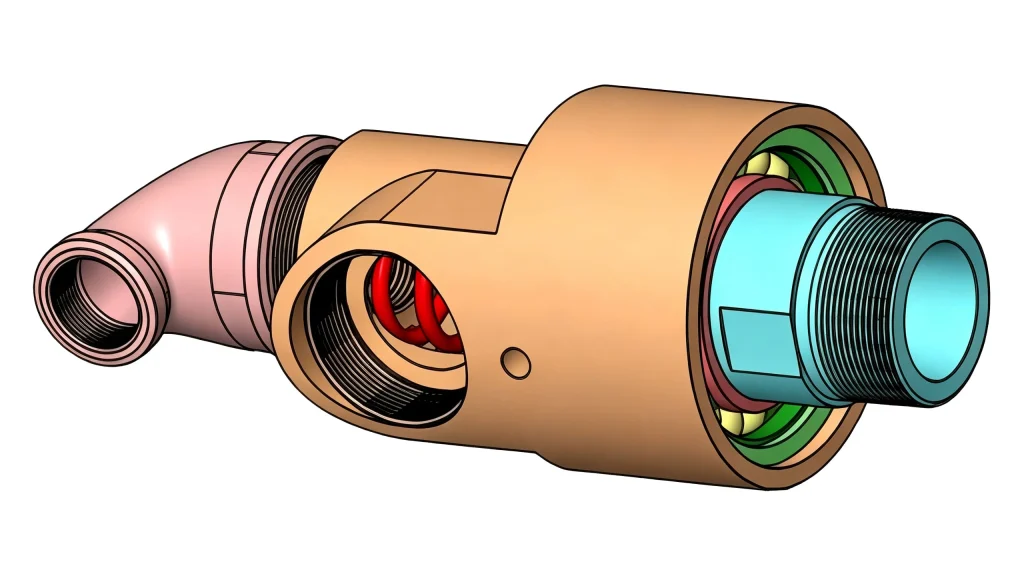
In industrial production, rotary joints, swivel joints, and hydraulic slip rings are key components for achieving stable transmission of fluid media in rotating equipment, and their sealing performance is crucial. However, when solid particles are present in the fluid medium, the sealing of the rotary joint faces severe challenges. These solid particles may come from the medium itself, debris generated by equipment wear, etc
Characteristics and sources of solid particles
Particle characteristics: Solid particles have different shapes, sizes, and hardness. The shape may be spherical, angular, etc., with a size range from tiny nanoscale to larger millimeter scale. The hardness also varies depending on the material, such as metal particles having higher hardness, while some organic particles are relatively softer.
Source analysis: Fluid media themselves may carry solid particles, such as in industries such as mining and oil extraction, where the extracted raw materials often contain sediment, rock debris, etc. In addition, during long-term operation of the equipment, the wear of internal components can also generate solid particles, such as wear on the inner wall of pipelines and friction loss of mechanical parts.
The pathway for solid particles to enter the rotary joint
Direct entry with fluid: During the process of medium transportation, unfiltered fluid directly enters the rotary joint, and solid particles enter along with it. This is the most common way of entry.
Infiltration through sealing gap: Even if a filtering device is installed at the inlet, some small particles may still infiltrate into the rotating joint through the sealing gap due to the pressure difference.
Mechanism of influence on sealing performance
Wear effect: Solid particles entering between the sealing surfaces will cause wear on the sealing surfaces like abrasives during the rotation of the rotary joint. Angular particles are more likely to scratch the sealing surface, causing scratches, grooves, and other damages, thereby damaging the integrity of the seal and reducing its sealing performance.
Particle accumulation: Some particles may accumulate in local areas of the sealing gap or sealing surface, changing the microstructure of the seal, hindering the normal fit of the seal, and increasing the risk of leakage. Meanwhile, the accumulated particles may also trigger local corrosion reactions, further damaging the seals.
Affects the elasticity of the seal: Prolonged contact with solid particles can affect the elasticity of the seal. After the elasticity of the seal decreases, it cannot effectively compensate for the changes in sealing clearance caused by wear or vibration, and thus cannot maintain good sealing performance.
Solution
Optimize filtration system: Install multi-stage high-efficiency filters at the fluid inlet, select appropriate filtration accuracy based on particle size and characteristics, and remove solid particles from the fluid as much as possible.
Improved sealing structure: Adopting more advanced sealing structures, such as a combination of labyrinth seals and lip seals, to increase the difficulty of particles entering the sealing surface and improve the reliability of the seal.
Choose suitable sealing materials: Choose sealing materials with good wear resistance and strong resistance to particle erosion, such as special rubber materials or high-performance composite materials, to extend the service life of the seals.
Conclusion
Solid particles in fluid media have a significant negative impact on the sealing performance of rotary joints. By deeply understanding the mechanism of this impact and taking effective measures, such as optimizing the filtration system, improving the sealing structure, and selecting suitable sealing materials, the damage of solid particles to the sealing performance of rotary joints can be effectively reduced, ensuring the stable operation of rotary joints under complex working conditions and ensuring the normal operation of the entire industrial system. In the future, with the continuous development of industrial technology, further research and exploration of more effective particle erosion prevention technologies are needed to meet the growing industrial demand.