
Multi channel turntable rotary joints
Multi channel turntable rotary joint, Multi channel turntable rotary joints, Multi channel turntable rotary union, Multi channel turntable rotary unions, Multi channel turntable swivel joint, Multi channel turntable swivel joints, Multi channel turntable swivel union, Multi channel turntable swivel unions
We design multiple independent channels on a single rotary joint, which can control multiple workstations to simultaneously transmit different media such as compressed air, vacuum hydrogen, gas, chemical mixtures, steam, cooling water, hot water, hot oil, petroleum, sulfuric acid, beverages, etc. during 360 degree rotation work. The media are transported separately without interfering with each other The product adopts a whole system design, fully imported high-precision bearing support, dynamic rotation zero leakage seal, ultra long service life, ultra-low torque, stable rotation torque, and is not affected by supply pressure and temperature changes during operation. The rotation force is also not affected after long-term storage
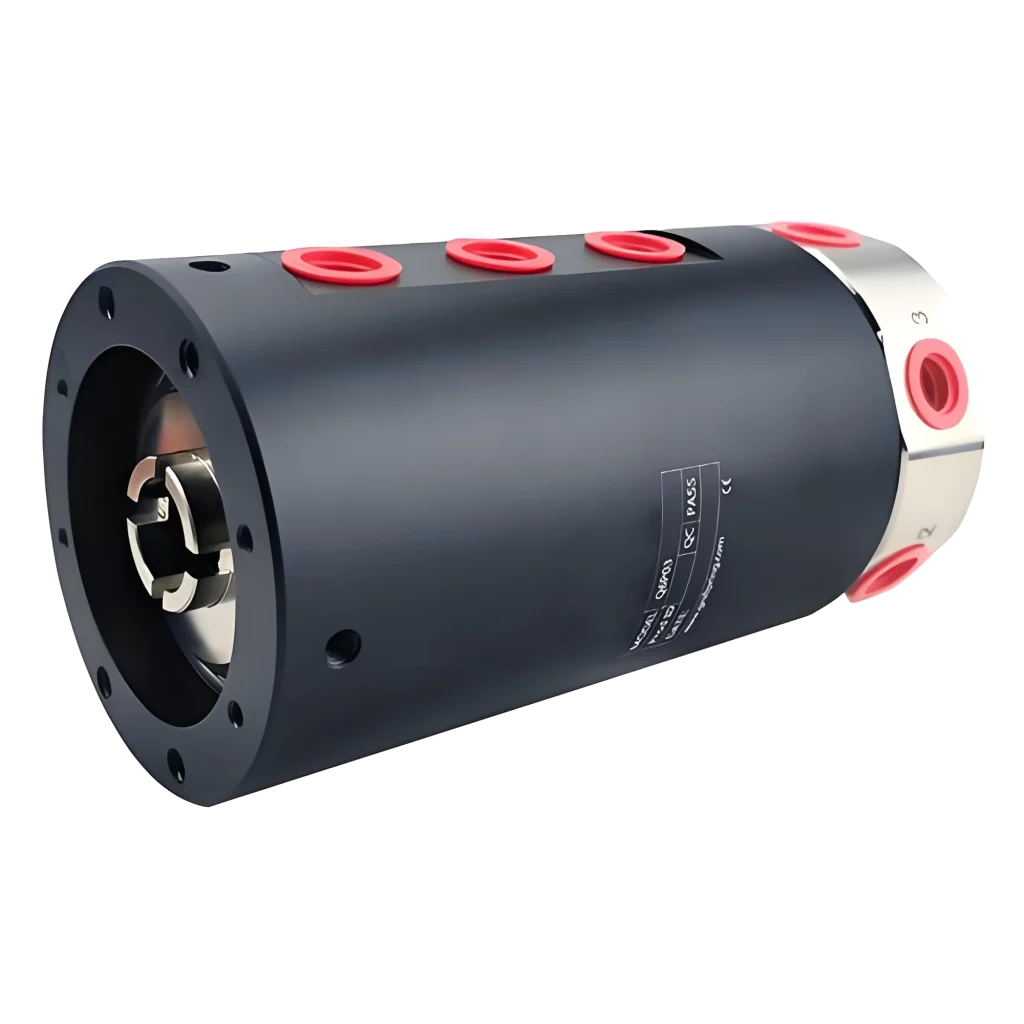
Support threaded interface: The product can be sealed with G-threaded connection port, PT threaded connection port, or flat O-ring docking
Supports hybrid power lines, signal lines, Ethernet, industrial buses, control lines, solenoid valves, induction lines, etc
The product is applied in various automation industries, food industry, paper industry, CNC machine tool industry, printing industry, semiconductor industry, military industry
Food industry, plastic molding lathe machining center equipment and other equipment industries
Structural Design and Material Technology
The design of multi-channel rotary joints emphasizes high precision, high rigidity, and long service life. The main structural features are as follows:
Two or more precision bearings are usually configured inside the support system to support high rigidity shafts. The shaft undergoes special heat treatment to enhance rigidity, ensuring low vibration and high concentricity during long-term high-speed operation. The friction coefficient of the bearing is extremely low, ensuring smooth and flexible operation.
The sealing mechanism adopts mechanical balanced end face sealing technology. The sealing surface and sealing ring are made of special materials that are wear-resistant and corrosion-resistant. Common combinations include carbon powder graphite and bronze, tungsten carbide and stainless steel, etc. This design not only achieves zero leakage in low-pressure to high-pressure environments, but also has the ability of “dry operation”, that is, when the medium stops flowing, the sealing surface automatically separates to avoid dry friction damage. Some high-end models use labyrinth components to assist in leak prevention, further reducing the risk of minor leaks.
The shell material is mostly made of aluminum alloy, stainless steel or brass, which combines lightweight and corrosion resistance characteristics. The internal pipelines are independent of each other, and multi medium mixing is achieved through precise coordination between the rotor and stator without mutual connection.
Many modern multi-path connectors are designed with visual windows, allowing users to directly observe the wear and tear of internal seals, thereby achieving preventive maintenance and avoiding production losses caused by sudden shutdowns.
Installation precautions
Flexible connection: A flexible hose (preferably a metal hose with good flexibility) must be used to connect the rotary joint to the external pipeline. Rigid connection is strictly prohibited to absorb vibration and reduce the auxiliary weight of the joint.
Concentricity calibration: During installation, it is necessary to ensure that the axis of the rotating joint is concentric with the height of the equipment rotation center. Excessive deviation can lead to abnormal wear and leakage.
Thread rotation matching: For threaded connection type joints, it is necessary to confirm that the inner and outer pipe threads rotate in the same direction as the drum rotation to prevent loosening.
Support and anti rotation: Reasonably set the support rod and anti rotation hole, usually the diameter of the rod should be about 2mm smaller than the anti rotation hole to ensure free adjustment and compensation ability.
Handle with care: Avoid impact during transportation, protect interfaces and internal precision parts.