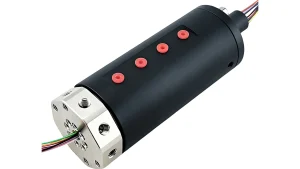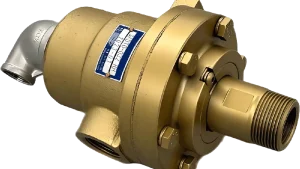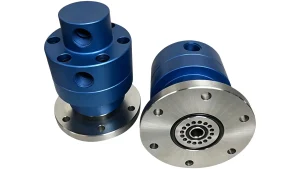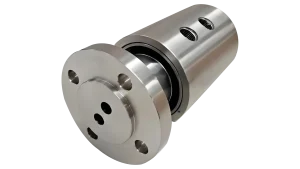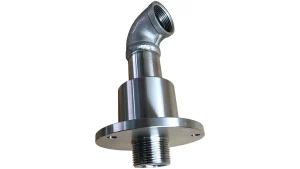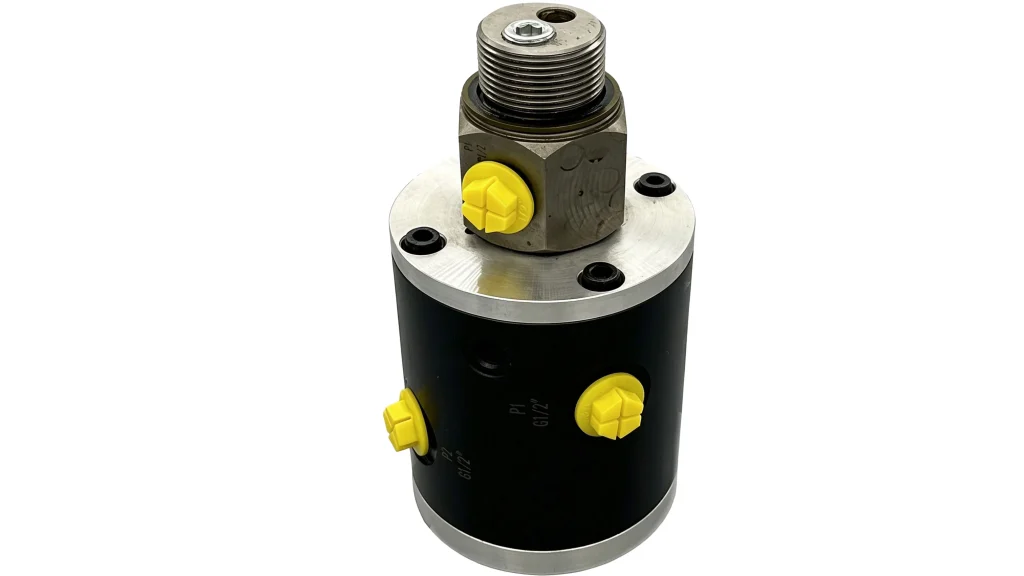
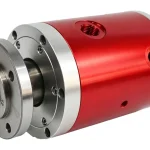
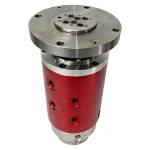
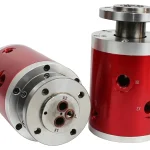
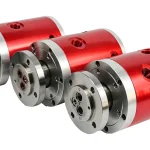
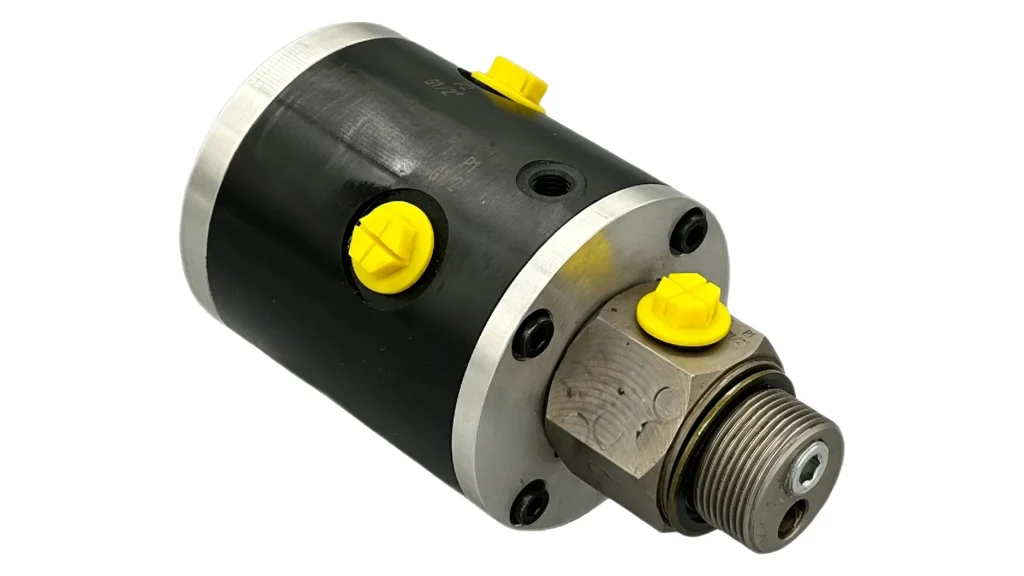
MT type hydraulic rotary joint
MT type hydraulic rotary joint is a fluid transmission device designed specifically for low-speed, high-pressure, multi-channel independent sealing conditions. Its core is used in the bi-directional oil supply and return system of rotating oil cylinders in equipment such as steel coiling machines and machining centers.
- Operating Temperature100℃
- work pressure30MPa
- maximum speed300RPM
MT type hydraulic rotary joint
MT type hydraulic rotary joint, MT type hydraulic rotary joints, MT type hydraulic rotary union, MT type hydraulic rotary unions, MT type hydraulic swivel joint, MT type hydraulic swivel joints, MT type hydraulic swivel union, MT type hydraulic swivel unions
MT Type Hydraulic Rotary Joint: The Complete Design and Application Guide
An MT type hydraulic rotary joint is a precision swivel device that transfers pressurized hydraulic oil from a stationary supply line into rotating equipment, such as winders, rotary tables, and rotating clamps. It keeps fluid flowing to the rotating member at full system pressure without leakage, allowing hydraulic cylinders, chucks, and other actuators to operate while the assembly turns. This ability to pass high-pressure oil through a rotating interface is what makes continuous, high-duty hydraulic machinery possible.
Because hydraulic systems operate at far higher pressures than steam or thermal-oil circuits, this component is built around a robust seal arrangement, hardened contact surfaces, and tight machining tolerances. Every element is selected to withstand sustained pressure, resist wear, and keep internal leakage to a minimum over long service intervals. The result is a part that quietly does its job at the center of the machine, and its reliability directly determines how long the equipment runs between maintenance stops.
Understanding how the MT series is built, rated, and maintained is the key to getting the most from it. This guide breaks down the working principle, the essential design features, the technical specifications that matter, the applications where the unit shines, and the selection and maintenance practices that extend service life. By the end, you should be able to specify, install, and care for one of these joints with confidence.
How a Hydraulic Rotary Joint Works
The unit works by dividing the duty between two functions: a rotating bearing assembly that carries the mechanical load, and a seal package that contains the pressurized oil. Oil enters through a stationary port, passes through the rotating body, and exits into the rotating member’s internal channels. The seal sits precisely at the interface between the stationary and rotating parts, holding the oil back while allowing the assembly to turn.
Precision matters more here than in almost any other fluid coupling. The running clearance between the rotating and stationary faces must be tight enough to prevent leakage yet generous enough to avoid seizure as parts warm up and expand. A film of hydraulic oil itself acts as a lubricant between the faces, but the gap must stay within microns, which is why manufacturing tolerances are held to such exacting standards.
Modern designs also use balanced seal geometry so that system pressure works in the unit’s favor. As pressure rises, the forces on the seal faces stay proportioned, which keeps the sealing effect consistent rather than allowing high pressure to blow the seal open. This pressure compensation is one of the main reasons a well-engineered unit can hold tens of megapascals of pressure while turning continuously for years. Most designs also incorporate a small amount of intentional clearance at the bearing to allow for thermal expansion, since hydraulic oil can reach elevated temperatures during heavy duty cycles and the components expand at slightly different rates.
Key Design Features and Benefits
High-pressure capability. The seal package and body are engineered to handle working pressures that ordinary low-pressure joints cannot sustain, making them suitable for demanding actuator circuits.
Leak-resistant sealing. Precision seal faces and balanced geometry keep internal and external leakage low, protecting both the machine and the workplace from oil loss and contamination.
Hardened wear surfaces. Contact faces are hardened and ground to a fine finish, extending service life and maintaining a stable seal over millions of revolutions.
Replaceable seal elements. Seals are designed for routine replacement so the body can be refurbished in the field rather than scrapped, which lowers the total cost of ownership over the machine’s life.
Compact, modular construction. The unit integrates fluid passages into a compact housing, and multi-channel models can route several independent circuits through a single rotating interface.
Media flexibility. With the appropriate seal material, the assembly can handle mineral hydraulic oil, water-glycol fluids, and emulsions across a wide temperature range.
Low torque and smooth rotation. Precision bearings and balanced seals keep running torque low, which matters for indexing tables and other applications where smooth, accurate motion is essential.
Detailed Product Description and Components
The MT type hydraulic rotary joint is a compact, modular unit assembled from a small number of precision-machined parts. The main housing is a hardened alloy-steel body that holds a rotating shaft supported by precision ball or roller bearings. Inside the housing, the rotating shaft carries one or more internal passages that channel pressurized oil from the stationary inlet port to the outlet on the rotating side. Between the stationary and rotating parts sits a precision seal package, usually a combination of an O-ring, a wear-compensating graphite or PTFE face seal, and a back-up ring, all of which can be replaced individually during routine service.
The seal faces themselves are the heart of the unit. They are lapped flat to a tolerance of a few microns, hardened to roughly 58–62 HRC, and run against each other with a controlled gap that holds a thin film of oil as a lubricant. In higher-pressure models a balanced seal geometry is used, so that hydraulic pressure itself pushes the seal faces together with a controlled force. This pressure compensation keeps leakage low and seal life long even at the upper end of the pressure range. Each channel of the unit has its own seal stage, which is why a multi-channel version can carry several independent hydraulic circuits through a single rotating interface without cross-leakage between them.
The bearings are sized to handle the radial and axial loads of the machine while keeping the seal gap stable under rotation. The end cover orients the inlet and outlet ports to match common hydraulic hose and tube connections, and an optional dust seal on the outside keeps contamination away from the working seal area. Together these components form a hydraulic rotary joint that is small enough to mount in confined spaces, modular enough to be rebuilt in the field, and robust enough to keep a hydraulic circuit running for thousands of hours at full system pressure.
Technical Specifications
A hydraulic rotary joint’s ratings cover pressure, speed, temperature, channels, and media, all of which must be matched to the system it serves. The MT series is built around a compact modular housing with replaceable seal elements, and the table below summarizes the standard parameter range.
| Parameter | Specification | Notes |
| Series | MT type | Multi-channel modular design |
| Number of channels | 1 – 12 | Single or multiple circuits |
| Working pressure | 10 – 35 MPa | Application dependent |
| Maximum rotation speed | 100 – 300 rpm | Size and seal dependent |
| Fluid temperature | –20°C to +120°C | Standard hydraulic oil |
| Compatible media | Mineral oil, water-glycol, emulsions | Seal material dependent |
| Body material | Hardened alloy steel | Stainless steel optional |
| Seal material | NBR / FKM / PTFE | Selected by fluid and temperature |
| Connection type | Threaded, flanged, manifold | Custom sizes on request |
| Allowable leakage | < 0.5 ml/min | At rated conditions |
| Service life | 8,000 – 15,000 hours | With proper maintenance |
| Radial load capacity | 1,000 – 5,000 N | Model dependent |
Because exact limits vary by model, always confirm the pressure, speed, and temperature ratings against the manufacturer’s data sheet before specifying a unit. Running even slightly beyond a rating dramatically shortens seal life, so a safety margin of at least ten to twenty percent above the normal operating point is good practice.
Typical Applications
The component appears wherever hydraulic power must reach a part that is itself rotating. Common applications include:
- Paper and film winders and rewinders that use hydraulic core chucks to grip and release rolls during winding
- Rotary indexing tables and machining-center rotary clamps that clamp and unclamp workpieces at each station
- Steel and aluminum coilers and uncoilers where hydraulic actuation must pass through the rotating mandrel
- Rotating hydraulic clamps and work-holding fixtures on automated assembly and machining lines
- Injection-molding machines with rotating or unscrewing cores that are driven hydraulically
- Crane, excavator, and material-handling swivels that route oil to a continuously rotating upper structure
- Food and mixing equipment with rotating hydraulic drives that require clean, leak-free operation
The common thread in all of these uses is continuous rotation under hydraulic pressure, a combination that only a purpose-built swivel can handle reliably. Standard hose connections simply cannot survive the repeated twisting, which is why the unit remains an indispensable part of so many machines.
In paper winding lines, for example, the component typically sits at the center of a shaft-less rewinder, where the core is gripped and rotated by a hydraulic chuck. The unit must deliver continuous grip pressure throughout the winding cycle while the core spins at moderate speed, often for hours at a time without interruption. In rotary indexing tables used in machining, the same kind of product feeds hydraulic clamping pressure to multiple clamping stations around the table, holding each workpiece firmly while the table indexes from one station to the next. In mobile cranes, the joint sits inside the upper-structure swivel, allowing the cab to rotate freely while hydraulic power is delivered continuously to the boom, winch, and outriggers above.
How to Select the Right Model
Choosing the correct configuration comes down to matching the unit to the circuit it must serve.
Count the channels. Determine how many independent fluid passages the application requires, then select a single- or multi-channel model accordingly. Under-counting forces rework; over-counting wastes money and space.
Confirm pressure and flow. Check the maximum system pressure and required flow rate, and leave a safety margin above your normal operating point to accommodate pressure spikes.
Verify speed and duty. Make sure the rated rotation speed and duty cycle match the machine, especially for high-cycle or continuous operation where heat builds up in the seal.
Check media compatibility. Confirm that the seal material is compatible with your fluid and temperature range, since the wrong elastomer swells or hardens and fails quickly.
Match the connections. Specify the correct port sizes, thread standards, and mounting dimensions to ensure a drop-in fit and avoid adapter leaks.
Plan for service. Choose a model with replaceable seals and confirm spare-parts availability so maintenance stays simple and affordable over the long term.
Common Configurations
MT-series units are offered in a few standard configurations to suit the most common installation patterns. Single-channel versions are the simplest and are used where one hydraulic circuit must pass through the rotating interface, such as a single-acting clamp. Dual-channel models carry one supply and one return line through the same body, which simplifies piping on a reversing actuator. Multi-channel versions handle three or more independent circuits and are typical on rotary tables or winders with multiple grippers. Custom port arrangements, special flange patterns, and special seal materials are all available on request for machines that fall outside the standard range. Selecting the right configuration at the start avoids costly adapters and keeps the hydraulic plumbing clean and easy to maintain.
Installation and Maintenance Tips
Install carefully. Align the unit accurately with the rotating member and avoid side loads on the housing, which accelerate seal wear and shorten service life.
Keep the oil clean. Contaminated oil is the leading cause of premature seal failure, so maintain filters, monitor oil condition, and replace fluid on schedule.
Monitor for leakage. A small amount of seepage at the seal may be normal during break-in, but a persistent or increasing leak signals worn seals that need attention.
Inspect on a schedule. Check seal faces, bearings, and wear surfaces during planned downtime and replace seal elements before they fail outright.
Use correct torque. Overtightening fittings or flanges can distort the body and compromise the seal, so follow the manufacturer’s torque specifications closely.
Bleed trapped air. Air pockets in the circuit can cause erratic motion and cavitation that damages seals, so bleed the system fully after installation or repair.
Common Failure Modes and How to Avoid Them
Seal wear. Normal friction gradually erodes the seal faces. Preventative seal replacement on a fixed schedule avoids sudden leaks and keeps the unit in service.
Contamination damage. Dirt and metal particles carried in the oil score the seal faces and accelerate wear. Good filtration and regular oil changes are the cheapest protection available.
Misalignment. Side loads from inaccurate installation concentrate wear on one side of the seal, causing uneven wear and early leakage. Take care to align the unit during fitting.
Overpressure spikes. Pressure surges beyond the rating can blow past the seal and cause immediate leakage. Relief valves and correct system settings protect the unit.
Overheating. Running above the rated temperature degrades elastomer seals quickly. Match the seal material to the actual operating temperature and monitor fluid temperature.
FAQ
What is a hydraulic rotary joint used for? It transfers pressurized hydraulic oil between a stationary supply and a rotating part, so that actuators on the rotating assembly can be powered without twisting the hoses.
What pressure can these units handle? Standard models commonly operate between 10 MPa and 35 MPa, depending on construction and seal material, which suits most industrial hydraulic circuits.
Can one unit carry multiple circuits? Yes. Multi-channel models route several independent oil passages through a single rotating interface, which is ideal for machines with multiple actuators.
What causes the unit to leak? Worn or damaged seals, contaminated oil, misalignment, or operation beyond rated pressure and speed are the most common causes.
How do I extend the service life? Keep the oil clean, align the unit correctly during installation, avoid excessive side loads, and replace seals on a planned maintenance schedule.
What seal material should I choose? Match the elastomer to the fluid and temperature. Nitrile suits standard mineral oil, while fluorocarbon and PTFE-based compounds handle higher temperatures and more aggressive fluids.
Can these units be repaired? In most cases yes. Because seals are replaceable, a worn unit can be refurbished by fitting new seal elements and inspecting the wear faces, which is far less expensive than replacing the entire assembly.
What limits the maximum rotation speed? The main limits are seal friction, heat generation, and bearing design. Higher speeds raise seal temperature and accelerate wear, so faster applications generally require a specialized model with reduced-friction seals or enhanced cooling of the seal faces.
Can the unit be supplied with custom port sizes? Yes, custom port sizes and thread standards are typically available on request, so the joint can be matched directly to existing machine piping without adapters.
How do I get a quotation or technical drawing? Send the operating pressure, rotation speed, number of channels, fluid type, and connection preferences to the supplier, who will return a selection proposal and dimensional drawing for review.
Conclusion
Choosing the right hydraulic rotary joint is about matching the unit to the pressure, speed, fluid, and number of channels the machine requires, then maintaining it with clean oil and timely seal replacement. A well-chosen unit runs reliably for years at the heart of the machine, while a poorly specified or neglected one leaks, damages surrounding components, and forces costly downtime.
By understanding how this component works, what features to look for, and how to size and care for it, engineers can keep rotating hydraulic equipment running smoothly with confidence. Whether the application is a paper winder, a rotary indexing table, or a steel coiler, the same principles apply: match the ratings, protect the seals, and service the unit before it fails. Spending a little time up front to specify the unit correctly, and a little effort in service to keep the oil clean and the seals fresh, is almost always the most profitable decision a maintenance team can make over the life of the machine. The careful matching of the unit to a specific machine is the single most effective lever an engineering team has for reducing unscheduled downtime. Whether you operate a single line or a fleet of machines, the same fundamental rules apply: keep the oil clean, install the unit squarely, monitor early operation, and replace the seals on a planned schedule. This is the discipline that separates reliable production lines from chronic failure hotspots. This discipline saves real money.