
How is a rotary joints typically maintained?
How is a rotary joint typically maintained, How to maintain a rotary joint, rotary joint maintain, swivel's maintenance
Rotating joints are precision and vulnerable components. Scientific daily maintenance can not only prevent liquid and air leakage but also significantly extend their service life.
Start with a safe inspection routine
Before inspecting or servicing any rotary joint, always follow the site’s lockout, depressurization, and cooling procedures. Never loosen fittings, guards, or housings while pressure, temperature, or stored energy may still be present. Safety comes first because many rotary joints operate with hot, pressurized, or hazardous media.
A practical inspection routine should include:
- Visual checks: Look for leaks, corrosion, cracked hoses, damaged fittings, or residue around the joint.
- Sound checks: Listen for grinding, squealing, knocking, or other changes during operation.
- Temperature awareness: Notice if the joint runs hotter than normal, which may suggest friction, blockage, or lubrication problems.
- Movement checks: Watch for wobble, vibration, or strain caused by misalignment or unsupported piping.
- Connection review: Confirm that hoses, brackets, and fasteners are secure without placing side load on the joint.
Documenting these observations gives your team a useful baseline. Over time, patterns become easier to spot, and maintenance decisions become less reactive.
Common maintenance mistakes to avoid
One of the most common mistakes is treating leakage as “normal” until it becomes severe. Even minor leakage can point to seal wear, incorrect installation, contamination, or operating conditions outside the joint’s intended range. Ignoring it may affect surrounding equipment and create safety or housekeeping concerns.
Another mistake is over-tightening connections. A rotary joint needs proper support and alignment, not excessive force. Strained hoses or rigid pipework can transfer stress into the joint and shorten service life.
It is also important not to mix incompatible lubricants, seals, or replacement parts. If the joint requires specific service procedures, follow the manufacturer’s guidance rather than guessing. Generic maintenance habits may not suit every media type, speed, pressure, or temperature.
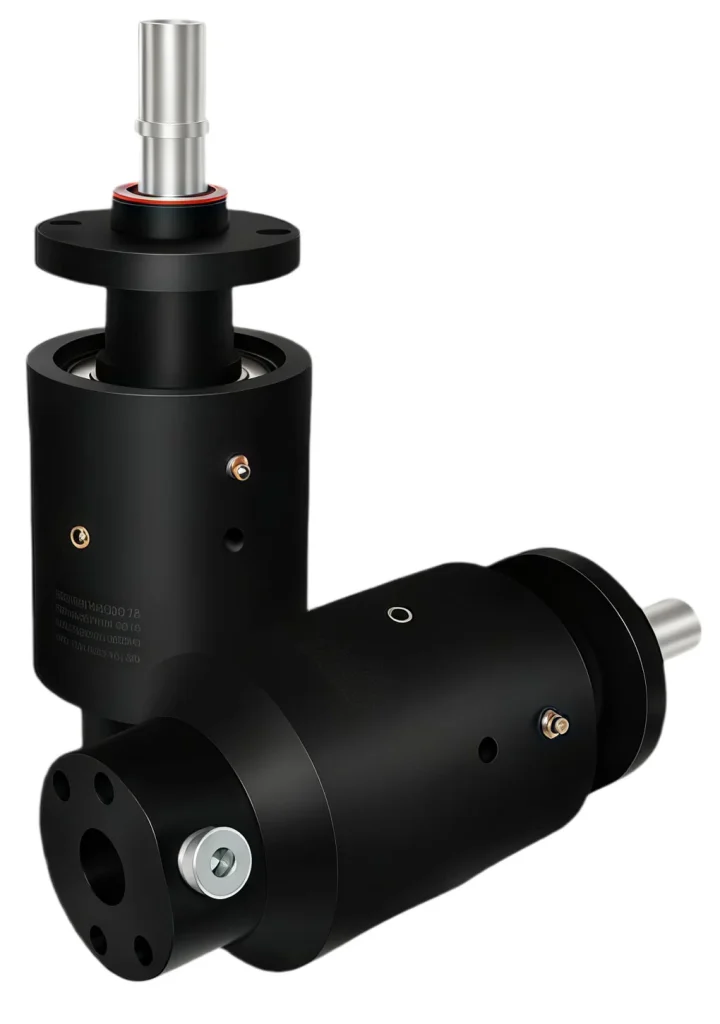
Media and pipeline environment maintenance
Strictly prevent foreign objects from entering (install filters): Hard particles such as welding slag, iron chips, and scale are the “number one killer” of the sealing surface of rotary joints. It is strongly recommended to install a precision filter at the front end of the inlet/inlet pipeline and regularly clean the filter screen to ensure that the medium entering the joint is clean.
Ensure lubrication (for specific media): If ordinary water or non-lubricating gas is being transmitted, the seal will wear out faster. Under permissible operating conditions, a small amount of lubricant can be added to the medium, or a small amount of lubricating grease can be injected through the oil filling hole (if present) periodically, to reduce dry friction on the sealing surface.
Preventing internal scaling: If transporting high-temperature water or heat transfer oil, long-term exposure to high temperatures can easily lead to carbon buildup or scale formation inside, potentially causing the seals to become stuck. It is recommended to regularly use a dedicated cleaning agent to perform circulating cleaning on the interior of pipelines and joints.
routine maintenance:
1. The high temperature and high pressure rotary joint drum and the interior of the pipeline should be kept clean. Special attention should be paid to new equipment, and filters should be added if necessary to avoid abnormal wear of rotating joints caused by foreign objects.
2. If equipped with an oil injection device, please inject oil regularly to ensure the reliability of the rotating joint bearing operation.
3. Long term disuse of the machine can cause scaling and rusting inside the rotary joint. Please be aware that there may be jamming or dripping when reusing.
4. Check the wear condition and thickness change of the sealing surface (usually normal wear is 5-10mm); Observe the friction trajectory of the sealing surface to see if there are any issues such as three-point interruptions or scratches. If there are any such problems, they should be replaced immediately.