
How do slip ring generate electricity
How do slip rings generate electricity
Slip ring is an electromechanical connector that helps you transmit power and signals between the fixed and moving parts of a machine. You can consider rotating platforms or wind turbines. It can rotate infinitely, but requires power and control signals. Slip rings can achieve this process.
It is also known as a rotating electrical joint, collector ring, or rotating electrical connector. Each name describes its main function, which is to maintain the flow of current or data through a rotating connection.
How do slip rings generate electricity?
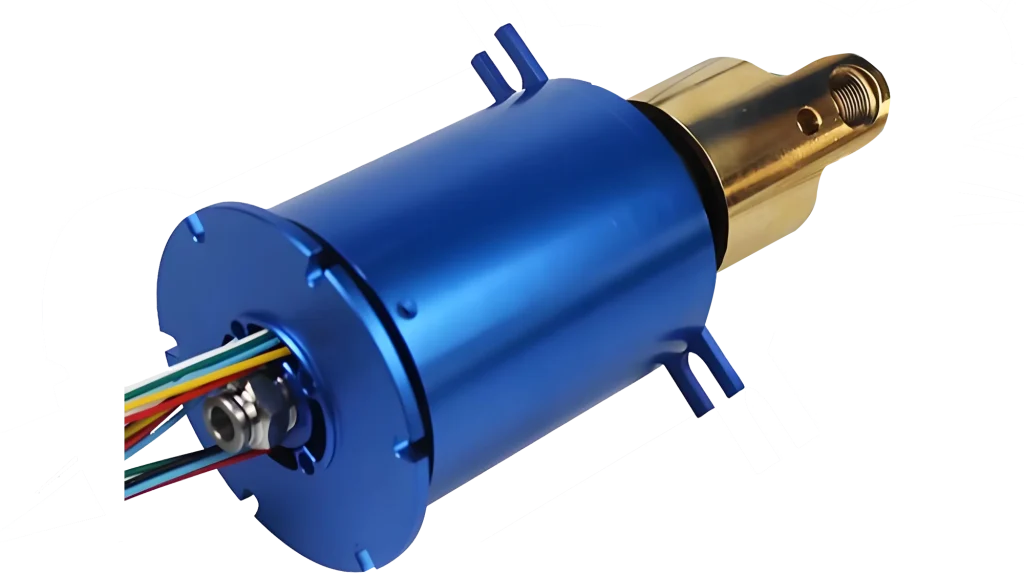
How does a slip ring work?
Basic working principle
So, how does the slip ring work? Slip rings are used for the flow of current between fixed and rotating parts. Electricity or data is transmitted through a fixed brush, which contacts a rotating ring. These brushes slide gently as the ring rotates, always keeping the circuit unobstructed.
The result is continuous transmission of power or signal throughout the entire 360 ° rotation process. No interruption, no entanglement, no interruption. The system is simple, reliable, and effective even at high speeds.
transmission process
This mechanism allows many machines to move freely while maintaining power and connectivity.
1. The power or signal enters through a fixed brush.
2. The brush maintains contact with the rotating conductive ring.
3. The current smoothly enters the rotating side.
4. The device rotates endlessly and the connection keeps opening.
Slip ring products should be placed indoors in a dry place. At the same time, screws should be tightened during window panel maintenance, and slip ring products should be sealed to avoid dust and other impurities. When the optical cable is not working, clean the ceramic plug and plug end face with alcohol and degreasing cotton, and cover them with dust caps to prevent dust from increasing or decreasing.
When handling slip rings, they should be handled with care. Do not open the slip ring when it is open. Be careful not to damage the optical cable by mechanical force and oil stains on the fiber optic connector. For example, when stepping on the optical cable with your feet and winding it, be careful not to have a radius less than 50mm.
The power cord should not be excessively bent or wrapped during use. When bending, the bending radius should be less than 4cm. When laying optical cables, it is strictly prohibited to remove the dust cover at both ends of the cable joint. It is strictly prohibited to hold the fiber optic cable joint by hand and drag it. The point of application should be at least 100 mm away from the joint.
During storage or transportation, the wire through holes should be tightly sealed, and installation screws should be equipped with flat pads and spring pads. Gently insert and remove the fiber optic cable connector. If subjected to excessive force, the fiber core will shift, affecting the quality of optical communication.
Slip ring is an electrical connector that can rotate and transmit signals and power. During the rotation process, the cables used for transmitting signals and power will not twist or be damaged. The main components of a slip ring are the slip ring body and the electric brush. The relative rotational sliding contact between the slip ring body and the electric brush completes the transmission of signals and power.
When the optical cable needs to be bent, the curvature diameter of the bent part should be greater than 3cm, otherwise its transmission characteristics will change, increasing the attenuation of light during transmission;
Power generation principle: After the wire is cut by a magnetic field, a current is generated in the wire. The generator cuts off the wires by rotating the magnetic field. The rotating magnetic field is the rotor, and the cutting line is the stator. In order to generate a magnetic field in the rotor, it is necessary to input excitation current into the rotor coil (through the process of providing direct current through the rotor coil), and send the excitation current generated by the excitation generator into the rotor coil.