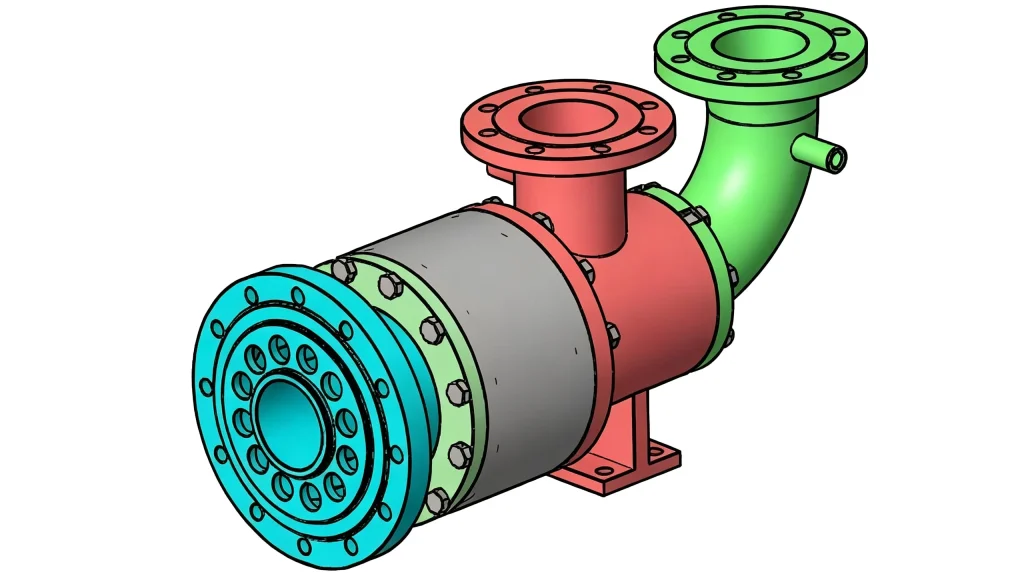
HKS type slag cooler swivel union
HKS type slag cooler rotary joint, HKS type slag cooler rotary joints, HKS type slag cooler rotary union, HKS type slag cooler rotary unions, HKS type slag cooler swivel union, HKS type slag cooler swivel unions, HKS type slag cooler swivel joint, HKS type slag cooler swivel joints
hks type slag cooler rotary joint
An hks type slag cooler rotary joint is a rotating sealing and fluid-transfer component used on slag cooling equipment. In plain terms, it lets cooling media move between fixed plant piping and a rotating cooler section without forcing the pipework to rotate with the machine. For operators, engineers, and maintenance teams, understanding this joint helps clarify why cooling performance, leakage control, alignment, and safe shutdown routines all depend on a relatively compact but critical assembly.
What is an hks type slag cooler rotary joint?
An hks type slag cooler rotary joint is a specialized rotary union for a slag cooler, designed to maintain a sealed passage for cooling water, air, or another cooling medium while one side of the equipment rotates. The “HKS type” wording is typically treated as a type, model, or design designation, so the exact construction should always be checked against the supplier drawing or site specification.
The basic idea is simple: the slag cooler rotates or moves while the supply and return lines stay fixed. The rotary joint sits between those two worlds. It creates a controlled interface where the medium can enter, circulate, and leave the cooling system while mechanical seals, bearings, or support features manage movement, pressure, and thermal expansion.
In slag-handling environments, this is not a gentle duty. The joint may sit near hot material, dust, vibration, uneven loading, and frequent temperature changes. A standard light-duty swivel may not be suitable because the application demands heat tolerance, sealing stability, and rugged mechanical support. That is why a correctly selected hks type slag cooler rotary joint is more than a pipe connector; it is part of the cooling system’s reliability strategy.
The role of the rotary joint in slag cooling
Slag cooling equipment is used to reduce the temperature of hot slag after industrial processing. Depending on the plant design, the cooler may use a rotating drum, barrel, cylinder, or similar moving body to expose hot material to a controlled cooling process. The equipment has to transfer heat away without letting the process become unstable, unsafe, or unnecessarily damaging to the machinery.
The rotary joint supports that process by keeping the cooling circuit connected while the cooler moves. Without it, fixed pipework would twist, fatigue, and fail. Flexible hoses might work in some limited movements, but continuous rotation or heavy-duty thermal service usually requires a component specifically designed for rotary transfer.
The joint also helps preserve the separation between the cooling medium and the surrounding environment. When the seal faces, packing, gaskets, or internal passages are in good condition, the medium follows the intended route. When they are worn, misaligned, or overheated, leakage can begin, cooling efficiency can fall, and surrounding equipment may be exposed to water, steam, dust, or contamination.
A slag cooler rotary joint therefore has three practical jobs:
- Fluid transfer: It provides an internal path for the cooling medium to enter or exit the rotating cooler.
- Motion separation: It allows rotation while the external piping remains stationary and supported.
- Leakage control: It contains the medium under the operating conditions specified for the equipment.
Those functions may sound basic, but they must happen at the same time. A joint that seals well but cannot tolerate shaft movement will wear quickly. A joint that rotates freely but cannot maintain seal pressure will leak. A joint that fits mechanically but does not match the cooling circuit may restrict flow or create unwanted pressure loss.
How does an hks type slag cooler rotary joint work?
An hks type slag cooler rotary joint works by using a stationary housing or connection body, a rotating shaft or rotor, and a sealing arrangement between them. The stationary side connects to fixed pipework, while the rotating side connects to the slag cooler’s moving section; the internal passage lets the cooling medium pass through the joint as the equipment turns.
The details vary by design, but most rotary joints follow the same operating principle. One element remains fixed, another rotates, and the seal interface controls leakage between them. Bearings, bushings, guide surfaces, or support hardware may help keep the rotating element stable. Gaskets, O-rings, mechanical seal faces, or packing materials may be used to close the pressure boundary.
In many slag cooler applications, the joint may need to manage both supply and return paths. Some designs use a single passage, while others use dual-flow or multi-passage arrangements. A dual-flow configuration can allow cooling medium to enter through one path and return through another, reducing the need for separate rotating connections. The correct arrangement depends on the cooler design, flow path, media type, and plant piping layout.
A useful way to picture the function is to imagine a fixed water line feeding a rotating drum. If the line were welded directly to the drum, it would twist apart as soon as the drum turned. The rotary joint creates a transition point: the pipe stays still, the drum rotates, and the medium continues moving through the sealed passage.
Main parts commonly found in the assembly
Although the exact HKS design should be confirmed from the manufacturer or equipment documentation, the following components are commonly associated with heavy-duty rotary joint assemblies:
- Stationary housing: The fixed outer body that connects to the plant piping or mounting bracket.
- Rotating shaft or rotor: The moving internal or external element that turns with the cooler.
- Sealing system: The parts that reduce or prevent leakage between stationary and rotating surfaces.
- Bearings or support surfaces: Features that help control movement, load, and alignment.
- Media passages: Internal channels that carry the cooling medium through the joint.
- Connection flanges or threaded ports: Interfaces used to connect the joint to pipework, hoses, or the cooler body.
- Drain, vent, or inspection points: Optional features that support commissioning, maintenance, or leak monitoring.
Each part matters because failure in one area often affects the rest. A worn bearing can disturb the seal faces. A blocked passage can increase heat and pressure. A poorly supported pipe connection can load the housing and shorten seal life. Treating the rotary joint as a complete assembly, rather than a single replaceable seal, usually leads to better maintenance decisions.
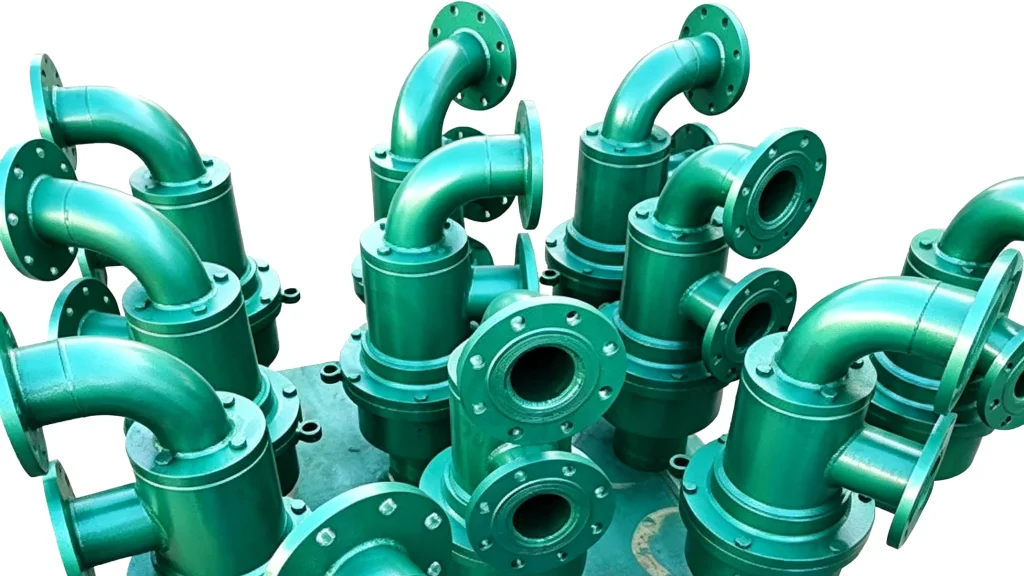
2、 Excellent performance characteristics
The HK type rotary joint can fully circulate the cooling medium in the cooling pipes inside the drum, and efficiently exchange heat with high-temperature slag. This is thanks to its reasonable flow channel design, which ensures that the cooling medium is evenly distributed in the pipeline, increases the contact area with the slag, and quickly removes the heat of the slag, causing the slag temperature to rapidly decrease and meet the requirements for subsequent processing or discharge.
Reliable sealing performance
Good sealing performance is a key indicator of rotary joints. HK type products can effectively prevent the leakage of cooling medium under high temperature, high pressure, and high-speed rotation conditions through advanced sealing technology and high-quality sealing materials. This not only ensures the normal operation of the slag cooler, avoids equipment failures and maintenance shutdowns caused by medium leakage, but also reduces the waste of medium and potential pollution to the environment.
Stable operating characteristics
Its high-precision manufacturing process and high-quality component selection make the rotary joint highly stable during operation. Even under long-term continuous operation and complex working conditions, such as the impact of slag particles and temperature fluctuations, the HK type rotary joint can maintain stable rotation speed and good sealing effect, reduce equipment vibration and noise, and provide a solid guarantee for the stable operation of the entire slag cooling system.
Good adaptability
The HK type slag cooler rotary joint can be customized according to different models of slag coolers and actual working conditions. Whether it is a small-scale laboratory slag cooling equipment or a large-scale industrial production line slag cooler, whether using water, oil or other cooling media, it can meet various specific needs by adjusting structural parameters and material selection, and has wide adaptability and universality.
HK type slag cooler rotary joint