
Do you offer custom rotary joint?
Do you offer custom rotary joints?
yes, we can offer custom rotary joints, for custom rotary joints, you need to give the parameters to our company:
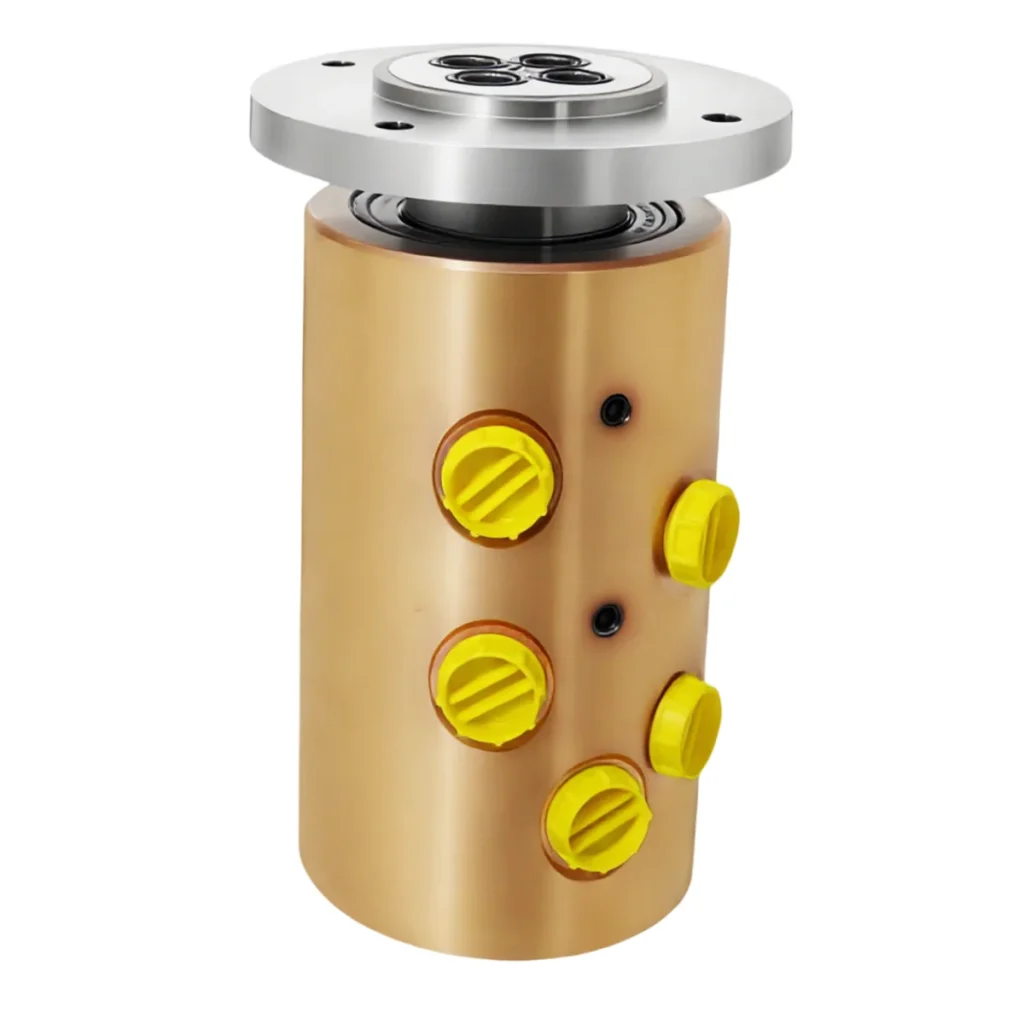
1. Basic parameters
1. * * Clarify the type of medium**
The type of medium transmitted by the rotary joint directly affects its material selection and sealing design. Common media include water, oil, steam, compressed air, hydraulic oil, etc. Different media have different requirements for the corrosion resistance, temperature resistance, and sealing performance of rotary joints. For example:
-When transmitting aqueous media, corrosion-resistant materials such as stainless steel or special coatings should be selected.
-When transmitting high-temperature steam, it is necessary to choose high-temperature resistant materials (such as silicon carbide sealing rings) and high-temperature sealing structures.
-When transmitting hydraulic oil, the oil resistance and wear resistance of the material need to be considered.
—
2. * * Determine work pressure**
The working pressure range of the rotary joint is an important parameter for its selection. When selecting, it is necessary to ensure that the rated pressure of the rotary joint is higher than the actual working pressure to avoid sealing failure or joint damage caused by excessive pressure. At the same time, it is necessary to consider the impact of pressure fluctuations and shocks on the rotating joint and select products with sufficient safety factors.
—
3. * * Consider working temperature**
The working temperature range of rotary joints directly affects their material selection and sealing performance. High temperature environments may cause aging, deformation, or failure of sealing materials, while low temperature environments may cause materials to become brittle. Therefore, when selecting, it is necessary to choose suitable materials and sealing structures based on the actual working temperature. For example:
-High temperature environments (such as steam applications) require the selection of high-temperature resistant materials, such as polytetrafluoroethylene (PTFE) or silicon carbide.
-Low temperature environments (such as refrigeration equipment) require the selection of low-temperature resistant materials, such as special rubber or metal seals.
—
4. * * Speed requirements**
The rotational speed of a rotary joint directly affects the lifespan of its bearings and seals. High speed may lead to increased wear of seals or overheating of bearings. When selecting, it is necessary to choose a suitable rotary joint based on the speed range of the equipment and ensure that its speed performance meets the requirements. For high-speed applications, rotary joints with special bearings or lubrication structures can be selected.
—
5. * * Connection method and size**
The connection method (such as threaded connection, flange connection, quick plug connection, etc.) and size of the rotary joint should match the equipment. When selecting, it is necessary to choose the appropriate connection method and size based on the interface specifications and installation space of the device. At the same time, the weight and installation convenience of the rotary joint also need to be considered.
—
6. Sealing performance**
Sealing performance is the core indicator of rotary joints, which directly affects their service life and reliability. When selecting, it is necessary to choose suitable sealing materials and structures based on the properties, pressure, and temperature of the medium. Common sealing materials include rubber, polytetrafluoroethylene (PTFE), silicon carbide, etc. For high demand applications, multiple seals or special sealing structures can be chosen to improve reliability.
—
7. Corrosion resistance**
The material selection of rotary joints is particularly important in corrosive media environments. When selecting, corrosion-resistant materials such as stainless steel, Hastelloy, titanium alloy, etc. should be chosen based on the corrosiveness of the medium. At the same time, the corrosion resistance of the sealing material should also be considered to avoid sealing failure caused by corrosion.
—
8. Wear resistance**
Under high-speed or high load conditions, the seals and bearings of rotary joints may wear due to friction. When selecting, wear-resistant materials (such as silicon carbide or ceramics) and lubrication structures should be chosen to extend their service life.
—
9. * * Convenience of maintenance and replacement**
Rotating joints require regular maintenance or replacement during use. When selecting, consideration should be given to its maintenance convenience, and products that are easy to disassemble and replace should be chosen. At the same time, it is also necessary to understand whether the supplier provides technical support or spare parts services.
—
10. * * Environmental adaptability**
The working environment of rotary joints may include complex conditions such as high temperature, low temperature, humidity, dust, vibration, etc. When selecting, it is necessary to choose products that are suitable for the actual environment. For example:
-Rust proof materials should be selected for humid environments.
-Rotary joints with dust-proof structures should be selected for dusty environments.
-Products with good seismic performance should be selected for vibration environments.
—
11. * * Brand and Quality**
Choosing a well-known brand of rotary joint can ensure product quality and after-sales service. Famous brands usually have strict quality control systems and rich application experience, which can provide more reliable products and technical support.
—
12. * * Cost and cost-effectiveness**
On the premise of meeting performance requirements, cost factors should also be considered when selecting. Choosing products with high cost-effectiveness can reduce procurement and maintenance costs while ensuring performance.
—
13. * * Special Requirements**
Some application scenarios may have special requirements, such as explosion-proof, anti-static, leak proof, etc. When selecting, it is necessary to choose products that meet special requirements based on actual needs.
II. Performance indicators
1. Temperature range: Typically, there are two types: normal temperature type (-20℃~80℃) and high temperature type (with an upper limit of up to 300℃). The medium temperature must fall within this range.
2. Rotational speed: There is a significant difference between high-speed models (such as 5000RPM) and low-speed models. It is necessary to match the rotational speed of the equipment, as excessive speed can lead to wear and tear.
III. Medium Compatibility
1. Medium type: Different media such as water, oil, steam, etc. require corresponding sealing materials (e.g., graphite for high temperature resistance, fluororubber for corrosion resistance).
2. Flow requirements: The size of the pipe diameter affects the flow rate, and it is necessary to calculate to avoid pressure loss caused by excessively high flow velocity.