
Common materials for rotary joint
Common materials for rotary joints
Which parts of a rotary joint require material selection?
Most rotary joint material decisions involve several components rather than a single part. Even when a product is sold as one assembly, each component may be selected for a different function.
Common material-sensitive areas include:
- Housing or body: Provides structural support and contains the media.
- Rotor, shaft, or nipple: Connects to the rotating equipment and must resist wear, pressure, and bending loads.
- Seal faces: Create the dynamic sealing interface and must manage friction, heat, and wear.
- Secondary seals: Elastomers or packing elements that seal static or semi-dynamic areas.
- Bearings or bearing supports: Help control alignment and rotational stability.
- Springs and fasteners: Maintain seal loading and mechanical integrity.
- Coatings or platings: Improve hardness, corrosion resistance, release properties, or wear behavior.
Looking at only one material can create hidden weak points. A stainless housing, for example, may not solve a failure caused by an incompatible elastomer or an abrasive seal pairing.
What metals are commonly used in rotary joint bodies and rotors?
Metal selection usually depends on pressure, mechanical load, media, environment, and cost. Carbon steel and alloy steel are often used where strength and durability are priorities and the fluid is not highly corrosive. Stainless steel is commonly chosen when corrosion resistance, washdown exposure, or cleaner process conditions are important.
Brass and bronze may be used in some water, air, and lower-load applications because they offer machinability and reasonable corrosion resistance in suitable environments. Aluminum can be attractive where low weight matters, but it may not be appropriate for every pressure, wear, or chemical condition. Cast iron may appear in some industrial designs, especially where rigidity and cost control are priorities.
The key question is whether the metal can maintain its shape, surface condition, and corrosion resistance throughout the expected operating cycle. If the rotor surface scratches, pits, or wears unevenly, seal performance can decline even if the body remains structurally sound.
When is stainless steel the right choice?
Stainless steel is often selected when the rotary joint must resist corrosion from water, cleaning processes, humid environments, certain chemicals, or demanding plant conditions. It can also be preferred where cleanliness and long-term appearance matter. However, stainless steel is not automatically the best choice for every application.
Different stainless grades offer different levels of corrosion resistance, strength, machinability, and cost. Some environments can still attack stainless steel, especially if chlorides, high temperatures, or stagnant conditions are present. Stainless steel also needs proper surface finish and pairing with suitable seals to prevent wear-related problems.
Stainless steel is worth considering when the application involves:
- Process water, washdown, or wet environments
- Food, beverage, pharmaceutical, or cleaner industrial settings where compatible designs are required
- Corrosive atmospheres or mild chemical exposure
- Applications where rust contamination would create problems
- Longer service expectations in environments that attack plain carbon steel
The interior of the rotary joint is made of precision parts, which can ensure stable operation during high-speed rotation and can work normally in harsh environments such as high temperature or high pressure. Different types of rotary joints also have special requirements for materials. Here are several commonly used materials for rotary joints.
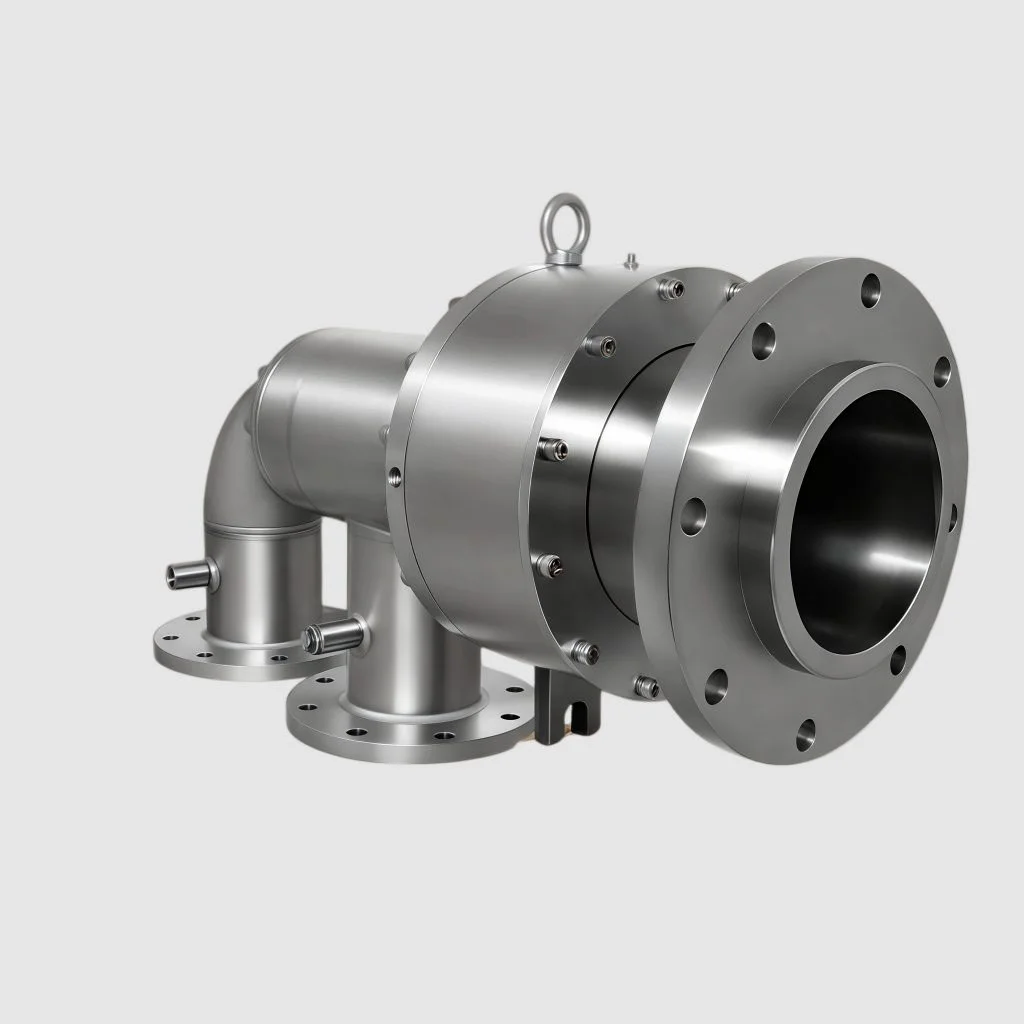
Common materials for rotary joints
1. Made of stainless steel, 304 stainless steel has strong rust resistance and can withstand high temperatures up to 1000 ℃. It also has good corrosion resistance to alkaline solutions and most organic and inorganic acids; 316L stainless steel, also known as titanium steel, has corrosion resistance and high temperature resistance.
2. Made of carbon steel material, grade 45 carbon steel, with high strength, good plasticity, and toughness, it is used to manufacture small section quenched and tempered parts. The rotary joint has a high load and the stress of the normalized parts is low. Surface hardened parts with lower strength requirements can also be used, but cracks will form during water quenching and the shape of the parts will be complex. The parts should be quenched in hot water, which results in poor weldability.
3. Ductile iron can improve the mechanical properties, plasticity, and toughness of cast iron, achieving higher strength than carbon steel.
4. Silicon carbide special ceramics have lower density than ordinary graphite rings, higher flexural and compressive strength, lower coefficient of thermal expansion, and more stable temperature resistance, while imported graphite rings are more wear-resistant and heat-resistant.
The outer shell of the rotary joint is made of copper and can withstand high-speed rotation. If there are special requirements, remember to use the corresponding materials. For example, the heat resistance temperature of high-temperature rotary joints is determined by the heat resistance of each component. The heat-resistant temperature should be specified before use, but it must be lower than this temperature during use.