
Application and Testing of High-Pressure Rotating Joint
Application and Testing of High-Pressure Rotating Joints
high-pressure rotating joint
A high-pressure rotating joint keeps fluid moving through equipment while one side of the connection turns, indexes, or pivots. Built for hydraulic and industrial systems, it helps reduce hose twist, connection stress, and downtime in applications where a standard fixed fitting cannot move with the machine. Use it as a swivel joint, rotary union, rotating coupling, or hydraulic joint wherever pressure and motion need to work together safely.
What does this rotating joint help you do?
This rotating joint allows pressurized media to pass through a rotating or oscillating connection without forcing the hose, pipe, or tube to absorb the movement. In practical terms, it gives designers and maintenance teams a cleaner way to route hydraulic lines on moving equipment, especially where rotation would otherwise create twisting, rubbing, or premature hose wear. The result is a more controlled connection point for machinery that needs reliable movement under pressure.
A high-pressure coupling like this is especially useful when space is limited and the connection must stay compact, accessible, and serviceable. Instead of building extra hose loops or accepting strain at the fitting, the joint becomes the movement point. That can simplify assembly, improve line routing, and make daily operation easier to manage.
Built for pressure, motion, and practical installation
A high-pressure rotating joint is not just a connector. It is a mechanical interface designed to manage load, sealing, rotation, and fluid transfer at the same time. The right rotary union must match the pressure range, rotation style, media, port configuration, and installation environment of the machine it serves.
This product page is written for buyers comparing a swivel joint or rotating coupling for hydraulic equipment, production machinery, mobile systems, test rigs, and custom OEM builds. Exact specifications can be configured or selected based on your application, so you can avoid overbuying, under-specifying, or forcing a standard part into a demanding installation.
Key product strengths include:
- Supports rotating, pivoting, or oscillating hydraulic connections where a fixed fitting is not suitable.
- Helps reduce hose twist and mechanical stress in moving assemblies.
- Provides a cleaner routing option for hydraulic lines in compact equipment layouts.
- Can be specified as part of a new machine design or replacement maintenance solution.
- Suitable for applications that require a high-pressure coupling with controlled movement.
- Helps protect nearby components by reducing uncontrolled hose movement.
Applications for hydraulic and industrial systems
The most common reason to choose a high-pressure rotating joint is simple: the machine moves, but the fluid connection still has to hold pressure. A fixed connection may work on a static line, yet become a weak point when the connected component turns repeatedly. A hydraulic joint designed for rotation gives that movement a proper mechanical path.
Typical use cases include:
- Hydraulic cylinders or arms that pivot through repeated cycles.
- Rotating fixtures, indexing tables, reels, and turntables.
- Mobile equipment where hose routing changes as the machine articulates.
- Industrial presses, forming systems, and automated handling equipment.
- Test benches and production machinery with moving hydraulic circuits.
- Custom OEM assemblies where compact motion control is required.
For example, a maintenance team dealing with recurring hose failure on a pivoting assembly may not need a longer hose. They may need a rotating coupling placed at the movement point, so the line no longer acts like a torsion spring every time the machine cycles. That kind of change can make the connection easier to inspect, easier to route, and better aligned with how the equipment actually moves.
Product features that matter in real installations
When selecting a swivel joint, the details behind the part matter as much as the basic connection size. Pressure rating, media compatibility, sealing design, rotation speed, temperature range, and mounting orientation all influence performance. Because these values depend on the selected model and operating conditions, the safest approach is to confirm them before ordering.
Important selection points include:
- Pressure requirement Match the joint to the system’s working pressure and any expected pressure spikes. A high-pressure rotating joint should be chosen for the real operating environment, not only the average pressure shown on a diagram.
- Movement pattern Confirm whether the connection rotates continuously, turns occasionally, or oscillates through a limited angle. A rotary union used for continuous rotation may require different design considerations than a joint used on a pivoting arm.
- Media compatibility Hydraulic oil, water-based fluids, lubricants, and other media can require different seal and material choices. Confirm compatibility before installation.
- Port and mounting configuration The rotating joint should fit the available space without creating new interference points. Port orientation, thread type, and installation access all affect serviceability.
- Maintenance expectations Consider how often the joint will be inspected and how accessible it will be once installed. A well-placed hydraulic joint can make future maintenance faster and cleaner.
1. Firstly, try to use high-pressure rotary joint interfaces during installation and connect them to the machine with hoses. Adopting optimal support to reduce auxiliary weight and vibration, effectively extending the service life of high-pressure rotary joints. The support and stopping rotation of high-pressure rotary joints should be appropriate. In general, the diameter of the rod should be 1-3mm smaller than the anti rotation hole to avoid affecting the compensation and free adjustment of the high-pressure rotary joint.
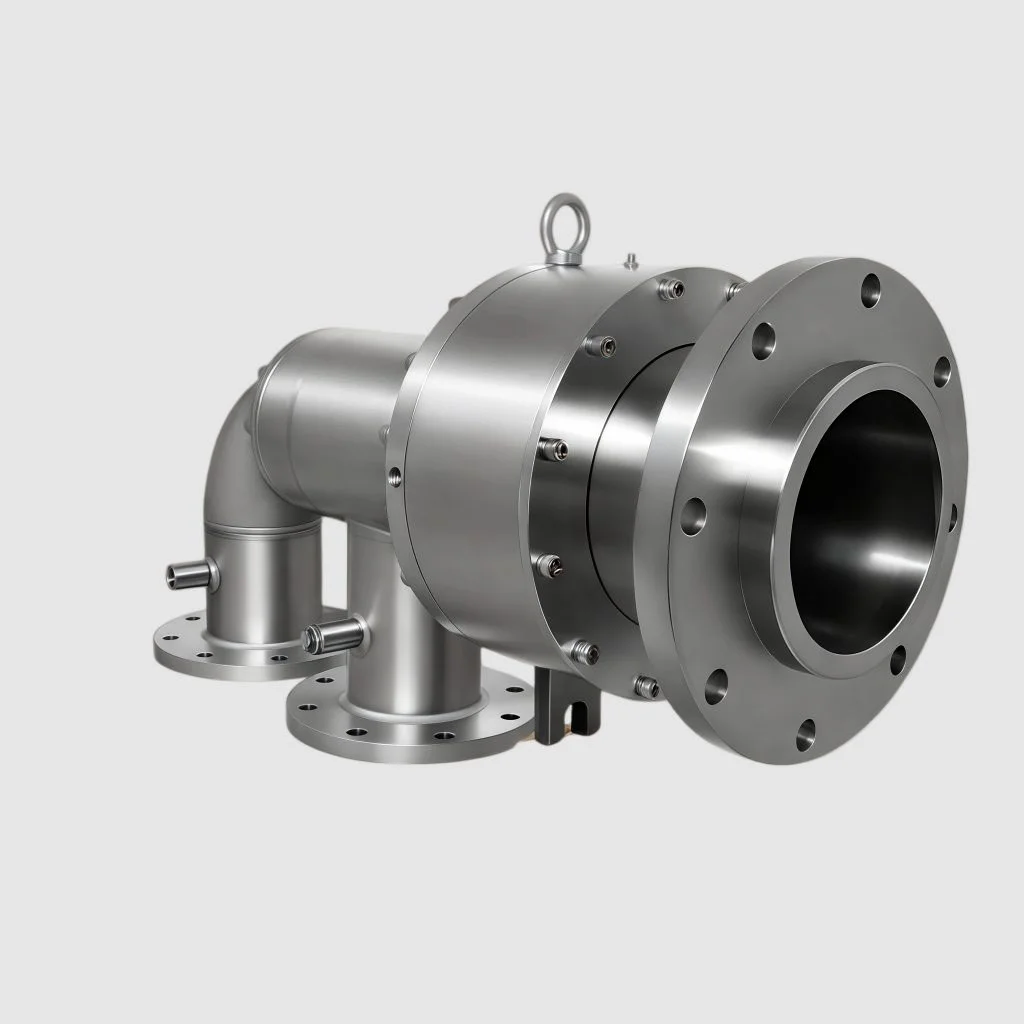
2. When assembling the inner tube, pay attention to size matching and weight distribution. It is recommended to use E7/H8 tolerance fitting for the fit between the high-pressure rotary joint inner pipe and the joint. The connection between high-pressure rotary joints and pipelines must be made with hoses, and steel connections are strictly prohibited.
3. There is an oil injection device, please inject oil regularly to ensure the reliability of the high-pressure rotating joint bearing operation. Due to long-term disuse of the machine, it can cause scaling and rusting inside the high-pressure rotary joint. Please note that it may get stuck or drip when reused. The high-pressure rotary joint of the heat medium should be gradually heated to avoid sudden temperature changes. It is strictly prohibited for foreign objects to enter the rotating joint. The rotary joint cannot idle for a long time.
4. The high-pressure rotary joint has been precision manufactured, and collision should be avoided during handling and storage to avoid damaging the interface and internal parts. During installation, it should be concentric with the connecting shaft to ensure the good operation of the high-pressure rotary joint. When installing high-pressure rotary joints with threaded connections, attention should be paid to whether the thread direction of the inner and outer pipes is consistent with the rotation direction of the rollers, and the thread direction of the inner and outer pipes should also be consistent.
5. How to test high-pressure rotary joints?
Test the technical parameters of the product, such as pressure, speed, temperature, etc. Finally, there are also some data, such as the service life test, seismic test, and axle load test of the high-pressure rotary joint. Test the various indicators of the high-pressure rotary joint in a constant environment, record the test data, and effectively analyze the characteristics of the product and the application environment. This will ensure the quality of the product, I assure you.
6. Try to rotate the high-pressure rotary joint. Sometimes the medium will circulate during use, but the high-pressure rotary joint is fixed. This situation can lead to uneven traffic. In the long run, if there is an imbalance elsewhere, it will intensify the wear of a joint surface and reduce its service life