
Advantages of MXPH series rotary joint
Advantages of MXPH series rotary joints, Advantages of MXPH series rotary unions, Advantages of MXPH series swivel joints, Advantages of MXPH series swivel unions
mxph series rotary joint
A rotary joint is a small component with a big job: it lets fluid move between stationary piping and rotating equipment. The mxph series rotary joint belongs in this practical category, supporting water-transfer needs in industrial machinery where steady flow, sealing reliability, and maintainability matter. For buyers, engineers, and maintenance teams, understanding the application fit is the first step toward choosing it well.
What is an MXPH rotary joint used for?
An MXPH rotary joint is used to transfer water into or out of rotating equipment while helping maintain a sealed connection during operation.SD Technology identifies MXPH among its water-series rotary joints, with water-series models used in equipment such as continuous casting machines, coating machines, calenders, printing machines, PVC calendering equipment, and laminating machines across sectors including steel, textiles, plastic film and sheet, metallurgy, and chemical fiber cooling systems.
In practical terms, this means the joint helps cooling or process water reach rotating rolls, cylinders, or shafts without forcing the system to stop rotating. That makes it relevant in production lines where temperature control, material consistency, and equipment uptime are closely connected.
Why the right rotary joint matters
A rotary joint is easy to overlook until leakage, overheating, vibration, or premature wear affects the line. When water delivery is inconsistent, downstream quality can suffer, and maintenance teams may spend more time diagnosing symptoms than solving the root issue.
The right joint supports smoother operation by matching the medium, pressure, speed, connection style, and installation environment. For an mxph series rotary joint, the conversation should focus less on the name alone and more on how the model fits the machine, the water circuit, and the maintenance routine.
Selection points before ordering
Before choosing a rotary joint, gather the operating details that determine compatibility. Even when a model family is known, the correct configuration can depend on installation and process conditions.
Key points to confirm include:
- Medium: Verify that the joint is intended for water or the specific fluid in the system.
- Temperature range: Cooling water, hot water, and mixed operating cycles can create different sealing demands.
- Pressure and speed: These values affect seal choice, bearing load, and service life.
- Thread or flange connection: Matching the existing shaft, pipework, and equipment layout reduces installation issues.
- Flow direction and passage design: Single-flow and dual-flow arrangements require different internal designs.
- Space around the machine: Maintenance access matters, especially on compact or guarded production lines.
1. Adopting a balanced sealing design with precision grinding, suitable for use in high-temperature and high-speed working conditions;
2. Internally, a disc-shaped ring and hard alloy seal are used to minimize the sealing load surface, ensuring good sealing performance, increasing wear resistance, and improving service life;
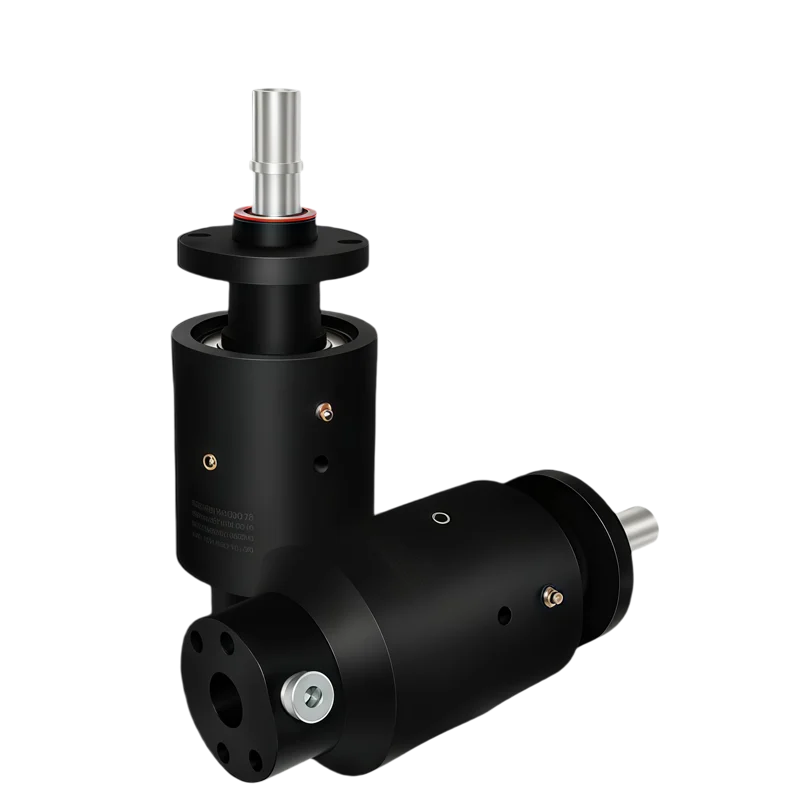
3. There is a locking pin inside the shell, which serves as a sealing ring to prevent rotation;
4. The shell is a worn copper shell with high density, and it is not easily deformed under high temperature use;
5. There are four observation holes on the shell and a drainage groove inside, which facilitates customers to install from multiple angles. If the product does not leak significantly, it can also prevent the medium from overflowing to the bearing, effectively protecting the bearing and reducing maintenance costs;
6. Exquisite and unique appearance, low resistance, suitable for passive rollers, small specifications do not require the installation of fixed devices;