
How to choose a high speed rotary joints
In order to enable a part of the pressurized fluid pipeline of the rotary joint to rotate around the axis relative to another concentric part, it is necessary to provide a joint between the two parts and a device for sealing the rotary joint
उच्च-गति रोटरी जोड़ों की संरचनात्मक विशेषताएँ: संक्षारण-प्रतिरोधी सामग्री, विशेष डिज़ाइन जो सीमित परिस्थितियों में भी जोड़ को नुकसान नहीं पहुँचाता, सीलबंद रोलिंग बेयरिंग्स को जीवन भर चिकनाई की आवश्यकता नहीं होती, संतुलित सीलिंग भार और घिसाव न्यूनतम तक कम हो जाते हैं, टॉर्क कम होता है, सीलिंग सामग्री में स्व-चिकनाई गुण होते हैं, और स्प्रिंग घटक द्रव चैनल के बाहरी हिस्से में स्थित होते हैं, जिससे दबाव हानि कम होती है, माध्यम में कणों के जमाव से बचाव होता है, और समग्र रूप से द्रव की गुणवत्ता में सुधार होता है।.
हाइड्रोलिक उच्च-गति वायुचालित रोटरी जॉइंट पानी, गर्म तेल और भाप में लचीले अनुप्रयोगों के लिए उपयुक्त है।
स्टेनलेस स्टील की बाहरी ट्यूब जंग-प्रतिरोधी है और इसकी सेवा अवधि लंबी होती है।
न्यूनतम दबाव हानि के साथ पूर्ण और एकसमान प्रवाह डिजाइन
दो सटीक आयातित बेयरिंग्स दीर्घकालिक परेशानी-मुक्त संचालन सुनिश्चित करने के लिए समर्थित हैं।
संतुलित यांत्रिक सील डिज़ाइन सीलिंग लोड के कारण सीलिंग सतह पर होने वाले घिसाव को कम करता है, जिससे सेवा जीवन में काफी वृद्धि होती है।
ग्राहक की आवश्यकताओं के अनुसार सील करने वाली सतह के लिए सामग्री चुनें।
बाहरी पाइप में थ्रेड्स या क्विक-चेंज फ्लैंज कनेक्शन विधि होती है, जो मजबूत इंस्टॉलेशन लचीलापन प्रदान करती है।
शेल में बेयरिंग्स के उचित रखरखाव और उनकी सेवा अवधि बढ़ाने के लिए तेल इंजेक्शन नोजल लगे होते हैं।
शेल में रिसाव और घिसाव की स्थिति का समय पर निरीक्षण करने के लिए अवलोकन छेद लगे होते हैं।
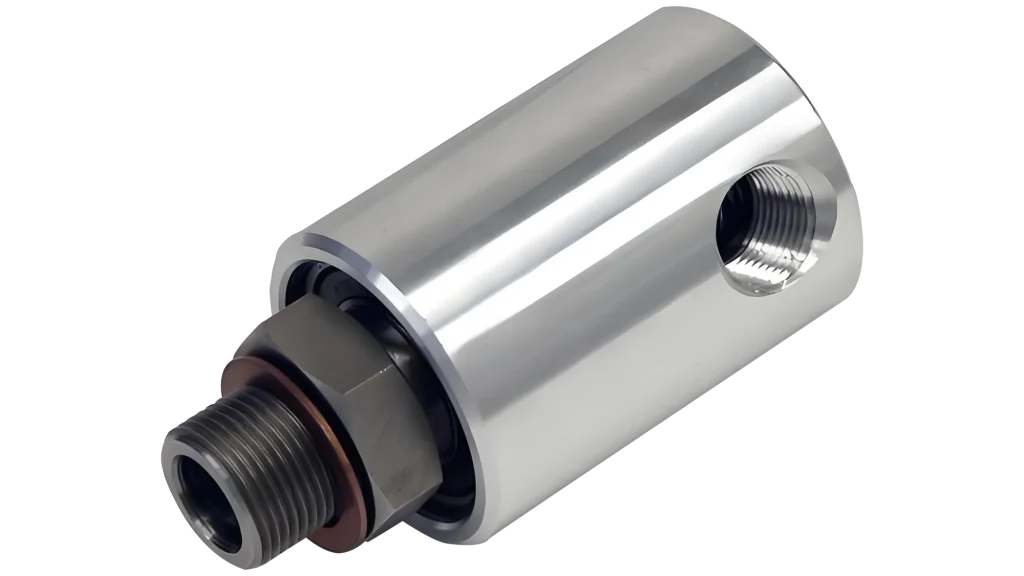
how to choose high speed rotary joints
High speed rotary joints help transfer media between stationary piping and rotating equipment without interrupting motion. Choosing the right model affects uptime, seal life, heat control, and maintenance access, especially when your application runs at elevated RPM. This page helps you evaluate the product details that matter before you request a quote or specify a replacement.
Which high speed rotary joint is right for your application?
The right high speed rotary joint is the one matched to your media, speed, pressure, temperature, shaft layout, and duty cycle. A joint that looks similar on the outside can perform very differently if the seal material, bearing support, connection style, or flow path is wrong for the equipment. Start with the operating conditions, then narrow the choice by installation space and maintenance expectations.
Useful details to gather before selection include:
- Rotational speed: Note normal operating RPM and any peak speed during startup, testing, or process changes.
- Media type: Identify whether the joint will carry air, water, coolant, hydraulic oil, steam, gas, or another process fluid.
- Pressure and temperature range: Include both steady operating values and short-term spikes.
- Flow direction and passage count: Confirm whether the application needs single-flow, dual-flow, or multi-passage transfer.
- Mounting orientation: Check shaft connection, thread type, hose clearance, and whether side or axial ports are required.
- Maintenance access: Consider how quickly seals, hoses, or the complete unit can be inspected or replaced.
-
Key product features to compare
When reviewing high speed rotary joints, focus on features that directly affect performance rather than appearance alone. The most useful product specifications are the ones that help you avoid leakage, premature wear, and installation problems.
Look for options such as:
- Balanced seal designs that support stable operation at higher rotational speeds.
- Bearing arrangements suited to the expected load and shaft behavior.
- Seal materials compatible with the media and temperature range.
- Corrosion-resistant body materials when fluids or environments require it.
- Compact housings for tight machinery spaces.
- Connection styles that match existing equipment and reduce adapter complexity.
- Drain, vent, or leakage management features where the process requires them.
Pricing depends on configuration
High speed rotary joint pricing usually depends on size, material, seal package, speed rating, pressure rating, passage configuration, and order quantity. A standard replacement may be straightforward, while a demanding custom setup may require application review before pricing is confirmed. Instead of guessing, share your operating data so the recommended option and quote reflect the real conditions.