
关于中央旋转接头质量差异的讨论
Central rotary joint is a sealing device that connects rotating components and fixed pipelines, and transmits hydraulic oil, water, air or electrical signals during relative rotation. It is mainly used for construction machinery such as excavators and shield machines that can rotate continuously 360 degrees
Understanding the quality differences among Central Rotary Joints is essential for engineers and maintenance managers who depend on reliable fluid transfer in rotating machinery. These precision mechanical devices serve as the connection point between stationary supply lines and rotating equipment such as drums, rolls, spindles, and turrets. Variations in seal design, material grade, machining precision, bearing quality, and surface finish directly determine whether a rotary union will deliver years of leak-free service or require frequent downtime for repair and replacement. This guide examines the critical quality differentiators of industrial rotary interfaces, explains how to evaluate construction standards, and provides a practical framework for selecting the right product class for your operating conditions.
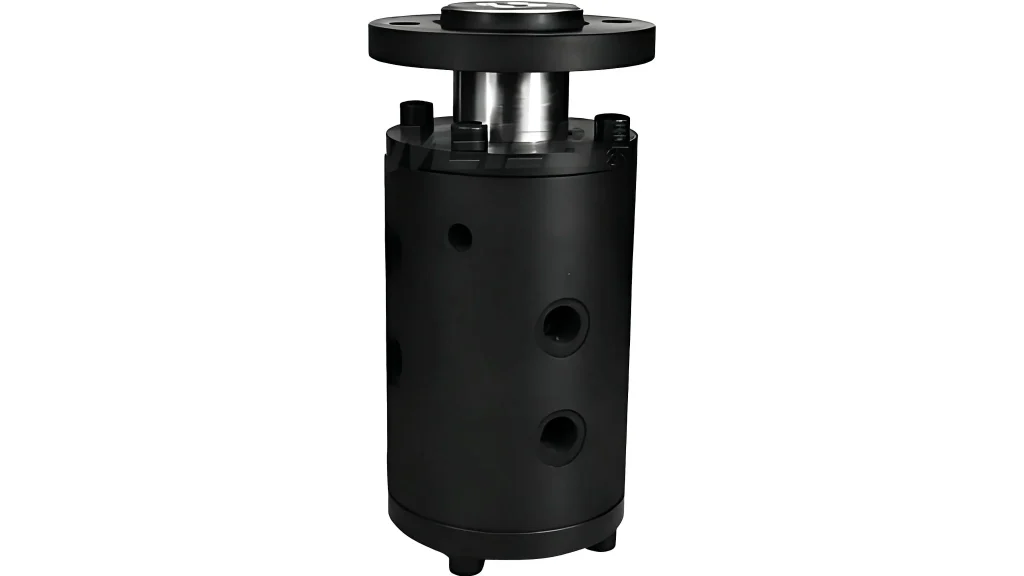
Quick Preview: Central Rotary Joint Quality Grades
| Quality Grade | Seal Technology | Materials | Typical Applications |
|---|---|---|---|
| Economy / Light-Duty | Flexible graphite, molded rubber lip seals | Cast iron, carbon steel, basic bronze | Low-speed water lines, HVAC, basic conveyors |
| Standard Industrial | Mechanical seal with carbon/ceramic faces | Ductile iron, 316 stainless steel, brass | Paper machines, plastics, printing presses |
| Premium / Heavy-Duty | Balanced mechanical seal, tungsten carbide faces | 316L stainless steel, hardened alloy steel | Steel mills, rubber calenders, laminating |
| High-Precision | Custom lapped seal faces, low-torque design | Precision-ground 316L, titanium, ceramics | Machine tools, semiconductor, medical imaging |
| Specialized / Custom | Application-specific seal geometry | Engineered alloys, coatings, composites | Aerospace, defense, cryogenic, subsea |
| Sanitary / Food-Grade | Elastomer or PTFE seals, polished surfaces | 316L stainless steel, FDA-compliant materials | Food processing, pharmaceuticals, cosmetics |
| High-Temperature | Metal or graphite seals, thermal expansion compensation | Heat-resistant alloys, Inconel, ceramics | Steam, hot oil, drying cylinders |
| High-Speed | Low-friction balanced seals, precision balancing | Lightweight alloy, hardened stainless steel | Centrifuges, dynamic balancing machines |
| High-Pressure | Reinforced mechanical seals, multiple backup seals | Forged steel, high-strength stainless steel | Hydraulic systems, water jets, descaling |
1. What Are Central Rotary Joints?
Central Rotary Joints are mechanical devices installed at the centerline of rotating machinery to transfer fluids, gases, or steam from stationary piping into a rotating component. They are commonly found on the hollow shaft or central bore of equipment such as paper machine dryers, calendar rolls, plastic extrusion rolls, machine tool spindles, and indexing tables. Unlike peripheral fluid connections that would twist or fatigue as the machine rotates, a central-mounted rotary union allows continuous 360-degree operation while maintaining a stationary inlet.
The basic construction consists of a stationary housing that connects to the plant supply line, a rotating rotor that attaches to the machine shaft, a seal assembly that prevents leakage between stationary and moving parts, and bearings or bushings that support the rotating member. The central mounting position places the device at the rotational axis, minimizing centrifugal loads and allowing symmetrical distribution of heating or cooling media across the rotating component. This central location also simplifies piping and supports higher rotational speeds compared to offset-mounted rotary unions.
Quality differences in 旋转接头 arise from every element of this construction. Superior units use precision-machined seal faces, corrosion-resistant materials, high-grade bearings, and controlled spring loading to maintain seal contact under varying pressure and temperature. Lower-quality alternatives may use stamped housings, basic lip seals, and unhardened seal faces that wear quickly under industrial duty. Recognizing these differences is the first step toward making a reliable procurement decision.
Core Functions of rotary unions
- Fluid transfer: Deliver water, steam, oil, air, or process chemicals to rotating drums, rolls, and spindles.
- Heating and cooling: Circulate thermal media to control surface temperature in paper, plastic, rubber, and metal processing.
- Vacuum or pressure retention: Maintain process pressure or vacuum without leakage at the rotating interface.
- Central mounting: Position the rotary union at the machine centerline for balanced loading and compact piping.
- Continuous rotation: Support uninterrupted 360-degree operation with minimal wear and torque variation.
2. Key Quality Differences in rotary unions
The performance and service life of Central Rotary Joints depend on a combination of design, materials, and manufacturing precision. The following sections explain the most significant quality differences that separate economy products from premium industrial-grade units.
2.1 Seal Face Materials and Lapping Quality
The seal faces are the heart of any rotary union. In high-quality 旋转接头, stationary and rotating seal faces are precision-lapped to optical flatness, typically within one light band or less. Common face material pairings include carbon against ceramic, carbon against tungsten carbide, and silicon carbide against silicon carbide. These hard materials resist wear, handle high temperatures, and maintain flat contact under pressure. Economy units may use molded elastomer seals running against cast iron or mild steel surfaces without precision lapping. Such designs generate higher friction, suffer from corrosion, and leak more readily as the seal face degrades.
2.2 Housing and Rotor Material Selection
Premium rotary unions are manufactured from materials selected for the operating environment. Type 316L stainless steel offers excellent corrosion resistance for water, steam, and mildly aggressive chemicals. Ductile iron provides good strength and machinability for general industrial water service. Brass and bronze are common for low-pressure water and air applications. In demanding environments such as marine, chemical, or food processing, material selection becomes critical. Lower-quality products may use lower grades of cast iron or unprotected carbon steel that corrode quickly, leading to housing leakage and seizure.
2.3 Bearing and Bushing Quality
Rotary union bearings must support the rotating rotor while resisting side loads from connected hoses and piping. High-quality units use sealed deep-groove ball bearings with appropriate load ratings and corrosion-resistant shields. Sleeve bushings of bronze or composite materials are used where cost, size, or contamination resistance is more important than rolling-element fatigue life. Precision-aligned bearings reduce runout, minimize seal face misalignment, and extend service life. In contrast, low-cost units may use undersized bushings or unsealed bearings that fail prematurely when exposed to moisture, dust, or media leakage.
2.4 Spring Loading and Seal Compensation
Springs maintain contact between rotating and stationary seal faces as the faces wear and as thermal expansion changes their relative position. Premium designs use corrosion-resistant springs made from Inconel or stainless steel, with carefully calculated preload to avoid excessive face loading while ensuring positive sealing. Some high-end units employ multiple springs or bellows arrangements for uniform force distribution. Economy rotary joints may use single springs of plain steel that corrode, fatigue, or apply uneven pressure, leading to early leakage and face damage.
2.5 Machining Precision and Surface Finish
Quality differences in machining become apparent in critical dimensions such as rotor roundness, housing concentricity, seal face flatness, and thread accuracy. Premium manufacturers hold tight tolerances and verify dimensions with coordinate measuring machines and surface profilometers. Mirror-finished seal surfaces reduce friction and wear. Lower-grade products may exhibit poor concentricity, rough seal faces, and inconsistent thread fit, all of which contribute to leakage, vibration, and shortened life.
2.6 Protection Against Corrosion and Wear
Surface treatments and coatings significantly influence longevity. Hardened seal faces, electroless nickel plating, chrome plating, and ceramic coatings protect against wear and chemical attack. High-quality 旋转接头 specify these treatments and provide documentation of material composition and hardness. Economy products often omit protective treatments, relying instead on base material properties that may be inadequate for the application.
3. How Quality Affects Performance in Different Applications
The consequences of choosing the wrong quality grade vary by application severity. Understanding the operational demands of each industry helps engineers match the rotary union class to the service conditions.
3.1 Paper and Board Manufacturing
Paper machine dryers operate with steam at temperatures above 150°C and pressures that cycle as machine speed changes. 旋转接头 in this industry must handle thermal shock, condensate carryover, and continuous rotation for months between maintenance stops. Premium units with balanced mechanical seals, corrosion-resistant springs, and robust bearings are essential to prevent unplanned shutdowns. Lower-quality units cause steam leakage, condensate accumulation, and uneven drying profiles that reduce product quality.
3.2 Plastic and Rubber Calendering
Calender rolls require precise temperature control to achieve consistent sheet thickness and surface finish. Rotary unions circulate hot water, steam, or thermal oil through the roll interior. Precision temperature control depends on leak-free operation and consistent flow. High-quality units with flat seal faces and stable spring loading maintain thermal uniformity. Economy units with worn or leaking seals create hot spots and temperature drift that affect product dimensions.
3.3 Steel and Metal Processing
Continuous casting rolls, cooling beds, and descaling equipment operate in harsh environments with high-pressure water, abrasive particles, and elevated temperatures. Heavy-duty 旋转接头 with tungsten carbide seals, high-strength housings, and reinforced bearings survive these conditions. Standard-duty units fail quickly when exposed to scale, vibration, and pressure spikes common in metal processing.
3.4 Machine Tools and CNC Systems
CNC rotary tables and spindles demand compact, low-torque, high-precision rotary unions that do not introduce runout or vibration. Coolant-through-spindle systems require leak-free transfer of high-pressure coolant. High-precision units with balanced seal faces and precision bearings maintain machine accuracy. Low-quality products increase torque, cause coolant leaks into bearings, and degrade machining quality.
3.5 Food, Pharmaceutical, and Cosmetic Processing
Sanitary rotary unions must meet strict hygiene standards with smooth surfaces, FDA-compliant seals, and corrosion-resistant materials. Quality is measured not only by leak-tightness but also by cleanability and material safety. 旋转接头 for these industries typically use 316L stainless steel with polished finishes and PTFE or EPDM seals suitable for clean-in-place procedures.
4. Comparing Economy, Standard, and Premium rotary unions
The following comparison table summarizes the typical quality differences across grades of Central Rotary Joints. Actual specifications vary by manufacturer and model, so always confirm technical data against application requirements.
| Feature | Economy / Light-Duty | Standard Industrial | Premium / Heavy-Duty |
|---|---|---|---|
| Seal Type | Lip seal, O-ring, molded graphite | Mechanical seal, carbon/ceramic faces | Balanced mechanical seal, tungsten carbide or silicon carbide |
| Face Lapping | Basic or none | Lapped to standard flatness | Precision-lapped, optical flatness |
| 外壳材料 | Cast iron, carbon steel | Ductile iron, 316 SS, brass | 316L SS, forged steel, specialty alloys |
| 轴承类型 | Bronze bushing, plain bearing | Sealed ball bearing | High-load precision ball bearing or custom bushing |
| Spring Material | Plain carbon steel | Stainless steel | Inconel or high-alloy stainless steel |
| Surface Finish | As-cast or rough machined | Smooth machined finish | Precision-ground, polished, coated |
| Pressure Rating | Up to 10 bar | Up to 40 bar | Above 100 bar (specialized designs) |
| 温度范围 | Up to 120°C | Up to 200°C | Above 300°C with appropriate seals |
| Speed Rating | Low speed, <100 rpm | Moderate speed, up to 500 rpm | High speed, above 1000 rpm |
| Typical Life | Months to 1 year | 1 to 3 years | 3 to 10+ years with maintenance |
| Leakage Tolerance | Higher acceptable leakage | Low visible leakage | Minimal leakage, sometimes zero-leak options |
| Maintenance Needs | Frequent seal replacement | Scheduled seal kits | Long intervals, rebuildable |
| Documentation | Basic catalog data | Drawings and test reports | Full material certs, inspection reports |
5. Technical Specifications That Reveal Quality
Reviewing specifications provides objective evidence of rotary union quality. The following parameters should be evaluated during selection.
| 参数 | Typical Range | Quality Indicator |
|---|---|---|
| Operating Pressure | Vacuum to 200+ bar | Higher ratings indicate stronger construction |
| 工作温度 | -40°C to +350°C | Wider range with appropriate seals |
| Rotational Speed | 0 to 3,000 rpm | High-speed capability requires precision balance |
| Seal Face Runout | <0.01 mm to 0.05 mm | Lower runout means better sealing and longer life |
| 泄漏率 | 0 to visible drip | Zero or minimal leakage indicates premium design |
| Starting Torque | 0.1 N·m to 50 N·m | Consistent low torque reflects good alignment |
| Materials | SS, brass, carbon steel, alloys | Material must match media and environment |
| Bearing Load Rating | Varies by size | Higher ratings support side loads and long life |
| Surface Roughness | Ra 0.2 to Ra 1.6 μm | Smoother seal faces reduce wear |
| Coatings / Treatments | Nickel, chrome, ceramic, DLC | Protective treatments extend service life |
6. How to Evaluate and Select the Right Quality Grade
Selecting the appropriate quality level requires balancing initial cost against total cost of ownership, operational criticality, and maintenance access. The following framework supports systematic selection.
6.1 Define Operating Conditions
Document pressure, temperature, rotational speed, media type, flow rate, and duty cycle. Harsh conditions including thermal cycling, pressure spikes, abrasive media, and corrosive fluids demand higher-quality construction. Mild conditions such as ambient-temperature water at low pressure may allow standard industrial grade. Err on the side of higher quality when downtime costs are high or maintenance access is difficult.
6.2 Assess Leakage Consequences
Consider the cost and safety impact of leakage. Steam, hot oil, and hazardous chemicals require premium sealing. Clean environments such as food processing, electronics manufacturing, and medical facilities demand zero visible leakage and hygienic materials. In less critical cooling water applications, small acceptable leakage may justify a lower grade.
6.3 Evaluate Speed and Precision Needs
High-speed machinery and precision equipment generate dynamic loads and require low runout. Premium 旋转接头 with precision bearings and balanced seal faces maintain stability at speed. Low-speed, non-precision equipment is more tolerant of standard-grade products.
6.4 Consider Maintenance Strategy
Applications with planned shutdown windows and easy access can accept units that require more frequent seal replacement. Continuous processes, remote installations, and safety-critical systems benefit from premium, long-life designs with rebuildable construction and documented seal replacement procedures.
6.5 Verify Certification and Traceability
For demanding applications, request material certificates, pressure test reports, dimensional inspection data, and third-party certifications. Quality suppliers provide complete documentation and technical support. Lack of documentation is itself a warning sign of lower manufacturing control.
7. Common Quality Failures and Their Root Causes
Understanding typical failure modes helps diagnose whether a rotary union was underspecified, improperly installed, or simply of insufficient quality for the application.
7.1 External Leakage at the Seal Face
Leakage from the seal face is the most common failure mode. Root causes include worn or scratched seal faces, inadequate spring force, misalignment between stationary and rotating components, and operation outside rated pressure or temperature. Premium lapped faces and balanced spring loading reduce this risk.
7.2 Internal Cross-Leakage
In multi-passage units, fluid can migrate between passages when internal seals fail. This is particularly dangerous when incompatible fluids mix or when product contamination occurs. Quality differences in internal seal groove machining and passage isolation directly affect cross-leakage resistance.
7.3 Bearing Failure and Runout
Bearing wear causes rotor wobble, which increases seal face misalignment and accelerates leakage. Causes include inadequate bearing capacity, corrosion from leaked media, dry running, and excessive side load from rigid piping. High-quality bearings and proper hose support prevent these failures.
7.4 Housing Corrosion and Cracking
Corrosion weakens housings and creates leak paths. Cracking may result from thermal shock, pressure cycling, or material defects. Premium-grade materials and heat treatment improve resistance to these failure modes. Economy castings are more susceptible to porosity and internal defects that lead to cracks.
7.5 Spring Fatigue and Loss of Seal Load
Springs lose preload over time due to corrosion, creep, and fatigue. Inconel and high-alloy springs maintain consistent force longer than plain steel alternatives. Loss of spring load causes face separation and visible leakage.
8. Installation and Maintenance Practices That Preserve Quality
Even the highest-quality rotary union will fail prematurely if installed or maintained incorrectly. The following practices help realize the full service life of the selected product.
8.1 Installation Best Practices
Mount the rotary union so that the stationary housing is fixed and only the rotor rotates. Use flexible hoses to connect the inlet and avoid rigid piping that imposes side loads. Ensure shaft runout and angular alignment are within manufacturer limits. Apply specified torque to threaded connections and use appropriate thread sealant. For central mounting, verify that the rotor pilot fits the machine shaft without binding.
8.2 Startup and Commissioning
Start rotation before applying full pressure when possible to allow seal faces to seat. Gradually increase temperature and pressure to avoid thermal shock. Check for leaks during the first operating cycle and verify that torque and vibration are within expected ranges. For steam service, follow proper warm-up procedures to prevent condensate hammer.
8.3 Preventive Maintenance
Inspect rotary unions regularly for external leakage, abnormal vibration, increased torque, and housing corrosion. Replace seal kits at intervals recommended by the manufacturer or based on condition monitoring. Use genuine replacement parts to maintain original quality. Keep accurate maintenance records to identify patterns and optimize replacement schedules.
9. Frequently Asked Questions About rotary unions
Premium Central Rotary Joints use precision-lapped seal faces, corrosion-resistant materials, high-grade bearings, and balanced spring loading. Economy units typically use basic lip seals, cast iron housings, plain steel springs, and lower machining precision. The result is longer life, lower leakage, and better reliability for premium units.
Look for specifications including balanced mechanical seals, heat-resistant face materials such as tungsten carbide or silicon carbide, corrosion-resistant springs, and pressure and temperature ratings that exceed your operating conditions. Request pressure test certificates and verify materials of construction.
Precision-lapped seal faces create a uniform contact surface that distributes load evenly and minimizes leakage paths. Poorly lapped or rough faces allow fluid to escape, accelerate wear, and generate heat that further degrades the seal. Optical-flat lapping is a hallmark of high-quality rotary unions.
Sometimes, but not always. If the housing and rotor are poorly machined or made from unsuitable materials, installing premium seals will not compensate for misalignment, corrosion, or weak springs. In many cases, replacing the entire unit with a higher-quality model is more cost-effective than repeated seal upgrades.
Maintenance intervals range from a few months for light-duty economy units operating continuously to several years for premium heavy-duty designs. Factors affecting interval include operating pressure, temperature, speed, media cleanliness, and seal type. Condition monitoring helps determine the optimal replacement schedule.
Material selection is critical. Stainless steel 316L resists many industrial chemicals and water-based media. For chloride-rich or acidic environments, higher alloys such as duplex stainless steel, Hastelloy, or titanium may be required. Always verify material compatibility with the process fluid and operating temperature.
Central-mounted units install at the rotational axis and are ideal for symmetrical heating or cooling of rolls and drums. Side-entry units mount on the side of a shaft and are used when central mounting is not practical. The choice depends on machine design, piping layout, and service access. Quality requirements apply equally to both configurations.
Request dimensional drawings, material certificates, pressure test reports, seal material specifications, bearing load ratings, and any relevant third-party certifications. For critical applications, inspection reports and traceability records provide additional assurance of manufacturing quality.
结论
Understanding the quality differences among Central Rotary Joints is essential for reliable machinery operation and cost-effective maintenance. While economy models may appear attractive based on purchase price, the hidden costs of leakage, frequent repairs, unplanned downtime, and reduced product quality often make premium units the better long-term investment. Quality differences are visible in seal face materials and lapping, housing and rotor alloys, bearing selection, spring design, machining precision, and protective surface treatments. By carefully evaluating operating conditions, leakage tolerance, speed and precision requirements, and maintenance strategy, engineers can select the appropriate quality grade and avoid the common failures associated with underspecified rotary unions. Proper installation, commissioning, and preventive maintenance further ensure that the selected 旋转接头 deliver their full rated service life in demanding industrial environments.